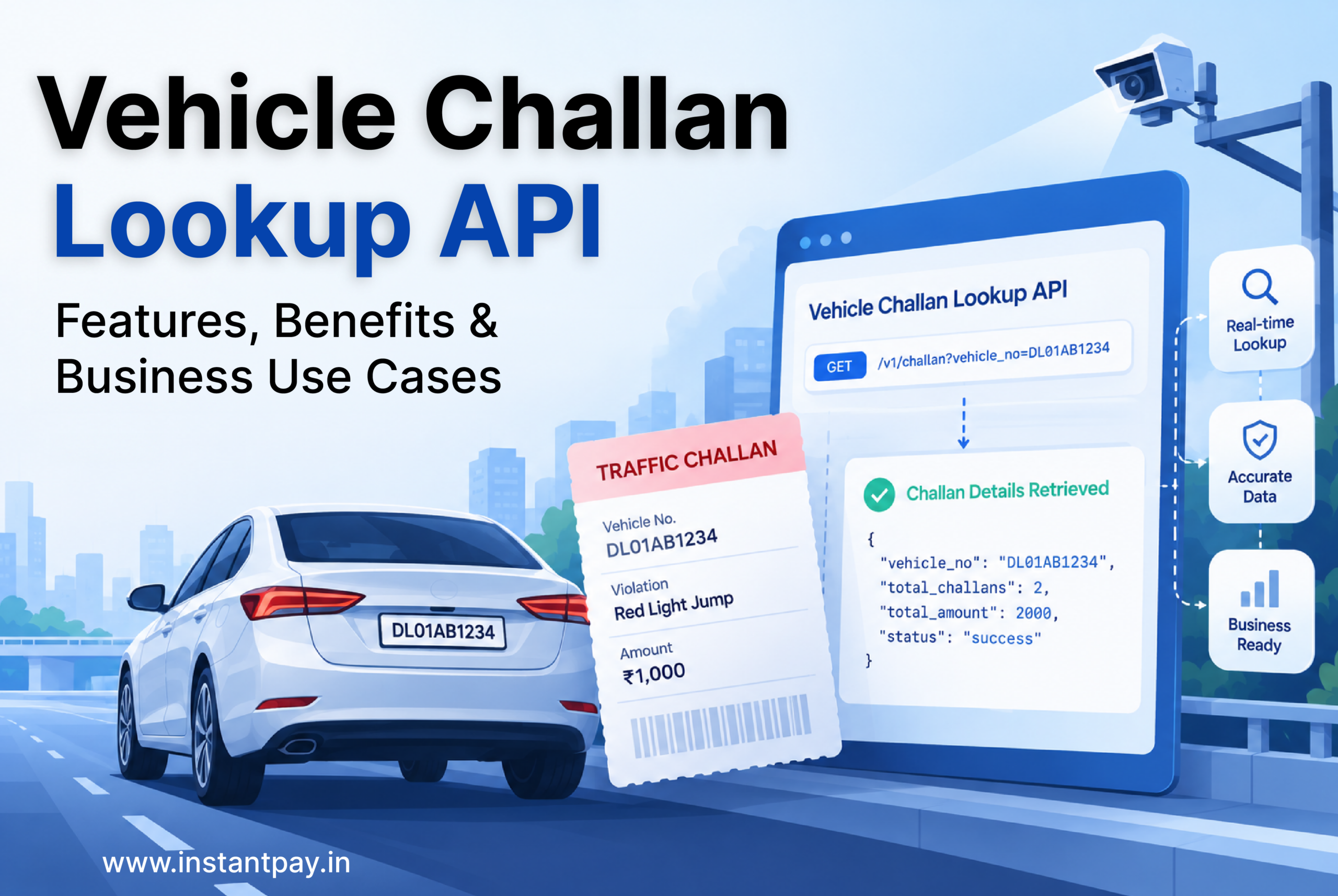
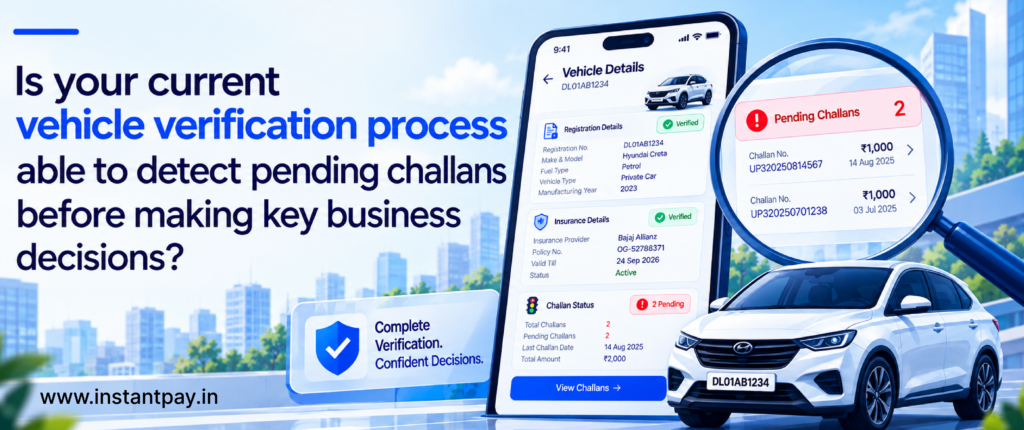
The verification of a vehicle is no longer limited to property ownership and registration details. Companies operating in lending, insurance, fleet management, and mobility services have to check for any pending traffic challans that can impact their risk assessment and operational decisions.
According to the CARS24 Challan Report 2024, 8 crore traffic challans worth about ?12,000 crore were issued last year, and about 75% of the total value of the challans has gone unpaid. This is the reason Vehicle Challan Lookup APIs have become an indispensable part of present-day vehicle verification processes.
In this article, we explain the Vehicle Challan Lookup API, its functioning, the main features, use cases of its application, and how to seamlessly integrate this API into your verification process.
What is a Vehicle Challan Lookup API?
Vehicle Challan Lookup API is an online verification tool that helps companies access a vehicle’s traffic challan details using either the registration number or another identifier for the vehicle. Due to the functionality of the API, companies do not have to manually access many government websites. The API can easily be integrated into the already existing systems to carry out the verification process.
The API connects to the relevant database, captures related challan information, and gives the result in a structured manner that can be used in fields such as lending, insurance, fleet management, vehicle onboarding, and compliance.
A Vehicle Challan Lookup API enables businesses to automatically retrieve a vehicle’s traffic challan details in real time, helping streamline vehicle verification, improve compliance, and support better business decisions.
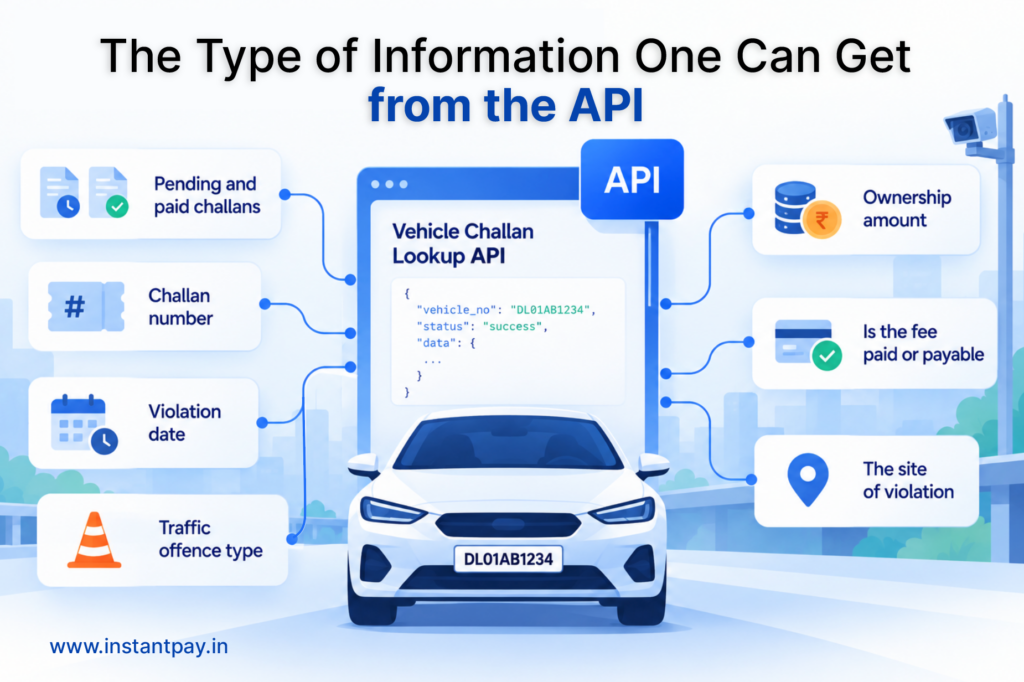
With the help of the information available through this service, businesses can make their actions quicker and more efficient.
Why Do Businesses Need Vehicle Challan Verification?
Businesses that utilize vehicle data must do more than just validate registration and title information. Unresolved traffic challans can also add context, which can assist in determining possible risks before a vehicle is acquired for use by businesses.
However, the old-fashioned method of verifying challans has its drawbacks since it takes time to do it manually, as this process is not efficient.
Some of the disadvantages of manual verification are:
Time-Consuming Process
Verifying vehicles one at a time through state government portals can be a slow process, as there might be a lot of vehicles that have to be verified in a day.
Challenging Access
Companies operating in various states may need to check various authoritative websites, making each one of them unique, which makes the process even harder to standardize.
More Chances for Errors
Manual processing increases the risks of errors in the data and missing crucial data.
Not Scalable
As the volume of verified vehicles gets bigger, the process will require more resources, which can lead to serious operational bottlenecks.
Delays in Decision-Making
Long verification cycles delay procedures related to loan approvals, insurance underwriting processes, and vehicle finance
Business Insight: Automating Vehicle Challan Verification helps organisations reduce manual effort, improve consistency, and integrate verification directly into digital onboarding and vehicle verification workflows.
How Does a Vehicle Challan Lookup API Work?
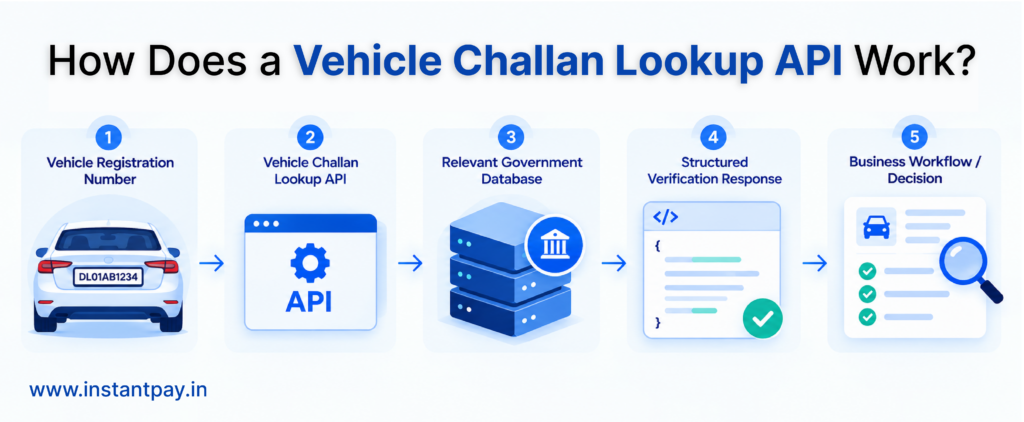
With the help of a Vehicle Challan Lookup API, businesses can verify challan information without any difficulty, as the API will access the necessary data and produce it in a format that is easy to manipulate. Thus, organizations will only need to implement the Vehicle Challan Lookup API into their system and receive the results of the verification process throughout the whole process of its execution.
A Vehicle Challan Lookup API works by accepting a vehicle’s registration number, retrieving available challan information from the relevant government database, and returning a structured response that businesses can use to automate vehicle verification and decision-making.
Step 1: Get Vehicle Identifier
The business sends its vehicle registration number (or other recognized identifier) to the API.
Step 2: Get Traffic Challan Data
The API will securely get the appropriate traffic challan data from the government database or another respective source.
Step 3: Get Report
The API will send the data in a certain format that includes information like the number of unsettled and settled traffic challans, the amount of fine that is to be paid in case of any violations, and many more.
Step 4: Use Data in Workflow
The information provided by the API can be automatically integrated into any business workflow related to cash loan lending or insurance processes.
Benefits of Vehicle Challan Lookup APIs—What You Need to Know?
Vehicle Challan Lookup APIs give you access to information about traffic violations in a timely, accurate, and cost-effective way.
Below are some of the key functionalities that can improve your vehicle verification process.
| Features | Benefits |
| Real-time access to challan data | With this API, you can obtain the latest challan information to speed up the vehicle verification process. |
| Pending challan status | Figure out pending liability for traffic penalties before onboarding a new client or approval. |
| Paid challan records | Get information about paid traffic penalties and conduct compliance checks. |
| Violation details | Get full information about violations such as the type of traffic offense, date of occurrence, place of violation, and the amount of fine. |
| Structured response from API | Receive standardized information that can be integrated into the existing systems. |
APIs provide you with many more opportunities to eliminate the need for manual lookup while improving the effectiveness and accuracy of the verification process.
Business Use Cases of a Vehicle Challan Lookup API
Various industries have their own unique way of implementing the Vehicle Challan Lookup API. The method of verification is constant but serves different objectives, such as reducing lending risk and enhancing underwriting assessment in auto insurance.
Here are some common business applications of this vehicle verification service:
1. Fintech
Business Challenge
Digital lending companies usually finance vehicles or use vehicles as collateral. Merely having ownership or registration details does not offer complete verification of a vehicle.
How the API Helps
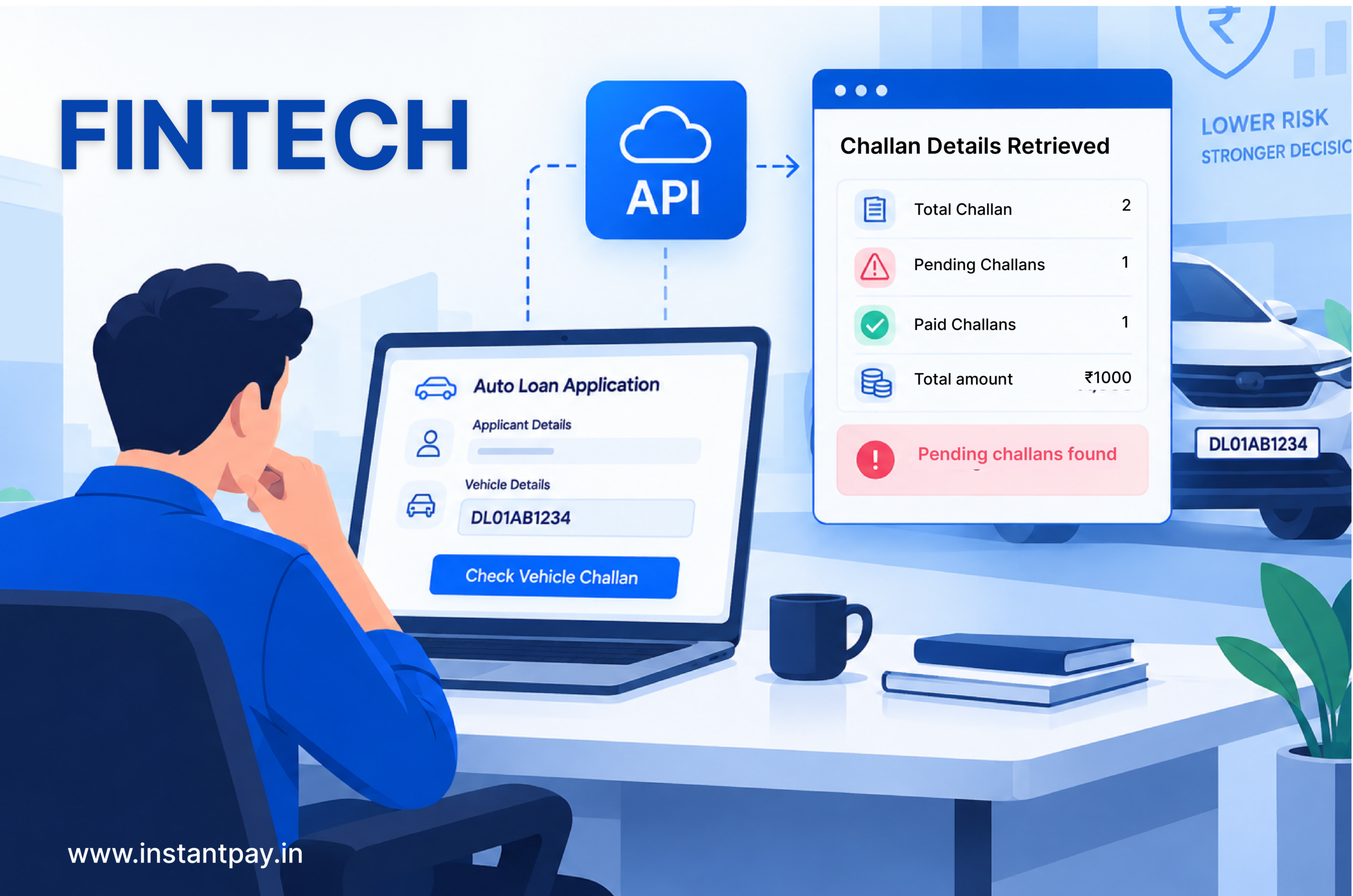
With the help of the Vehicle Challan Lookup API, fintech companies can easily check the status of pending challans during the online vehicle onboarding process. Thus, add another layer of verification for the loan approval process.
Example of implementation
The customer applies for a loan for a used vehicle. Before he gets approved for the loan, the lending company checks the vehicle’s registration certificate, insurance, and challan status through the API. If there are any pending challans on the vehicle, the case gets marked for further investigation.
Business Benefit
- Faster digital onboarding
- Better lending decisions
- Reduced manual verification
- Stronger risk assessment
2. NBFCs
Business Challenge
The volume of vehicle finance applications processed by NBFCs daily is huge. Checking the challans manually from different portals is time-intensive, and difficulties in the verification processes are created.
How the API Helps
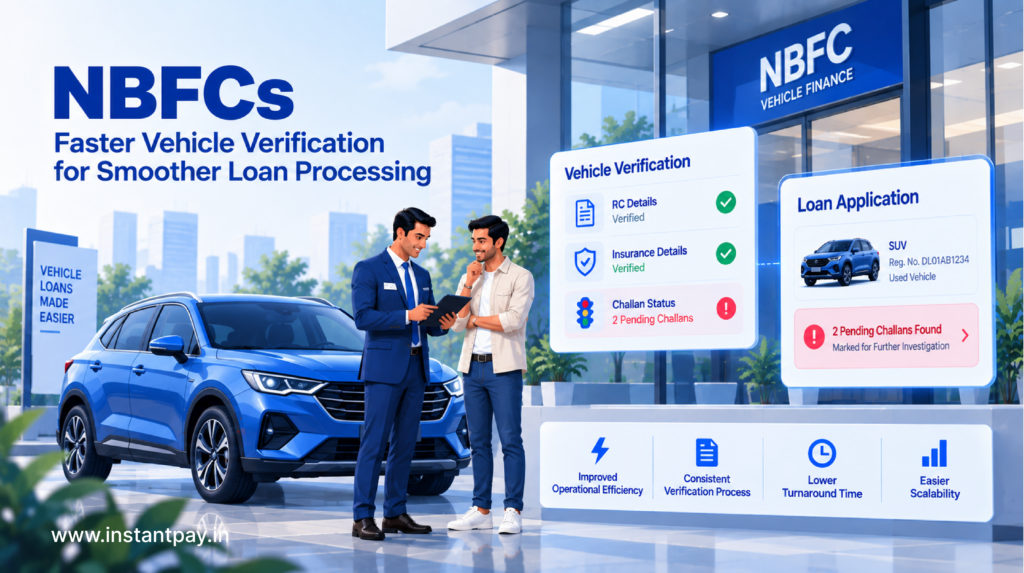
NBFCs can use the Vehicle Challan Lookup API to automate the verification of challans during vehicle verification in the existing processes. The results will be available within seconds.
Example Use Case
In commercial vehicle financing, the API checks for any outstanding challans before the loan application is finally approved.
Business Benefit
- Improved operational efficiency
- Consistent verification process
- Lower turnaround time
- Easier scalability
3. Insurance Companies
Business Challenge
Insurance companies take many factors into account before issuing or renewing a policy, but manual verification of vehicles results in longer processing times and might miss valuable verification information.
How the API Helps
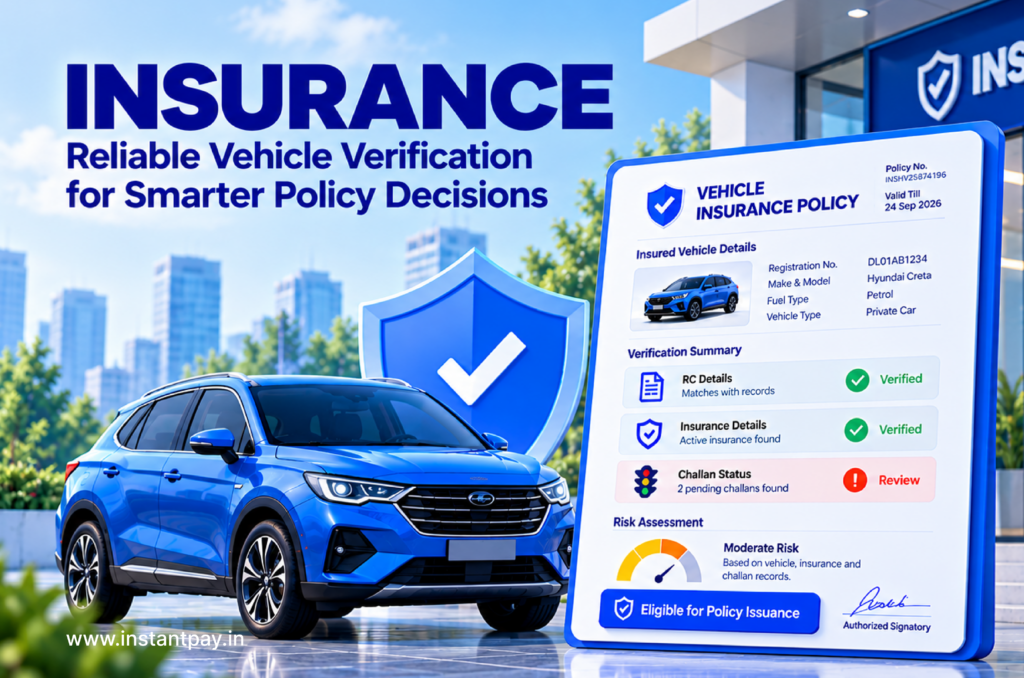
The Vehicle Challan Lookup API can be used together with RC and insurance verification to give additional context to the underwriting and policy assessment processes.
Example Use Case
Before issuing a commercial vehicle policy, the insurer retrieves information about any challans automatically, which serves as an addition to vehicle verification.
Business Benefit
- Faster underwriting
- Improved verification workflow
- Better risk visibility
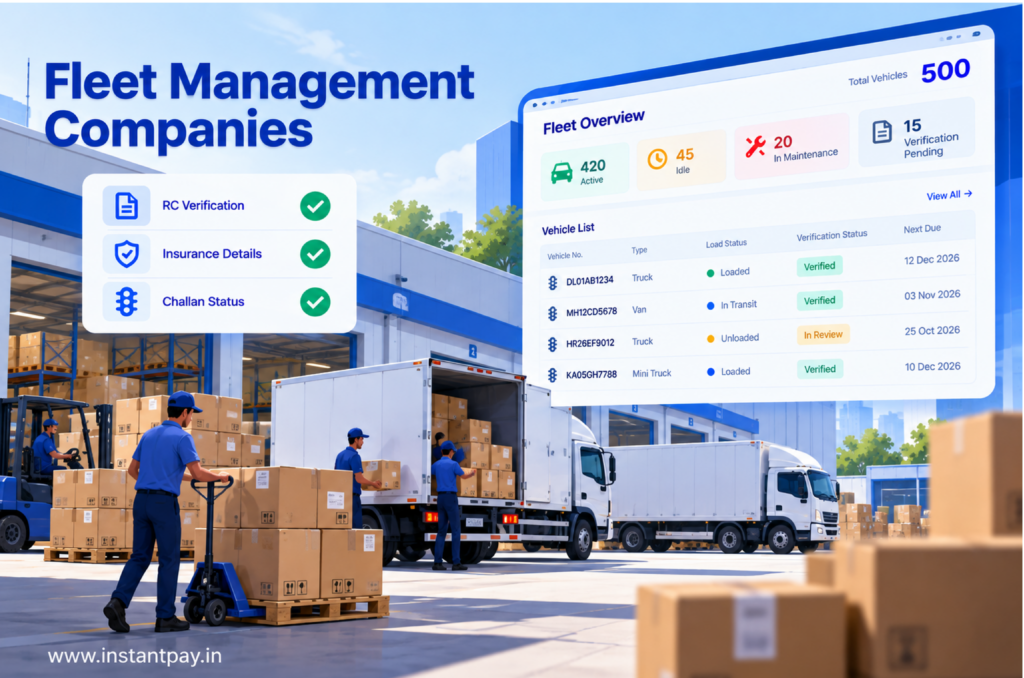
4. Fleet Management Companies
Business Challenge
Supervising numerous vehicles makes it impossible to do manual challan checks. Monitoring compliance in growing fleets requires more resources.
How the API Helps
Fleet managers can automate challan verification during vehicle onboarding and perform periodic verification checks across their fleet.
Example Use Case
A logistics company brings in 500 new vehicles to its fleet, and the challan verification tool performs checks automatically through API integration without any manual intervention.
Business Benefit
- Higher fleet compliance
- Lower operational burden
- Faster vehicle onboarding
- Centralized checking process
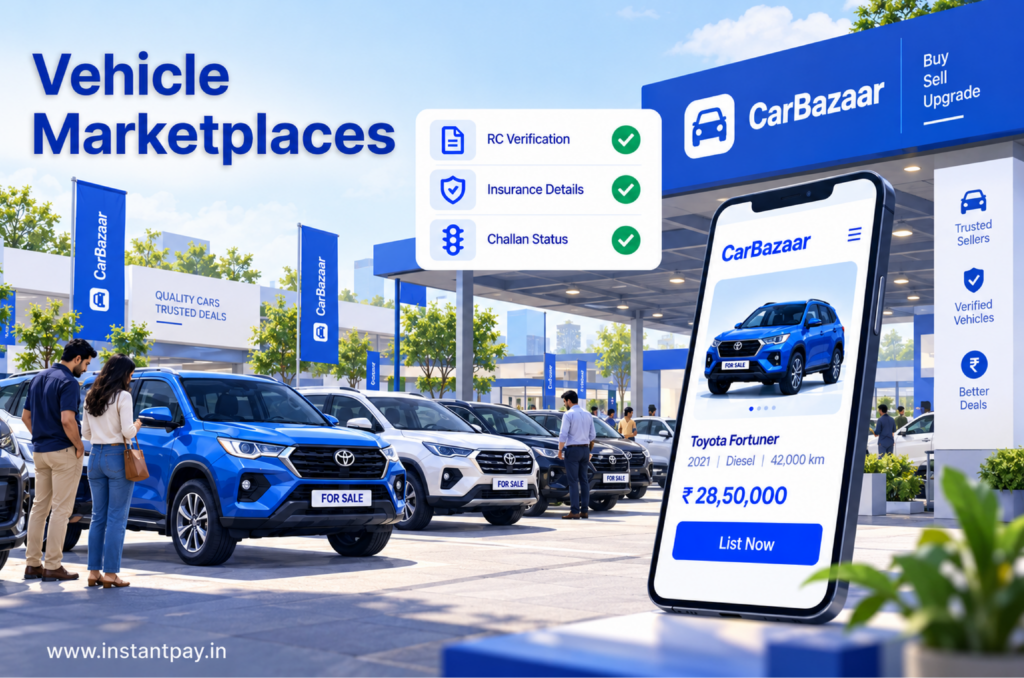
5. Vehicle Marketplaces
Business Challenge
Buyers of pre-owned vehicles want to know as much information as possible before making the purchase. The manual verification process may lack important information on vehicle history.
How the API Helps
Vehicle marketplaces may incorporate Vehicle Challan Lookup APIs into their verification procedures so that they can perform due diligence before selling a vehicle.
Example Use Case
The platform performs automatic checks of RC, insurance, and challan information before the pre-owned vehicle is listed for sale.
Business Benefit
- Increased transparency
- Higher confidence among buyers
- Better due diligence
- More reliable verification process
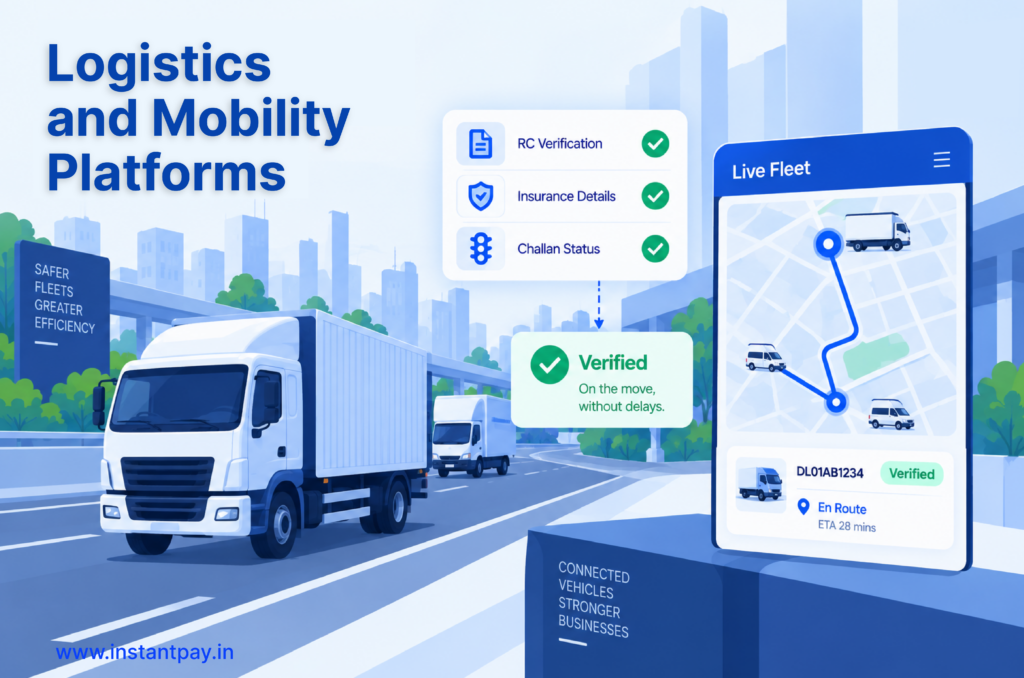
6. Logistics and Mobility Platforms
Business Challenge
Typically, logistics businesses or mobility service providers have to onboard vehicles quickly while ensuring compliance within the ever-increasing network.
How the API Helps
With the introduction of automated challan verification, logistics companies can now verify vehicles too while onboarding and carry out periodic compliance checks.
Example Use Case
With a mobility platform onboarding vehicles owned by various individuals on a weekly basis, every vehicle’s challan status will be automatically checked before activating it on the platform.
Business Benefits
- Quick onboarding
- Automated compliance checks
- Flexible verification system
Common Challenges in Manual Vehicle Challan Verification and How APIs Solve Them
Manual challan verification is feasible only for a limited number of vehicles, but moving forward with verification makes it more challenging. For attestation, businesses often have to use multiple websites, input vehicle details one by one, and collect results manually.
The Vehicle Challan Lookup API makes the entire process more convenient, as the lookup is automated and challan information is retrieved in a formal way.
| Manual Verification Challenge | API-Based Solution |
| Multiple portals | API integration lets businesses perform challan verification on their platform. |
| Manual data entry | Required vehicle data is supplied automatically thanks to the verification process. |
| Slow verification | Verification results can be obtained almost instantly based on source access. |
| Human error | Standard responses help prevent mistakes from happening due to wrong entries and recording. |
| Inconsistent processes | One can apply the same procedure of verification in different business entities. |
| Hard to scale | API supports identifying more vehicles without a need to increase verification costs. |
| Lack of visibility in workflow | Verification results can be saved, monitored, used for analysis, or determinations. |
Moving from Manual to Automatic Verification
Let’s take the situation in which a non-banking financial corporation (NBFC) processes vehicle loan applications for hundreds of vehicles each month. Manual verification in this case would involve examining registration numbers and entering details in the software manually.
In the system, with the help of an application programming interface (API), registration numbers get automatically retrieved, while the data comes in structured form, which allows for further processing.
That is to say, organizations achieve more efficient processing and are, among other things, able to create solutions that can be easily scaled up.
How Vehicle Challan Lookup Helps Prevent Fraudulent Activities During Vehicle Verification?
Fraudulent schemes involving vehicles do not always entail the gathering of forged paperwork or the usage of false identities. Surely, several situations arise wherein businesses run into various issues as the crucial information about vehicles remains either unattended or is verified too late. Although a vehicle challan lookup API does not detect fraudulent activity, it offers important verification information, which makes it easier for a business to detect possible risks faced while dealing with vehicles.
If combined with other vehicle verification solutions, the Challan data becomes an additional instrument of due diligence, allowing much better decisions related to business activities.
Identify Existing Traffic Debts
Pending challans may indicate pending debts linked to a specific vehicle. Checking for such information before the onboarding process allows businesses to better understand the compliance level for the vehicle in question.
For instance:
If a used commercial vehicle is taken for financing, the API will be able to spot multiple unsettled challans at the verification stage. Instead of approving the application immediately, the lender will be able to conduct deeper due diligence.
Enhancing Vehicle Due Diligence
The process of verifying a vehicle consists of various verification metrics based on which the vehicle is verified, as opposed to just one document. Utilizing both challan verification with other vehicle records like RC, insurance, and other data provides a more thorough vehicle verification mechanism.
Best Fit:
Used vehicle markets and fleet owners who wish to be more transparent before carrying out vehicle purchases or onboarding vehicles.
Support Better Lending Decisions
Automated challan verification provides more details to lenders and NBFCs in vehicle-related lending. Although this may not be the sole determinant in the lending decision, it aids the larger assessment of risk when checked with the other verification results.
Business Value:
- Improved credit decisions
- Strong verification processes
- Less manual inquiry
Enhancement of Insurance Underwriting
Insurance companies look into several factors that are related to a vehicle before issuing or renewing an insurance policy. The data related to the challan can be utilized as one of the aspects of verifying the auto and can thus complement other practices such as reviewing records about ownership, registration, and insurance.
Streamlining the process of adding vehicles to the fleet
Fleet companies managing a variety of vehicles need to follow a systematic process of verification. Automated verification of the challan information will make sure that all vehicles go through the same verification path, making the verification less labor-intensive and ensuring a higher level of consistency.
Business insight: Vehicle challan lookup API will be of great service when it is an important part of a wider vehicle verification ecosystem. Its integration with RC verification, insurance verification, and PUC verification will help organizations to improve due diligence and compliance and make more informed decisions.
Best Practices for Businesses Using a Vehicle Challan Lookup API
Implementing Vehicle Challan Lookup API technology in your verification process is just the beginning. For businesses to reap all the benefits of automatic challan verification, they must follow a formalized approach that enhances consistency, enables compliance, and scales with growth.
Here are some tips to bear in mind:
Verify Before Vehicle Onboarding
Consider challan verification as an important step in the process of receiving loans, selling insurance, onboarding fleet vehicles, or selling vehicles. Early verification allows one to deter any potential trouble.
Combine Several Verification Services
A challan check is a great service, but it should always be complemented by other verification services like RC verification, insurance verification, or PUC verification. Together, these services provide a fuller picture and allow for the best due diligence.
Integrate Verification in Current Workflows
Instead of doing manual verification separately, integrate the API into your onboarding/verification software.
Keep Verification Records
Keep verification records and timestamps on file. To improve operational efficiency, ensure that operations are transparent, and it is therefore easier to track verification-based activities when required.
Reassure Verification Done At Regular Intervals
The information about cars changes with time. Carrying out checks on an ongoing basis helps a business keep abreast of the latest information, particularly in the case of long-term loans, fleet management, and repeated business relationships.
Make Use Of API Verification Rather Than Looking Manually
With increasing numbers of verification processes, manual verifications may become difficult to deal with properly. API solutions will allow making the process uniform and minimizing human input.
Best Practice: The best vehicle verification practice is a combination of automated verification processes and other processes allowing easy integration into one digital operation.
Why Choose Instantpay’s Vehicle Challan Lookup API?
Implementing vehicle verification isn’t just about accessing challan data, it’s about integrating reliable verification into everyday business operations. Instantpay’s Vehicle Challan Lookup API is designed to help businesses streamline verification within their existing onboarding and decision-making workflows without adding unnecessary manual effort.
Whether you’re verifying a single vehicle or processing high volumes across lending, insurance, fleet management, or mobility platforms, the API supports a consistent and scalable verification process that fits seamlessly into your digital ecosystem.
As part of Instantpay’s broader Vehicle Verification Suite, it can be used alongside RC Verification, Insurance Verification, and PUC Verification APIs to help businesses build a more comprehensive verification workflow from a single integration partner.
Final Thoughts
As the process of vehicle verification becomes increasingly digitized, businesses must go beyond basic checks on ownership in order to make informed decisions. One important layer of verification is provided by the Vehicle Challan Lookup API, which allows businesses to identify outstanding traffic liabilities and automate challan verification as well as enhance vehicle verification processes.
In today’s world of financing vehicles, underwriting insurance, managing fleets, and dealing with the challenge of integrating a large number of vehicles, automated challan verification can help improve efficiency in operations and make better business decisions.
FAQs
1. What sectors gain the most from using a Vehicle Challan Lookup API?
Vehicle Challan Lookup API is helpful in sectors where vehicle verification is necessary in operations. This includes fintech, non-banking financial companies, insurance, fleet management, logistics, mobility apps, and online vehicle marketplace companies. Automating challan verification allows companies to achieve operational efficiencies, increase their compliance, and make better decisions.
2. What kind of information may be returned by a Vehicle Challan Lookup API?
It depends on which information source the API relies on in coming from. Information returned may include such data as PPP identifier, vehicle registration number, information on paid and unpaid challans, violations, fines, payment status, time and location of traffic offences committed. The results may change depending on the authority and the information stored in their databases.
3. Is it possible to combine the API with other vehicle verification tools?
Sure, most of the Vehicle Challan Lookup APIs were designed to be combined with existing vehicle verification tools, onboarding, lending, insuring, and fleet management solutions, thus allowing businesses to automate their challan verifications without too much changing existing processes.
4. Can vehicle challan verification be implemented using APIs?
Yes. Thanks to API based verification suited for companies operating with a large number of vehicles. Instead of checking vehicles manually using different portals, companies can automate the verification process and include the challan checks as part of their digital processes.
5. How fast can companies expect to receive an API response?
Response time is determined by the API provider, system architecture, and availability of sources. A new-generation API allows companies to carry out verification in seconds, thus enabling faster onboarding and making faster operational decisions.
6. Is it possible for Vehicle Challan Verification API to assist fleet verification?
Yes. Fleet managers can use the API in their onboarding and compliance workflows for vehicle verification before fleet addition as well as for conducting periodic checks on already existing vehicles, thus making the process more uniform and decreasing the manual efforts needed.
7. Is it necessary to use Vehicle Challan verification together with RC verification API?
Yes. Vehicle Challan verification provides an additional level of vehicle verification. By combining it with RC Verification, Insurance Verification, and PUC Verification, a more comprehensive verification process is obtained.