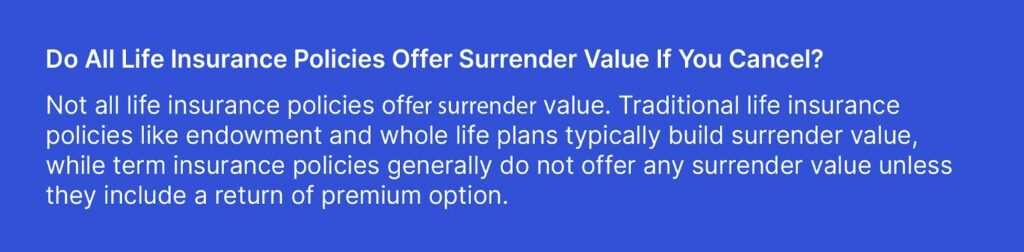
A policyholder who cancels a life insurance policy early will receive what’s known as a “surrender value” from the insurer. The surrender value concept applies to a limited number of products, including traditional life insurance products such as whole life and endowment policies. Both whole life and endowment policies consist of savings elements as well as protection elements.
The insurance company may have certain eligibility requirements for paying the surrender value of a policy, including that the insured have been making regular premium payments for at least three consecutive years to keep the policy enforceable and qualify for any partial payouts.
In India, many policyholders cancel their life insurance policies early and most of those cancellations occur as a result of an insurance policy being surrendered or withdrawn. According to industry data, benefits paid due to surrenders and withdrawals increased by over 25% in FY2022-23, reaching approximately Rs. 1.98 lakh crore, highlighting the scale of early policy termination across the industry. The reason for this rapid rise to record levels is mainly due to poor financial circumstances, lack of knowledge about the long-term benefits of life insurance products, or a mismatch between the features and benefits offered by the life insurance policy and the policyholder’s expected financial goals.
Another important metric in the insurance industry that reflects how well policyholders retain their life insurance policies is called “policy persistence.”Policy persistence indicates how many policyholders continue to pay premiums on an ongoing basis. If a life insurance policy has low persistency rates, the result generally indicates that a large number of life insurance policies are being dropped due to policy lapses or policy surrenders.
Declining policy persistency in the first few years after issuing the policy has emerged as a significant challenge for many insurance companies throughout the industry. As a result, families can find themselves without the financial protection they were seeking if the life insurance policy was terminated prematurely due to a policy lapse.
At the same time, there is a significant opportunity for life insurance products in India because, based on the Insurance Regulatory and Development Authority of India (IRDAI), overall life insurance penetration, which indicates the amount of money spent on insurance as a percentage of the total GDP, is at only approximately 3.7% in FY 2023-24. This number is significantly lower than the worldwide average of approximately 7% of GDP.
When you look specifically at the life insurance portion of the overall insurance penetration percentage, you will observe that only about 2.8% of GDP is attributable to premiums for life insurance policies. There are still a considerable number of people in India who have no life insurance or are underinsured for their needs.
On the other hand, if you buy a term insurance policy, all premium payments for coverage are for risk protection, and no savings or investment value is created. As such, the policyholder will likely not receive a surrender value if the term insurance policy terminates prior to the end of the term, unless the term insurance policy includes a Return of Premium (ROP) rider that will refund any premium due to the insured if they survive to the end of the term.
Understanding the importance of the surrender value of your life insurance policy is essential to your financial liquidity and long-term plans. The surrender value may be particularly relevant when your life changes as a result of changing jobs, managing an unexpected debt, or making adjustments to your investment strategies.
IRDAI is developing different regulatory initiatives to enhance transparency at the time of making an initial premium payment and making surrender value calculations to ensure that policyholders receive fair payments based on any amounts paid to them and clear information regarding any future withdrawals.
This blog will discuss how to determine the surrender value of your life insurance policy by looking at the different factors that may impact the determination of the surrender value, including premium payment duration, policy tenure, bonuses in the policy, and the type of life insurance policy. The blog will also help you to identify when the surrender value of your life insurance policy may be the best option in order to minimize your financial losses.
What is Surrender Value and Why Does it Matter?
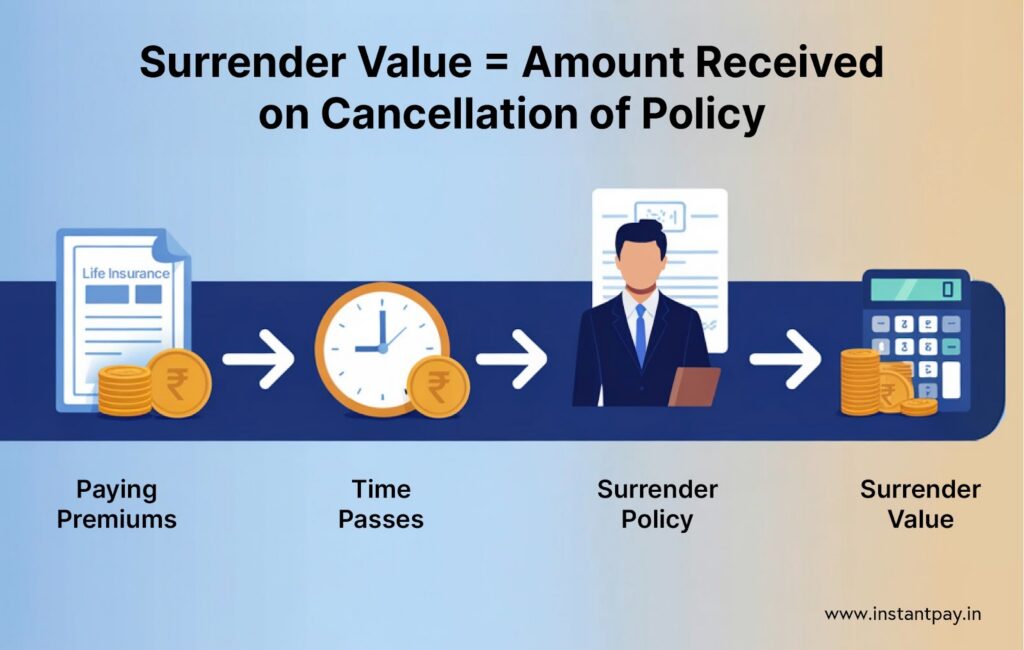
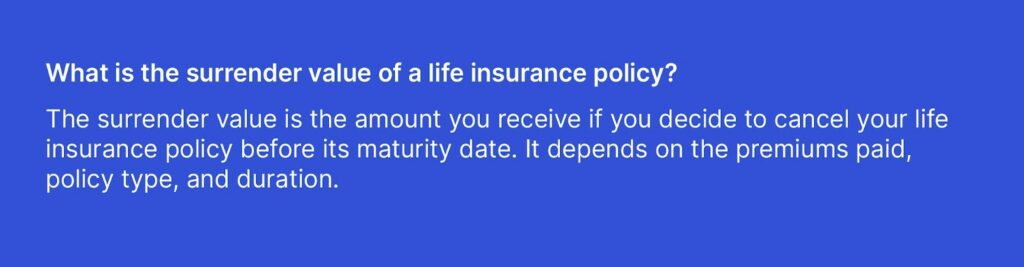
Surrender value is the amount received by insurance policyholders when they terminate their life insurance policies early. The surrendered amount represents the policy cash value. The policy will provide cash to the insured upon failure to pay the required premiums. The surrender value is typically less than the total premiums paid, especially in early years of the insurance term, due to deductions being taken for administrative costs (i.e., administrative fees), mortality charges, and surrender penalties.
According to the IRDAI, any policyholder can only obtain a surrender amount if there have been premiums paid in connection with the policy for at least three years and the policy has been in force during this time. The Guaranteed Surrender Value as defined by various insurance companies can vary from 30% (minimum) to 90% (maximum) of total premiums paid and excludes the first drop premium and taxes. The Guaranteed Surrender Value will increase gradually as the policy remains in force.
According to industry reports and IRDAI regulations, traditional life insurance policies usually acquire surrender value after two to three years of premium payments, and the payout typically ranges from 30% of premiums in the early years to as high as 90% in later years depending on the policy tenure and insurer rules.
Understanding the policy termination will help an individual decide whether to continue their life insurance program or leave the life insurance plan with respect to providing financial security to a beneficiary. The main point of life insurance is to provide a financial safety net for the plan beneficiary. Given the time and money spent purchasing the life insurance plan, the policyholder may want to surrender the policy for cash in times of need or for other reasons, such as changing circumstances or low returns.
By understanding how cash value accumulates, the potential impact of surrender charges, and the timing between premium payment and the possible surrender of a policy, you will be able to make a reasonable and informed decision as to the best financial option for the policyholder.

When Does a Policy Acquire Surrender Value?
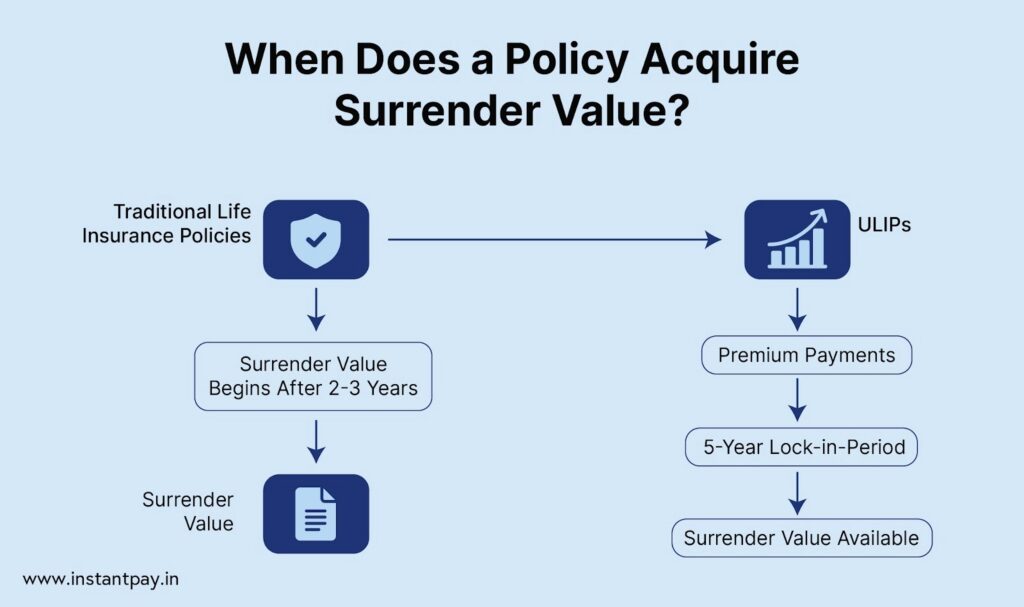
Determining when a Life insurance policy attains its termination value is determined by the type of policy owned. Life insurance policies are described by when they usually achieve their cancellation value.
- Traditional Life Insurance Policies: The amount of endowment, money back, and whole life insurance policies have achieved policy cancellation values two to three years in a row of consistent premium payments. As months and years go by of keeping these policies in force, the amount of the cancellation value grows. If canceled before this period, the payout amount will be less than the premium amount for that year.
- Unit-Linked Insurance Plans (ULIPs): ULIPs have an additional condition providing for a mandatory five-year lock in period. If a person surrenders their policy prior to the end of this five-year period, the fund value is typically transferred to a “discontinuance fund” and paid at the end of the lock-in period, less any applicable charges. After five years, the policyholder is entitled to the full amount of the cancellation payout, based on the rate of return on the underlying investments.
What are the Types of Cash Value on Policy Termination?
Policyholders who decide to cancel their policy may be entitled to two different methods of refunding life insurance premiums. Both have different ways of calculating refunds, eligibility requirements, and benefits.
1. Guaranteed Surrender Value (GSV)
What It Is:
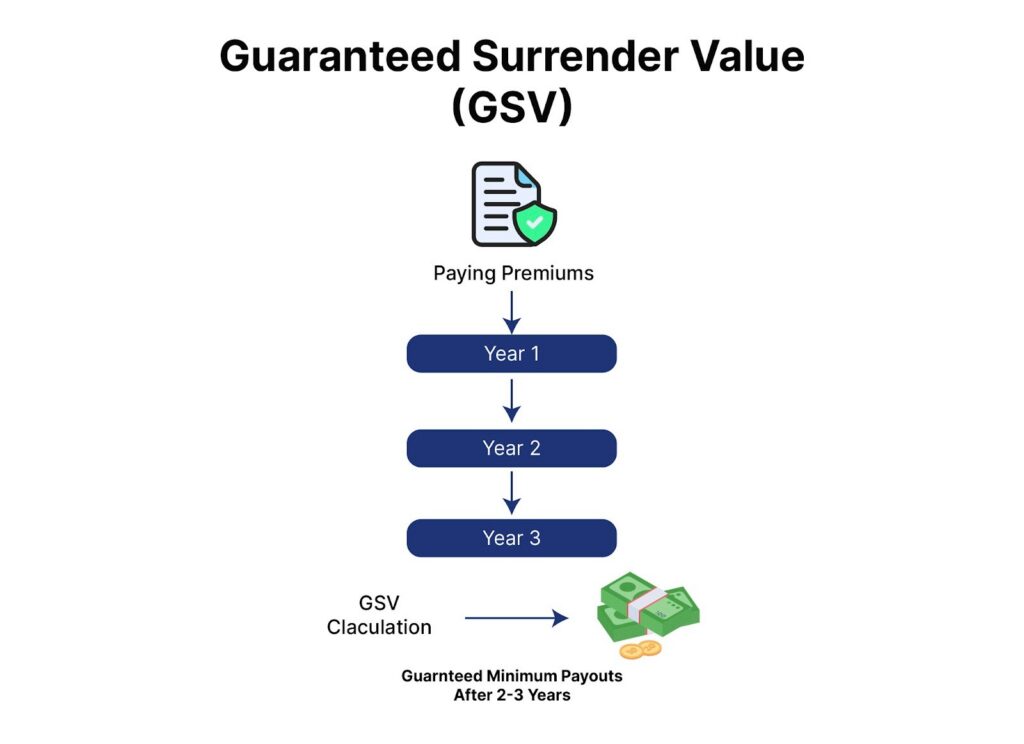
The guaranteed surrender value is the lowest amount that a policyholder would receive if the policyholder decided to terminate the policy. The GSV is determined basically by taking the total amount of premiums and calculating based on certain exclusions such as first-year premium and rider premium.
Example:
For example, if you are paying into an endowment policy at Rs.50,000 a year and have been doing so for the last 3 years, and the insurance company provides you with a 30% GSV after three years (i.e., these amounts total to Rs.138,000 during that time frame), then this would be your GSV amount that would be payable upon termination of the policy.
- Total premiums paid = Rs.50,000 x 3 = Rs.1,50,000
- GSV = 30% of Rs.1,50,000 = Rs.45,000
If you surrender the policy now, you’ll receive Rs.45,000, which is guaranteed by the insurer as per the terms of your contract.
When It Is Paid Out:
The GSV will only be paid out if the policyholder has met the issued minimum premium payment term established by the insurance company. The minimum premium payment term is generally the 2nd or 3rd year of continuously paying premiums.
2. Special Surrender Value (SSV) / Cash Surrender Value
What It Is:
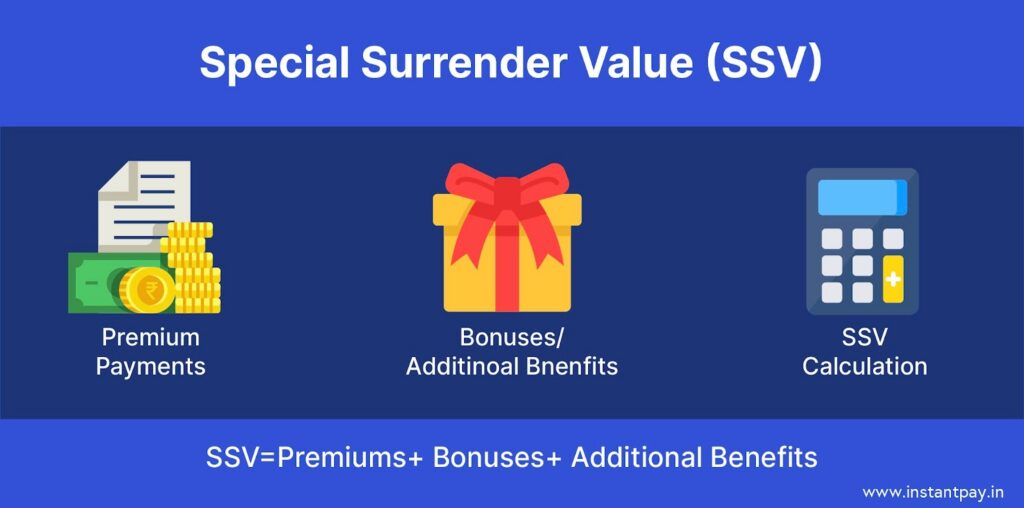
The amount paid to the policy owner under a Special Surrender Value (SSV), or Cash Surrender Value, is more than what they receive from Guaranteed Surrender Value (GSV) because it includes the sums paid in as premiums, as well as any bonuses and benefits that have been accrued during the life of the policy.
Example:
Let’s say your whole life insurance has been accumulating a bonus for five years. You paid a total of Rs.2,50,000 for the premium payments over the five years. The insurance company also has paid you a total of Rs.50,000 over those same five years. The SSV would be greater than the GSV because the SSV also accounts for the bonuses you have earned.
- Total premiums paid = Rs.2,50,000
- Accrued bonus = Rs.50,000
- SSV = Rs.2,50,000 + Rs.50,000 = Rs.3,00,000
Thus, the SSV could be paid out to you as a cash payout of Rs.3,00,000, which would be better than a GSV of Rs.2,50,000, if no bonuses were included in the GSV calculation.
When It Is Paid Out:
When a policyholder surrenders their policy and meets their eligibility criteria, they will receive their Special Surrender Value (SSV). This usually requires the payment of premiums for several years and the accrual of bonuses.
If you are deciding whether or not to use a term insurance plan, you should consider some important factors before making your final choice..
Surrender Value vs. Cash Value: What’s the Difference?
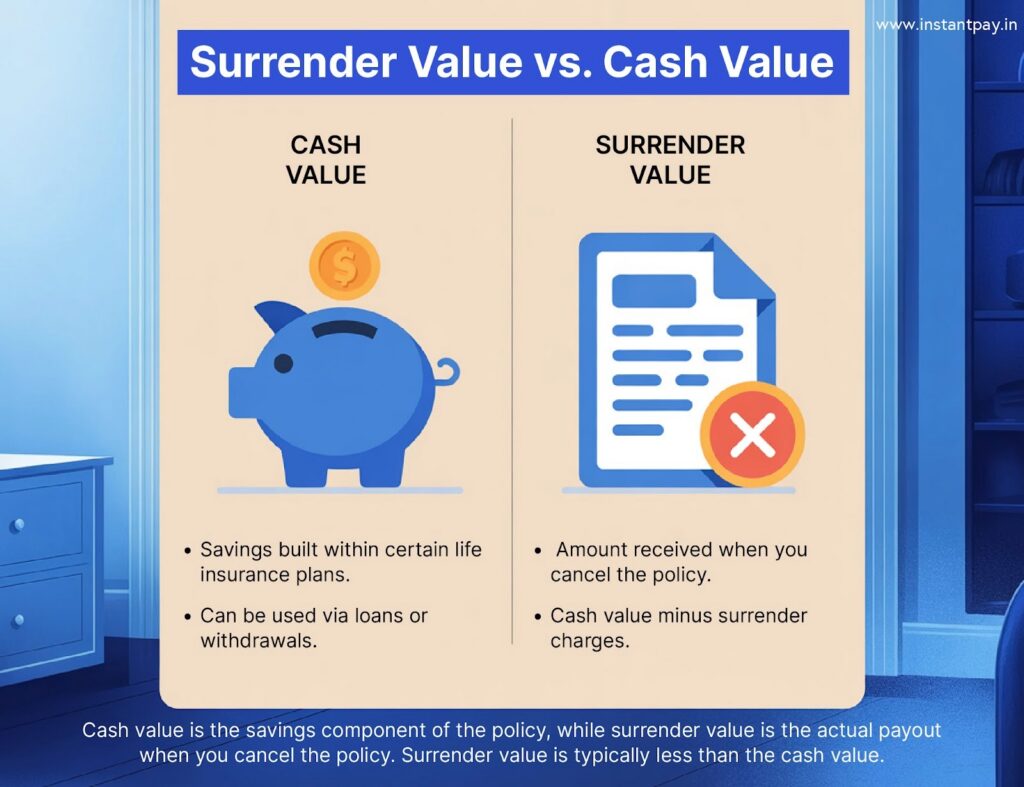
The terms “surrender value” and “cash value” are often confused as being the same thing; however, they are two different things:
- Cash Value: Cash value is the term used by the issuer of a life insurance policy for the money that is accumulated over time in certain types of life insurance policies (ie., whole and endowment). This accumulation of cash value is accumulated as savings in the policy and is paid out as either a loan or a partial withdrawal from the policy.
- Surrender Value: The money paid out to a policyholder when they choose to cancel their policy before it has matured is referred to as the surrender value. It is equal to the cash value accumulated in the policy at the time the policyholder cancels their policy, minus any applicable surrender charges (surrender charges will reduce the amount of the surrender value compared to the cash value). Generally, especially in the first several years of a life insurance policy, the surrender value of a life insurance policy will be less than the cash value.
Key Difference:The primary difference between cash value and surrender value is that the cash value reflects the accumulated savings in a life insurance policy at a given time, and the surrender value reflects the amount of money that is actually available to be withdrawn if the policyholder terminates the policy (subject to any surrender charges).
How to Calculate Surrender Value?
Determining the cash value of a policy or whether to surrender your policy or stop paying for your policy can be complicated, but it really comes down to few specific factors that insurance companies use to calculate cash values. While each insurance company will use their own method of calculating cash values, generally speaking, the following four components will be used to calculate the termination value of a policy:
- Premium Paid by Policyholder: Total amount of money you paid into your policy as part of the premium.
- Surrender Charge: A fee charged by the insurance company to cancel your policy early.
- Any bonuses applied to the policy (i.e., bonus amounts received from a participating policy), if applicable, will be included as part of the total termination value.
Length of time that the policy has been in effect—policies issued for longer periods of time typically yield higher termination values.
General Formula:
Surrender Value = (Total Premiums Paid + Bonuses) – Surrender Charges
What are the Surrender Charges?
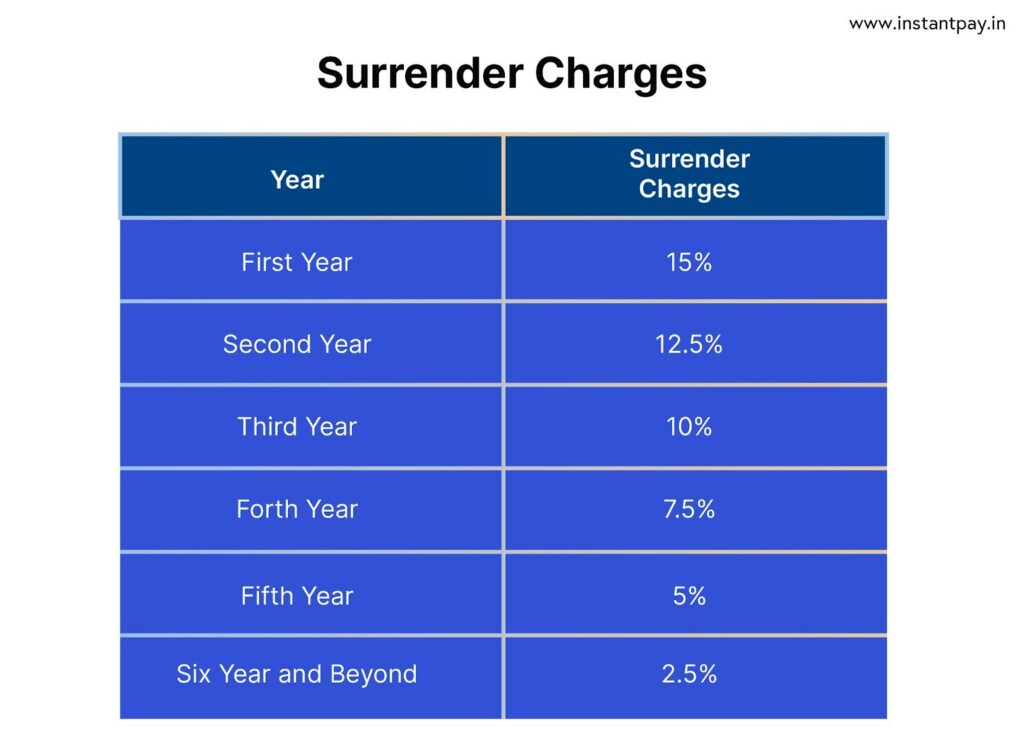
Surrender Charge is a fee charged by an insurance company for terminating or canceling your life insurance policy before it’s paid out. The purpose of this fee is to pay for the cost of the company’s administration involved in using the policy as well as to compensate the company for the loss incurred by ending the contract early. The amount of the surrender charge will be decreasing as time passes and the policy matures.
How Surrender Charges Work:
- During the early years of the policy, surrender charges are typically high since the insurance company has not recovered their acquisition cost (costs associated with selling you the policy + costs involved with establishing & processing your account).
- Over time, as your policy matures, surrender charges will decrease, and after a specific period of years (approximately 5-6), surrender charges will be minimal (or completely nonexistent).
Your surrender charges will directly affect the amount you get back if you choose to cancel the life insurance policy. Thus, understanding surrender charges will be important to help you decide whether or not to cancel your life insurance policy.
What Are The Factors Affecting Surrender Value?
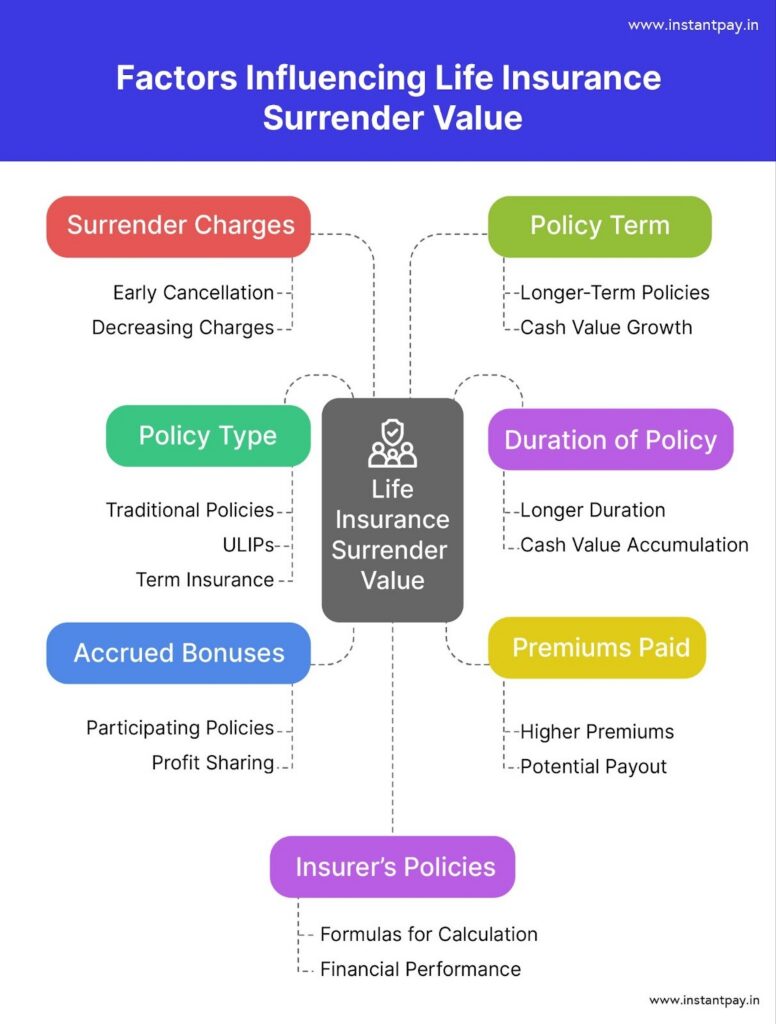
Numerous elements can have an effect on the amount of policy refund you are entitled to receive when you cancel your life insurance coverage, so understanding the impact of these different factors will assist you in making educated decisions in this area.
1. Policy Type
- Traditional policies (endowment, whole life, and money-back) have a higher potential for payout at the time of cancellation because of their built-in savings/investment aspects.
- Unit Linked Insurance Plans (ULIPs): The value received when you surrender your ULIPs will depend upon how the underlying funds performed in the marketplace. ULIPs can provide greater potential for payout upon cancellation; however, this is heavily influenced by the market’s conditions.
- Term Insurance: There is typically no payout upon cancellation of a term policy, as it provides solely for the risk of loss from death; however, in some cases there may be a limited payoff available with a return of premium feature, which can begin to accrue after a period of time. If you wish to be educated on the fundamentals of term insurance and how it may assist you, please do so.
2. Duration of Policy/Premiums Paid
Your policy will have greater cancellation value based on how long you’ve had it, and the amount of premiums you’ve paid. Early cancellation of a policy will yield a smaller payout. The value of your policy builds up over time and the value to “cash out” will also increase as the policy goes longer.
3. Premiums Paid
Generally speaking, the higher the “premium” that you pay for the life insurance policy, the more cash value will be available if you were to discontinue your policy (i.e., surrender your policy). Since the discontinuity or surrender value of your policy is usually calculated as a percentage of your total premiums, higher premium policies will typically have larger total payout amounts than lower premium policies.
4. Accrued Bonuses
For participating policies, the insurance company will return to the policyholders who are participating in the company’s profits through paying out bonuses on the policy. Bonuses add to the total amount of funds paid to you at the time of cashing out your policy.
Therefore, the longer you have held a policy and received bonus payments, the higher your total cash out amount will be.
5. Surrender Charges/Penalties
The insurance companies assess costs when a policy is terminated early, resulting in reduced payout amounts; these costs are typically highest in the early part of the policy and decrease as you continue to hold the policy. You should take the surrender or termination costs into consideration when you are thinking about whether to cash out of a policy.
6. Policy Term
The longer the policy is held, the more it will increase in value due to accumulated premiums and bonuses. A long-term policy typically provides a greater refund amount to the insured upon termination because larger premiums and bonuses have accrued over the policy’s life.
7. Insurer’s Policies and Performance
Each of the insurance companies has a different formula to calculate a policy’s cancellation value (cash surrender value). The overall financial health of the insurance company and the success of the insurer’s investments will also have an impact on the total cash value available at the time of surrender/termination (also referred to as cashing out). The performance of the investment portfolio of the insurance company could affect the bonuses and returns available on the policy.
How Surrender Value Varies in Term, Whole Life, Endowment, and ULIP Policies
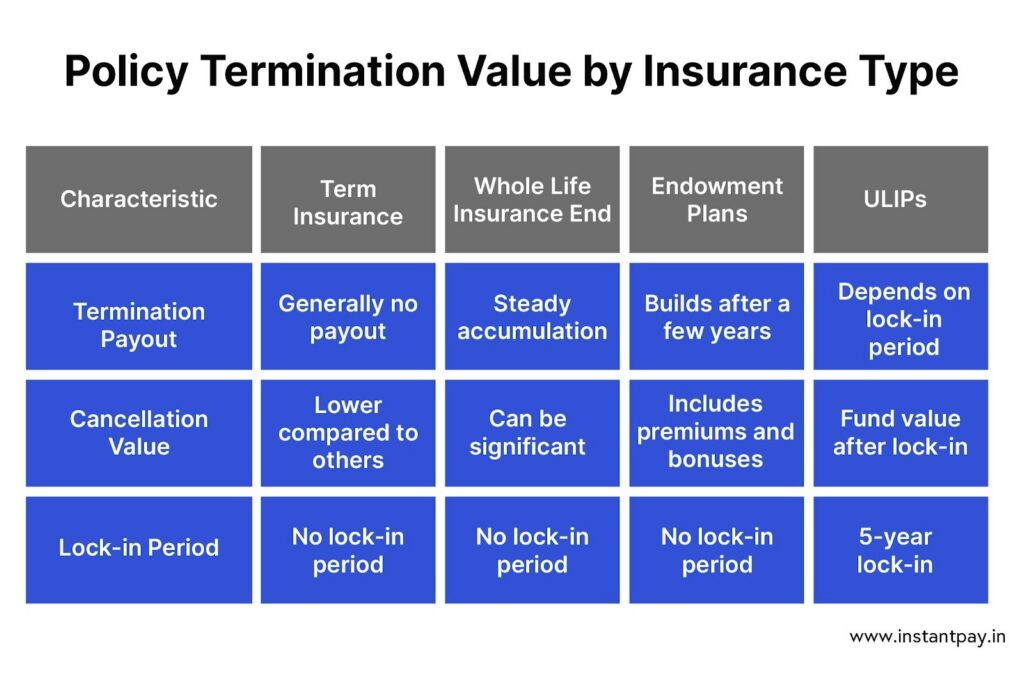
The value of your policy’s termination payout is largely dependent on what type of life insurance policy you have in place. Here is how each type of policy will treat cash value at the time of termination:
1. Term Insurance
Generally speaking, term insurance policies do not provide any payout at termination because the purpose of these policies is to provide financial protection in the event of death. However, there are types of term insurance that may pay out some portion of your premiums as a return of premium (“ROP”) at termination; cancelation values under ROP policies are generally much lower than under other types of insurance, since they are primarily a refund of premiums.
2. Whole Life Insurance
Whole life insurance policy’s provide a consistent growth of cash value over a period of time; as whole life policies are designed for your entire lifetime, the individual policyholders grow their cancellation value gradually over time, such that the longer an individual policyholder maintains his or her policy, the greater the cash value of the policy will be at termination. In addition, the cancellation value on whole life insurance policies could amount to substantial sums of money, particularly if there is a history of cash value growth.
3. Endowment Plans
Endowment insurance policies are both an insurance product and an investment vehicle that provides life insurance coverage and allows the policyholder the opportunity to accumulate a cash amount through premium payments over time. With endowment plans, the termination value generally begins to accumulate after a few years of premium payments; therefore, if the policyholder cancels the policy prior to the plan’s maturity, he/she will receive the accumulated cancellation value which will include a refund of a portion of the premiums paid to the premium fund and any associated bonuses.
4. ULIPs (Unit Linked Insurance Plans)
The termination value for ULIPs depends upon whether you surrender or terminate the ULIP and whether you do so before or after the end of a five-year lock-in period.
- Before the five-year lock-in period, any fund value you have will be transferred to a “discontinuance fund.” You will not be able to withdraw funds from this fund until the conclusion of the lock-in period; in addition, you may incur charges to access these funds from the discontinuance fund.
- After the five-year lock-in period, the cash value of your ULIP at termination will be equal to the current fund value and will reflect the performance of the underlying investments in the ULIP.
To learn more about how ULIPs work and how to maximize the benefits of these products, to learn more about how to maximize the benefits of ULIPs, please continue exploring other information available about Unit Linked Insurance Plans.
What to Consider Before Surrendering Your Life Insurance Policy?
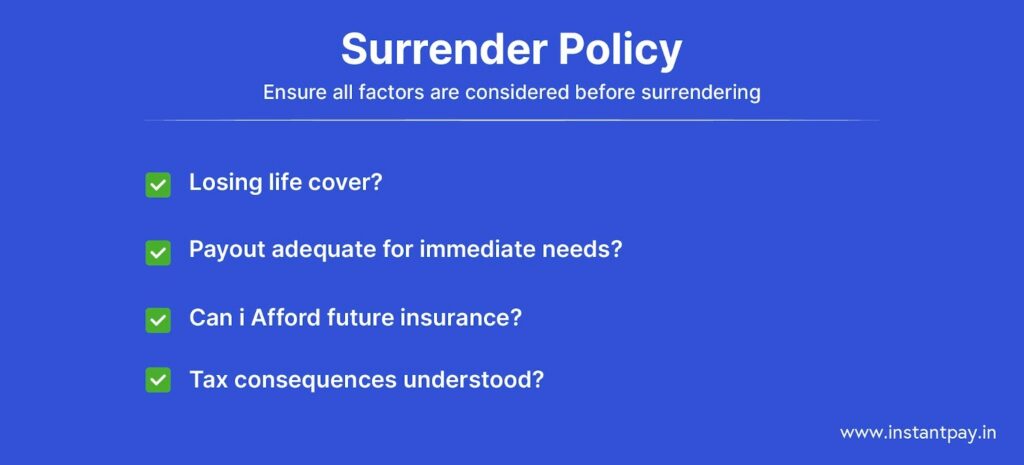
Making the choice to give up your life insurance policy is a big step and careful consideration of how that will affect you, your family and your finances should be taken before proceeding. Here are five important factors that you should consider:
1. Loss of Coverage
When you cancel your policy, you are removing the insurance coverage from your life. Therefore, if (for whatever reason) you die, your family will no longer have the protection of money they would have received from the insurance proceeds. For you to make this decision, you may want to consider whether or not you still need life insurance from that policy if you have dependents that rely on you.
2. Reduced Payout
When you cancel your policy, you will receive a cash payment. This cash payment is based on the amount of money that you have put into your life insurance policy over the years. In the first couple of years of your policy if you cancel your coverage, the cash value will likely be significantly lower than the cash value received if you were to continue with your policy until the end. Therefore, terminating your coverage early can severely diminish the amount of money you will receive back for your investment.
3. Financial Needs
If you are in need of immediate availability of cash, terminating your life insurance may seem reasonable. However, you will need to determine what your cash payment will be (from cancellation) and if that cash amount is sufficient for you. You may want to find out if it would still be beneficial to keep your policy active until you determine your need for immediate cash outnumber keeping active life insurance.
4. Future Insurability
If you cancel your policy and later determine that you want to obtain life insurance through an insurance company, due to your age or health when you go to apply for new life insurance, you will normally pay a higher cost per month for your new policy. Due to declining health or age, you may also have difficulty in establishing new life insurance coverage within an affordable monthly premium.
5. Tax Implications
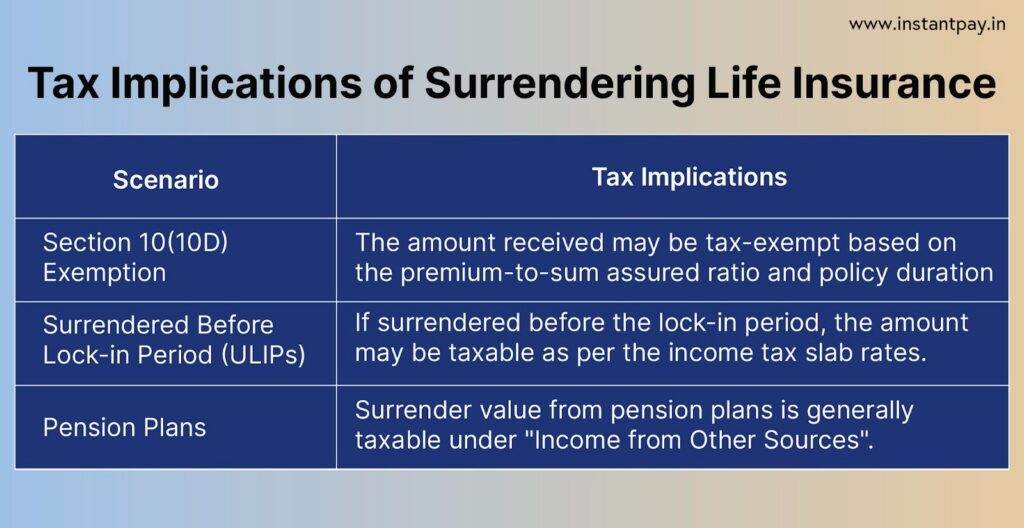
If you are considering giving up your life insurance and are concerned about taxes, it’s best to fully understand all of the tax consequences associated with your life insurance cancellation prior to proceeding. You may be subject to taxes on some forms of life insurance payouts and not others, so it is always a good idea to consult with someone that specializes in taxes or financial planning prior to making any final decisions regarding your policy.
Tax Implications of Surrendering Life Insurance
When is the Right Time to Surrender Your Policy?
When considering terminating your life insurance policy, this can be a very important decision. While terminating can be tempting, it’s important to also consider whether or not this is the right time in your life to do so according to your immediate financial needs as well as your long-lasting financial goals. Here are some of the most common reasons why a policyholder might want to terminate their life insurance policies:
1. Immediate Financial Need
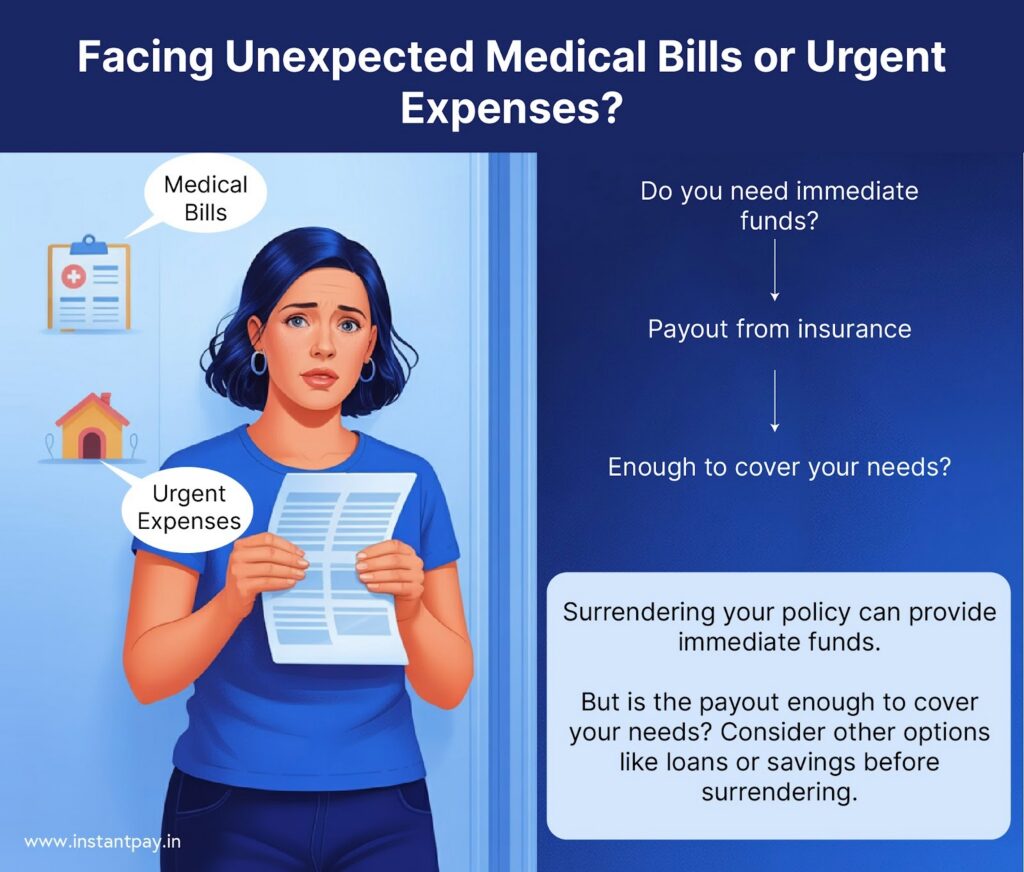
If you are in a financial emergency situation, like needing to pay for medical bills, home repairs, or having lost your job and need cash fast, you may want to consider terminating your life insurance policy to access that cash quickly. For example; if you have already built up a decent cash value in your policy over the years, you could access that to pay for immediate cash needs. Again please keep in mind that if you terminate your policy you could end up receiving a cash payout that is less than what you have already paid in premium.
2. Policy No Longer Matches Revised Financial Goals
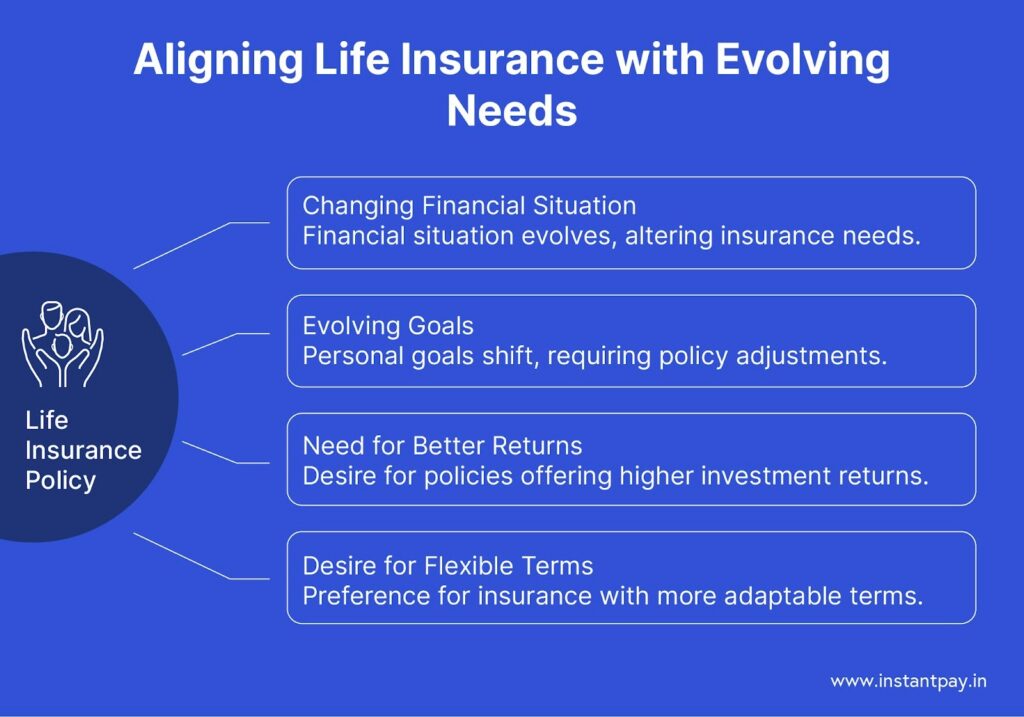
Many things can change over time, including your financial goals. The life insurance policy that was perfect for you when you purchased it, may no longer be a good fit for you. For example; when your children are no longer dependent on you for financial support, you may no longer need such a large amount of life insurance, or you may just want something with better returns or more flexibility. In this case, terminating your life insurance policy and purchasing a new policy that meets your current needs will most likely be in your best financial interests.
3. Better Alternatives Available
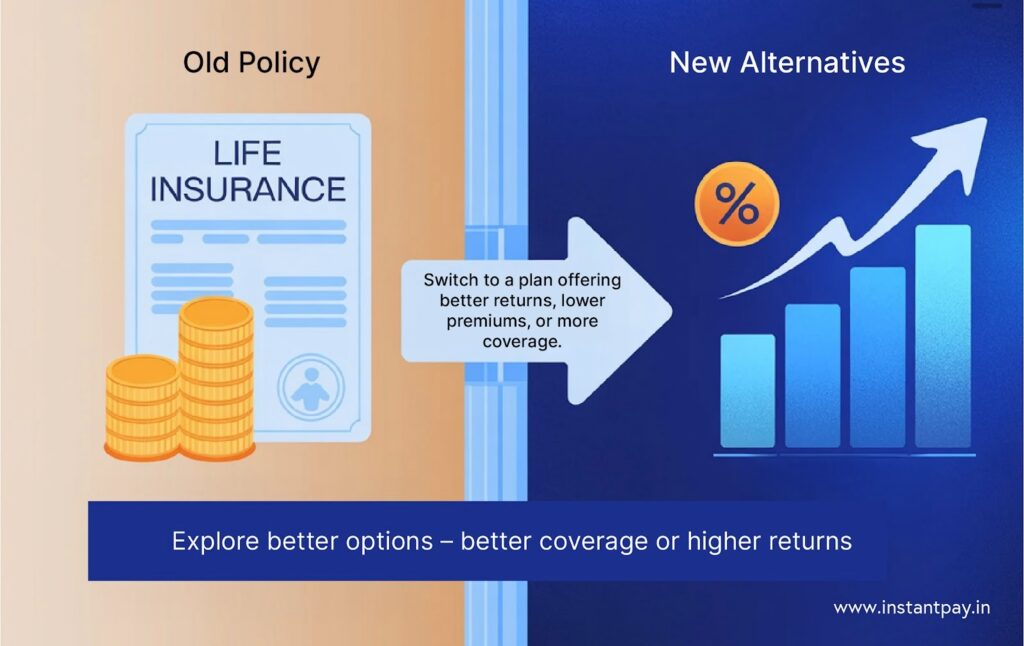
Sometimes, an investment or insurance option may become available that will provide a higher rate of return, offer broader coverage, or have more flexibility for you. If you discover that you have options other than your current life insurance policy that better meet your needs, terminating your life policy may provide you with the opportunity to take advantage of those better options.
What are Alternatives to Surrendering Life Insurance?
Life insurance policies will often provide you with multiple options to help retain coverage as well as help you meet your short-term financial needs before giving up on a policy.
The following are four options which may enable retention of your life insurance policy.
1. Borrowing Against Cash Value
Many permanent policies build cash value over time, which can be accessed as a loan prior to giving away your policy. This option allows the insured to access cash during an emergency without giving up coverage, but any outstanding loans and interest will reduce the overall benefit to your beneficiary.
2. Reduced Paid-Up Insurance
If you no longer wish to pay premiums but want to maintain in-force coverage, you will likely have a reduced paid-up conversion option available to you. This option will decrease both the amount of insurance you’ll receive as well as the amount of premium you’ll need to pay while still maintaining coverage.
3. Converting to Term Insurance
If you no longer need whole life insurance but do still require a level of coverage, you may be able to convert to a term life insurance policy from either your whole life policy or to an endowment policy. This option provides death benefit coverage at a significantly lower premium compared to a whole life insurance policy.
4. Partial Withdrawal
Certain policies allow you access partial percentage of the accumulated cash value upon request without giving up the policy (varies by product). This option provides flexibility and liquidity during time of need while maintaining overall death benefit and related coverage through life insurance policy.
How Do I Claim Surrender Value?
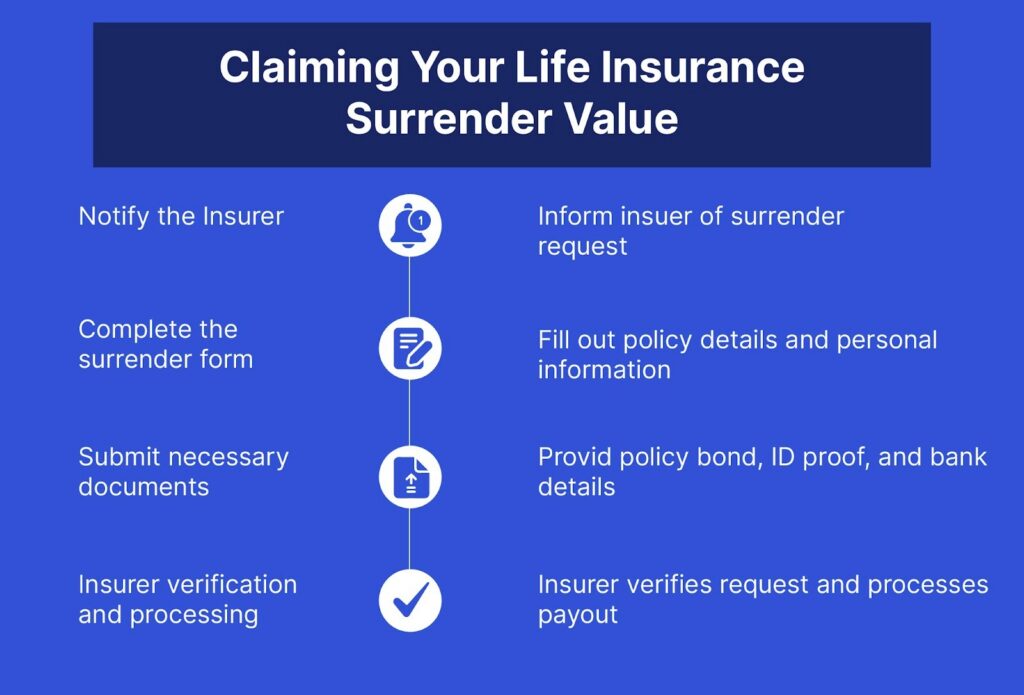
The process of claiming the surrender value of a life insurance policy is fairly simple; however, it is important that you follow the insurer’s guidelines and pay attention to all those details in order to avoid unnecessary delays. Use these steps as a guide to help you claim a surrender value:
1. Notify the Insurer
The first step to claiming the amount you are entitled to when you surrender your policy is to notify your insurance company of your intention to surrender your policy. This can typically be done over the phone by calling customer service or by writing a letter to the insurance company with a request for your policy to be surrendered.
2. Complete the Surrender Form
The insurance company will provide you a surrender form that you must fill out in full. Your surrender form should include basic information regarding your policy, such as your policy number and personal information about you.
3. Submit Necessary Documents
In addition to submitting a completed surrender form to the insurance company, you will also need to submit some required documentation with the completed surrender form. Examples of such documents include
- The original policy bond (or document proving you own the policy).
- Some form of ID (i.e., Aadhaar, PAN card, or passport).
- The details of the bank account where the payment should be made.
4. Insurer Verification and Processing
After the insurance company receives a completed surrender form with all required documentation, the insurance company will conduct an investigation to verify the request; after verification is completed, the insurance company will process the request and send you a check for the surrender value of your policy.
Financial Impact of Surrendering Your Policy
| Pros | Cons |
| Immediate Cash Payout: Receive a lump sum when you surrender the policy. | Loss of Coverage: Surrendering results in losing the life cover and future benefits. |
| Access to Funds: The cancellation payout can help meet immediate financial needs. | Reduced Payout: The amount received might be lower than the premiums paid, especially in the early years. |
| No Ongoing Premiums: Once surrendered, you’re no longer obligated to pay premiums. | Taxable Amount: In some cases, the cancellation value could be taxable, depending on the policy type and conditions. |
| Stop Future Premium Commitments: Stops the need for future premium payments. | Impact on Long-Term Goals: The policy was designed for long-term benefits, and surrendering early may affect your financial planning. |
| Avoid Surrender Charges in Later Years: After a few years, surrender charges reduce significantly. | Missed Bonuses: If you surrender early, you may miss out on accrued bonuses that could be added to the termination value. |
Final Thoughts
The decision to surrender a life insurance policy is very complicated and should not be taken lightly. You need to clearly define/clarify what your current insurance needs are (i.e. any outstanding debt) and what your future need(s) may be prior to making this decision.
When you choose to surrender your life insurance policy, you may receive cash immediately; however, you will lose your life insurance coverage and possibly receive less than the total amount you have paid in premiums for your coverage.
Before surrendering your life insurance policy, you should also look at alternatives such as borrowing against the cash value of your policy or converting your life insurance policy into a reduced-paid-up insurance policy.
If you choose to surrender your life insurance policy, be aware there are tax ramifications to doing so and will affect your long-term financial goals. Therefore, it’s important that you speak with someone who specializes in finance/taxes to determine what the best decision would be for you based on your financial situation.
Some Things To Keep In Mind:
- Look at your financial future; consider whether you will ever need life insurance again;
- Look at other opportunities (example: borrow against your cash value or convert to a reduced paid-up policy).
- Most importantly, look at and understand any tax implications before making any decision. Look for someone who specializes in finance/tax advice.
FAQs
1. How is life insurance surrender value calculated?
The surrender value is calculated based on premiums paid, the policy’s duration, bonuses (if applicable), and surrender charges. The insurer uses a specific formula that varies by policy type and insurer.
2. Which is better, paid-up or surrender value?
A paid-up policy keeps the life cover active at a reduced sum, while surrender value provides a one-time payout. Paid-up policies allow continued coverage, making them more beneficial if you need life insurance, while surrender value offers immediate funds but ends the policy.
3. How much money will I get if I surrender my policy after 3 years?
The amount depends on the premiums paid, accumulated bonuses, and surrender charges. Typically, you will receive less than what you’ve paid in premiums, especially in the early years of the policy.
4. What is the benefit of surrender?
Surrendering provides immediate access to cash, which can be used in times of financial need. It also allows you to discontinue premiums while receiving some amount of the cash value accumulated in the policy.
5. Can I withdraw the cash surrender value?
Yes, if your policy allows it, you can withdraw part of the accumulated cash value without fully surrendering the policy. However, this will reduce your coverage and benefits.
6. How do I claim surrender value?
To claim the surrender value, notify your insurer, complete the surrender form, submit necessary documents (policy bond, ID proof, etc.), and the insurer will process the request and pay the value.
7. What is the formula for surrender cost?
Surrender cost is typically calculated as the total premiums paid minus any applicable surrender charges. It may also include deductions for early termination fees and outstanding loans or interest.
8. What is the difference between sum assured and surrender value?
The sum assured is the amount guaranteed to be paid out in case of death, while the surrender value is the amount you receive if you cancel the policy before its maturity, which is typically lower than the sum assured.
9. Is it good to surrender a life insurance policy?
Surrendering can be beneficial in urgent financial situations, but it often results in lower returns than expected. It’s essential to evaluate alternative options before deciding to surrender.
10. Is surrender taxable?
Yes, the surrender value may be taxable if it exceeds the premiums paid or if the policy does not meet certain exemptions under Section 10(10D) of the Income Tax Act. Consult a tax professional for personalized advice.