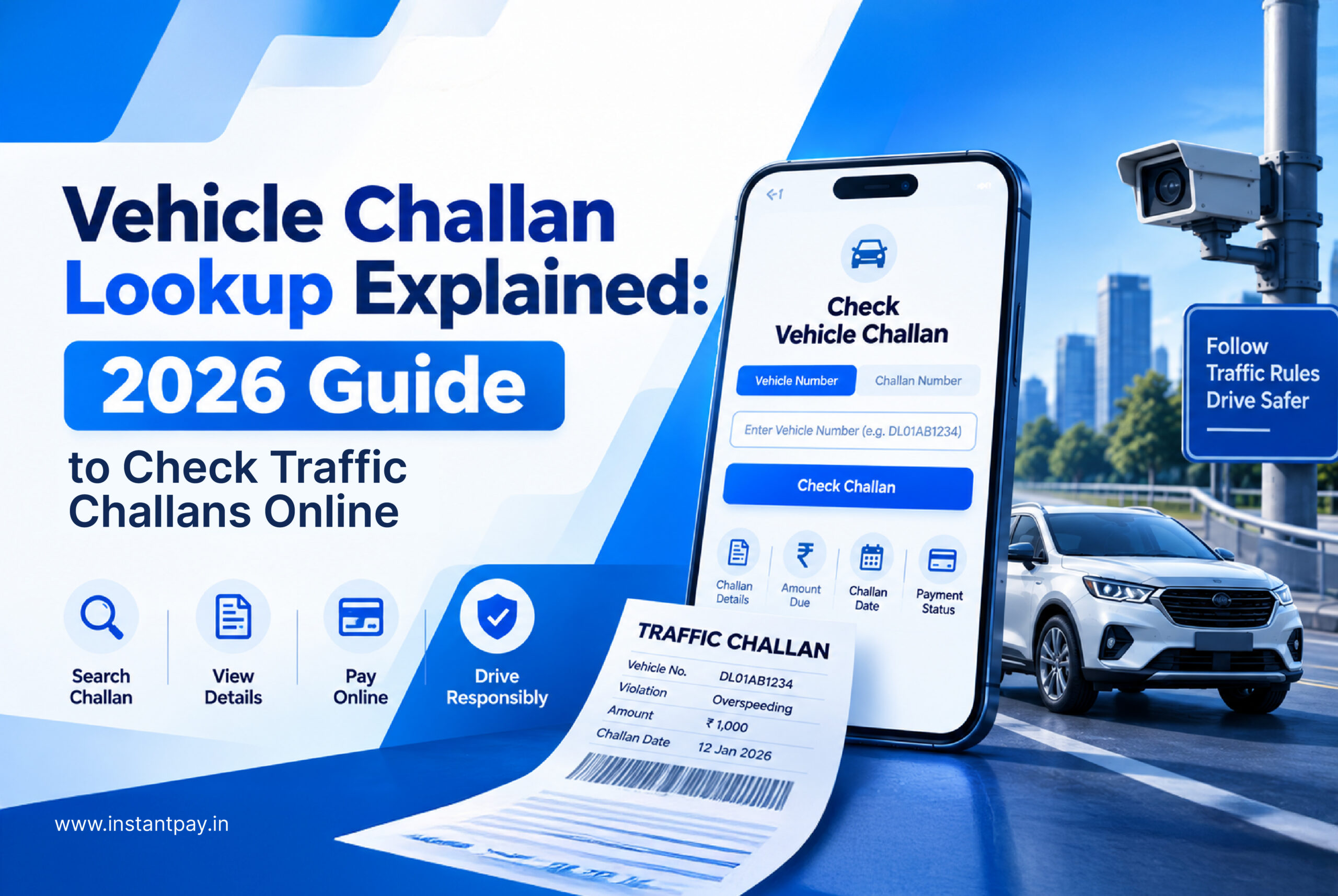
Being a vehicle owner means keeping track of its status with regard to compliance issues like pending traffic challans. A vehicle challan lookup is the ideal tool to find out if the vehicle has any unpaid e-challans, reasons for issuing them, amounts charged, and their payment status based on the registration number.
With the Ministry of Road Transport and Highways (PIB December 2024) announcing that there were more than 18.24 crore e-challans issued in 31 states and union territories between 2019 and 2023, generating total revenue of ?12,632 crore, it’s obvious that with the increasing prevalence of digital traffic enforcement, it is essential to check for the vehicle challan online as part of responsible vehicle ownership.
This guide will discuss what vehicle challan lookup entails, how to do a challan verification online, the implications of your results, and what one would face in case a challan has not been settled yet.
What is Vehicle Challan Lookup?
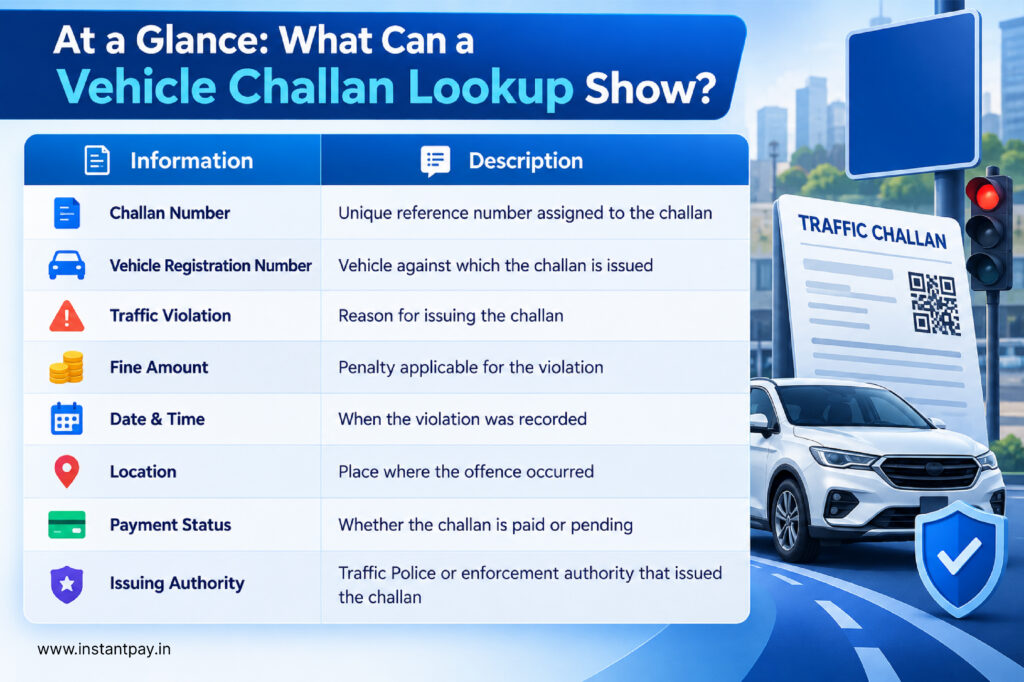
The vehicle challan lookup is a process that helps to determine whether a vehicle has any traffic charges pending against it. Through the vehicle registration number, you can learn about pending or paid challans, traffic violations, the total amount of fines, challan date, location, and payment status.
A traffic challan or an e-Challan is basically a digital notice issued by the traffic department when a car goes against the Motor Vehicles Act, 1988, or against the rules of traffic in a particular state. Nowadays, most of the traffic violation charges are sent to the vehicle owner electronically instead of sending a paper copy of the challan.
The vehicle challan lookup is beneficial for the existing owners of a vehicle as well as for people buying a second-hand vehicle. The benefit of checking the vehicle challan history beforehand is to know if there are any pending fines or fines pending due to any violation of any traffic rule.
Most of the online services for checking the challan are available through the Parivahan eChallan and the traffic police’s state-specific services. Depending on the regional authority, the information can be collected using the vehicle registration number, challan number, or driving license number.
Quick Note: The VAHAN platform is the Ministry of Road Transport & Highways’ national vehicle registry that maintains vehicle registration records. While VAHAN and the Parivahan eChallan system are part of the same digital ecosystem, vehicle registration details and traffic challan records are accessed through their respective official services.
Why Should You Check Your Vehicle Challan Regularly?
Checking your vehicle’s challan regularly is crucial. It is not only to ensure you pay the penalty, but also to ensure that your vehicle abides by the law and to protect you from potential problems later. E-challans are genuinely issued electronically, and unless owners check challans regularly, they might not even know about the traffic offense until they check the challan status.
As listed below are some cases where vehicle challan lookup proves useful:
Keep Track of Outstanding Challans
With a few clicks, it is possible to check any outstanding challans against your vehicle. It is important to clear the challan payments as early as possible to prevent any complications arising out of any pending traffic violations.
Prevent Sudden Surprises
Be it a renewal of your vehicle insurance, selling your vehicle, or checking your vehicle records, it is always prudent to check the challan status beforehand to avoid any surprises.
Check a Used Vehicle Before Purchase
In cases where you are buying a used vehicle, checking the challan history adds another dimension to your analysis of possible traffic violations.
Ensure Higher Compliance of Your Vehicle
By regularly verifying your challans, you can keep yourself updated about the compliance standing of your vehicle. While documents such as RC, insurance, and PUC certificate are relevant, tracking your traffic challans is the easiest way to ensure that you are an informed and responsible vehicle owner.
Good Practice: You should take the habit of checking your vehicle’s challans every few months or before major events like buying, selling, or transferring vehicle ownership.
How to Check Vehicle Challan Online Using Registration Number?
Verifying the status of your vehicle challan online is easy and can be done within a matter of minutes. Almost all vehicle owners can access their challan information using their vehicle registration number by logging on to the official eChallan portal—Parivahan—or their respective state traffic police website.
Method 1: Check Vehicle Challan on the Parivahan eChallan Portal
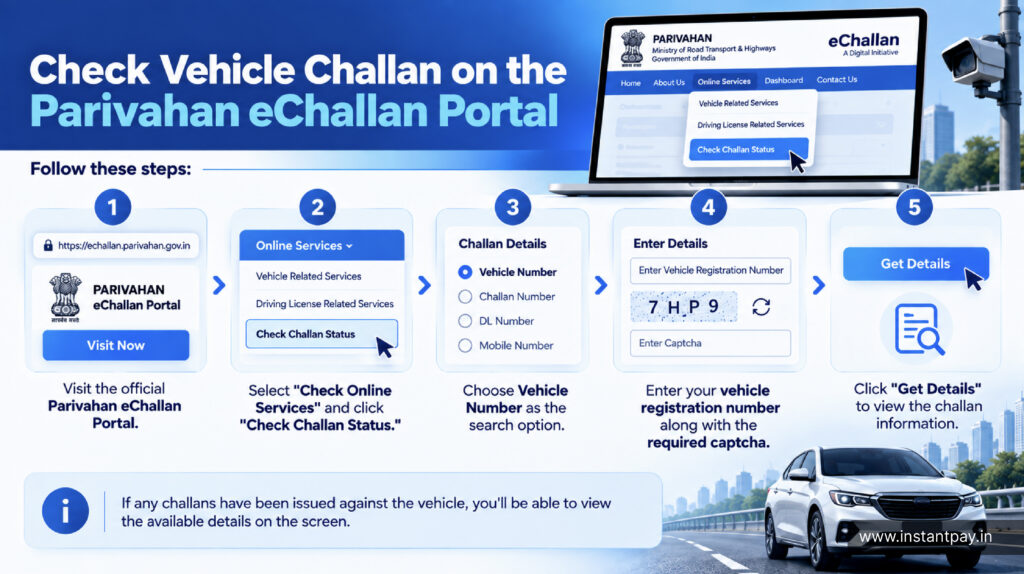
Follow these steps:
- Visit the official Parivahan eChallan Portal.
- Select “Check Online Services” and click “Check Challan Status.”
- Choose Vehicle Number as the search option.
- Enter your vehicle registration number along with the required captcha.
- Click “Get Details” to view the challan information.
If any challans have been issued against the vehicle, you’ll be able to view the available details on the screen.
Method 2: Check Through Your State Traffic Police Website
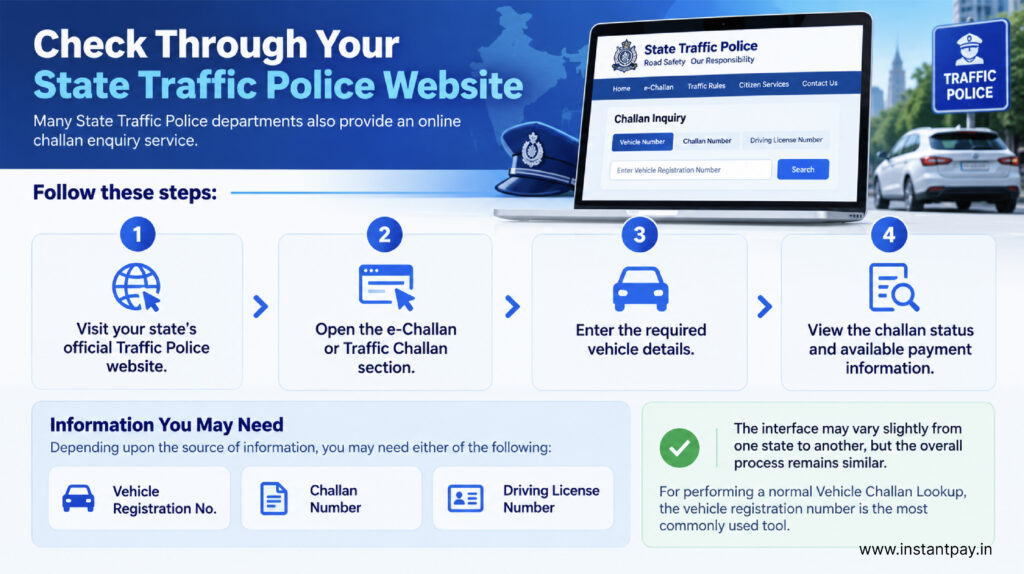
Many state traffic police departments also support Vehicle Challan Lookup, where you can perform challan verificationand check payment status online.
The process is generally similar:
- Visit your state’s official Traffic Police website.
- Open the e-Challan or Traffic Challan section.
- Enter the required vehicle details.
- View the challan status and available payment information.
The interface may vary slightly from one state to another, but the overall process remains similar.
What information do you need?
Depending upon the source of information, you may need either of the following:
- Vehicle Registration No.
- Challan Number
- Driving License Number
For performing a normal vehicle challan lookup, the vehicle registration number is the most commonly used tool.
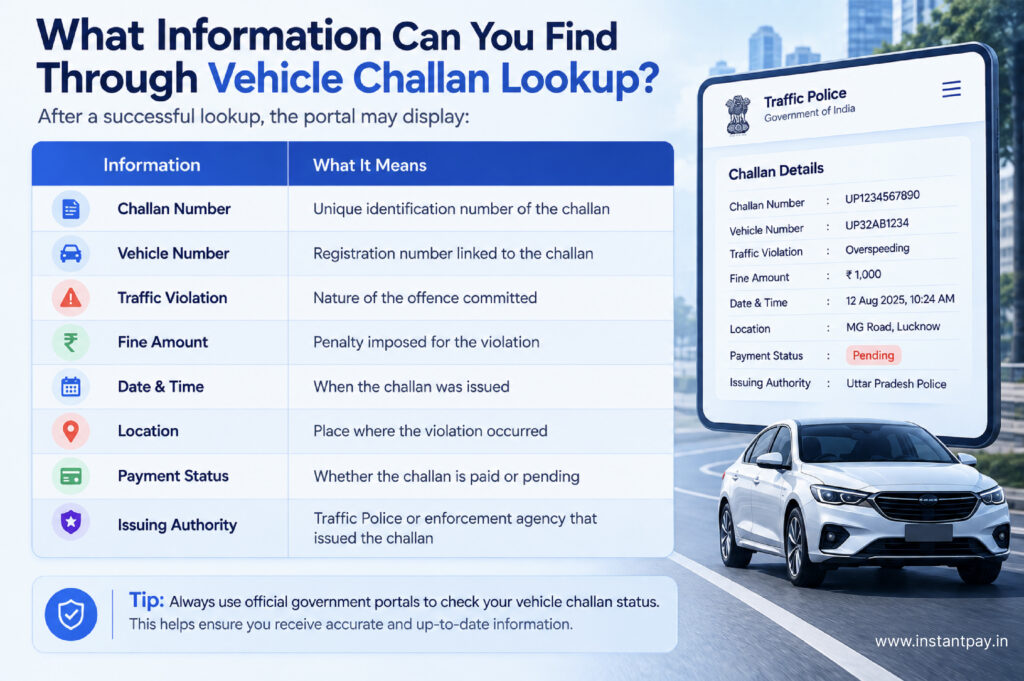
Method 3: Search Using Your Challan or Driving License Number
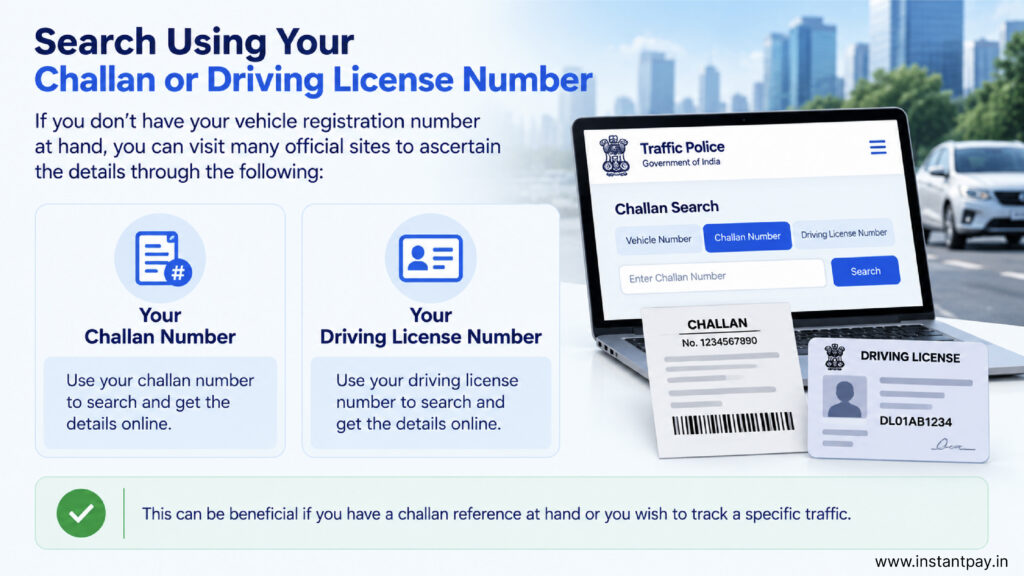
If you don’t have your vehicle registration number at hand, you can still perform a Vehicle Challan Lookup and complete challan verification on many official portals using:
- Your Challan Number
- Your Driving License Number
This can be beneficial if you have a challan reference at hand or you wish to track a specific traffic.
What Happens When a Vehicle Challan Is Not Paid?
Should your vehicle challan lookup show a pending challan, it is advisable to pay it as soon as possible through the official channels. Though the repercussions change depending on the kind of violation and the prevailing rules of the state, failure to pay the challan will lead to complications.
Some of the ways being affected due to the pending traffic challan include the following:
Further Penalties
In certain cases, delays in resolving a traffic challan may attract further penalties or lawsuits depending on the rules and the responsible authorities involved.
Legal Action
In certain violations, authorities could file a lawsuit if the challan is not resolved.
Delays Related to Vehicle Processing
If payments of penalty fines are not received, it could obstruct the process of transferring ownership of the vehicle or carrying out any other business in terms of compliance that requires checking of any overdue amounts.
Difficulties in Keeping Track of All Pending Challans
If one challan is ignored, it could lead to overlooking other challans. Challan verification from time to time can help keep track of the outstanding amounts and resolve them before they are practically overdue.
Good Habit: If you come across a pending challan when you do the Vehicle Challan Lookup, make sure you verify its details and proceed to make the payment through the official government portal, if necessary.
How to Keep Challans at Bay?
There are a few simple practices that can help you avoid any fines and keep your records updated at the same time:
- Keep checking the status of your vehicle challan regularly.
- Follow traffic rules and road safety measures.
- Resolve the pending challans by using the official channels.
- Check the challan status of the vehicle before making the purchase or sale.
Common Traffic Violations That Lead to E-Challans
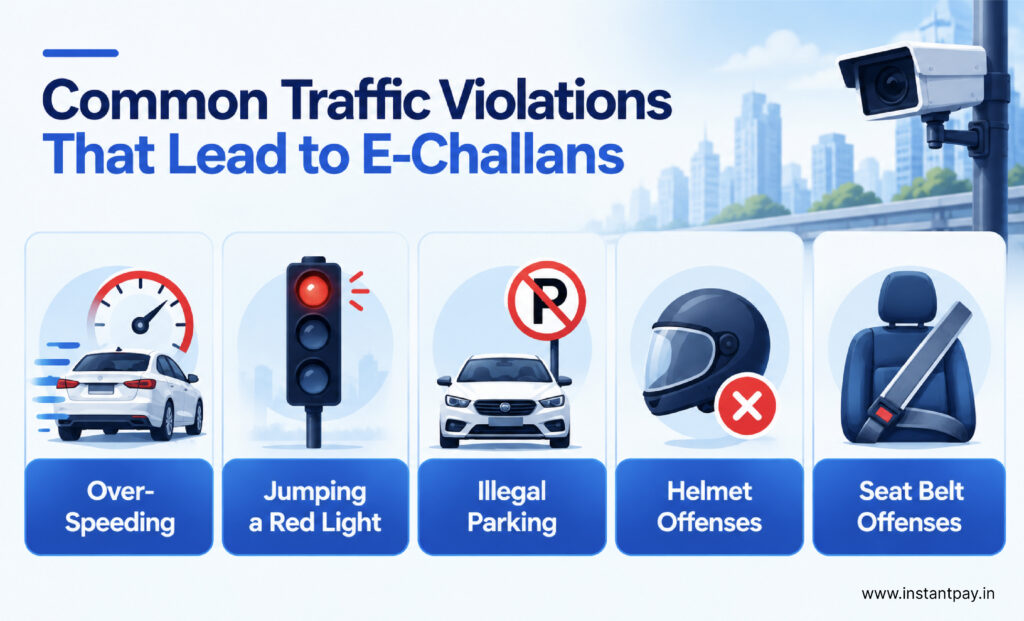
Most of the e-challans are sent for minor violations that can definitely be avoided if one adheres to basic principles of road safety. Knowing these offenses can make one a more responsible driver and help reduce the chances of getting a traffic challan.
Some of the common reasons for which the traffic authorities send e-challans are:
Over-Speeding
Over-speeding is one of the most common traffic violations recorded. Over-speeding can be calculated using speed-monitoring cameras and automated enforcement systems.
Jumping a Red Light
Jumping a traffic signal after it has changed to red is another common offense. Many urban intersections have surveillance cameras monitoring traffic signal violations, which in turn enable electronic issuance of challans.
Illegal Parking
If a vehicle is parked in a no-parking zone or blocking traffic, the local law enforcement agency might issue a traffic challan.
Helmet Offenses
Riding a two-wheeler without wearing a helmet or carrying a pillion rider without a helmet can lead to a traffic challan under the relevant provisions of the Motor Vehicles Act and state traffic regulations.
Seat Belt Offenses
Driving without wearing a seat belt, or being a passenger in a vehicle that requires the use of seat belts, may even lead to an e-mail challan. This is why observing the rules regarding seat belt use not only saves you from being fined but will also contribute to the safety of your passengers.
Did you know?
According to the Motor Vehicles Act, 1988, particular traffic violations are provided with respective rules. For instance, Section 194D concerns penalties for non-wearing of seat belts or headgear where applicable. Fines may vary according to the latest amendments.
Final Thought
The Vehicle Challan Lookup is a fast and easy method of monitoring your vehicle’s traffic challans, keeping track of any violation, and being aware of pending fines. It does not matter if you own the vehicle, want to buy a used vehicle, or are simply checking the compliance records. It will always be helpful to check your challan status from time to time to avoid complications and be up to date with official records.
Make it a point to monitor your vehicle’s challan status before getting your insurance renewed, selling your vehicle, or embarking on a long trip.
FAQs
1. Is it possible to access a vehicle challan using only the registration number?
Yes. The Parivahan eChallan site and several State Traffic Police websites allow the vehicle challan to be checked by its registration number. Some sites even give the option to check by challan number or driving license number.
2. Is it free to use Vehicle Challan Lookup?
Yes. Checking the vehicle challan status through Government portals is generally free. However, if the vehicle challan is pending, payment needs to be made through an authorized payment channel.
3. What is the time taken for the issuance of a new challan?
It can vary based on the issuer and the system update cycle. In many cases, the challans are posted soon after they are issued, but sometimes records can take longer to show up on the portal.
4. Am I able to make the traffic fine payment online after checking the status of the challan?
Yes. If the portal mentions that there is a pending challan, then the payment of the fine can be made online via the official payment process of the respective portal.
5. Is it possible to check for challans in a vehicle that belongs to a different state?
Yes, it is possible to check for challans in a vehicle from another state using the Parivahan eChallan portal. You can also check the relevant state traffic police site, if applicable.
6. Which information is required to check the challan of a vehicle?
The most commonly sought detail for this purpose is the vehicle registration number. A few official websites allow the search to be done through the challan number or the driver’s license number.
7. Can another person check the status of my vehicle’s challan?
With the necessary vehicle information, anyone can check the status of a vehicle’s challan on public portals of the government. However, it is always helpful to give and use vehicle information responsibly.
8. Does each traffic violation lead to the issuance of an e-challan?
Not always, since the issuance of an e-challan depends on the traffic enforcement sector, the type of violation in question, and the procedures adopted by the traffic authority in question.