The financial landscape is changing rapidly due to the advancement of technology combined with an increase in consumer expectations for more personalised experiences when dealing with banks. Banking-as-a-Service (BaaS) is at the centre of that evolution by providing software developers outside of traditional banking institutions (typically Fintechs) with the ability to access, integrate, and deliver great services based upon the technology and licensed financial institution’s infrastructure.
As a result, the joining of technology companies and legacy banks has formed a new ecosphere that has created tremendous opportunity for consumers and the businesses they serve through increased customisation, efficiency and accessibility of bank-related services.
In this post we will detail how BaaS is changing the traditional Fintech landscape, the organisations that are leading the charge, the potential benefits and disadvantages it presents, and most importantly, what it means for consumers, businesses and legacy financial institutions in the process.
What is Banking-as-a-Service (BaaS)?
Essentially, Banking-as-a-Service is a system that allows people who aren’t bankers to be able to provide banking products and/or services to customers via a fully compliant bank’s infrastructure. The banking products and services businesses may provide customers via embedded banking include account creation, payment processing, loan origination, issuing of financial cards, etc. Until now, banks were the only entities able to provide these types of services because banks were the only entities with the regulatory licenses required to provide such products/services; however, the rise of API banking has enabled many other businesses (both fintech and non-fintech) have access to and an opportunity to integrate banking capabilities within businesses in a more unified manner.
Businesses using API Banking can build their own customer-facing banking product configurations with custom specifications and provide new custom offerings for their customers that benefit their needs. Additionally, API Banking provides consumers with more options for their financial needs, more control over their finances and allows consumers to create their own banking experience very easily.
How Does BaaS Work?

Banking-as-a-Service enables multiple industries and organisations to integrate banking functions into their own platforms and products. Through embedded banking, fintechs, startups, and even companies without a traditional banking background can provide banking services to their customers by partnering with a bank that holds a valid license to operate legally as a financial institution. Here’s a high-level overview of how banking API works:
1. Partner with a Licensed Bank
The first part of the API Banking ecosystem begins when a fintech/other third-party company partners with an appropriately licensed bank to provide regulated financial services to their customers. The licensed partner provides the necessary compliance, regulatory guidance and risk management required to operate in the financial services industry as part of a white label banking relationship.
2. APIs Provide Access
Once a fintech and its bank partner complete their partnership, the bank will begin providing its regulated financial products to the fintech via an API. An API is an intermediary layer between a provider (e.g., bank) and a consumer (e.g., fintech) that shares secured digital access to the resources needed to develop financial services (opening bank accounts, accepting payments, providing credit, etc.) without having to build those financial services from scratch.
3. Incorporating Financial Services
Through the use of APIs, a business is able to incorporate a bank’s services into its software project to provide a streamlined user experience. For example, an app might allow users to open a savings account, send money, or apply for a loan without leaving the application they are using. The consumers will see the business-branded interface when using the app, but the bank will provide the back-end for core banking functions.
4. Ensuring Compliance and Security
The bank holding the appropriate licenses will have the sole legal and ethical responsibility to ensure compliance with all applicable financial regulations, provide protection for customer data, and maintain security standards as required by law. Therefore, a FinTech will be able to concentrate on acquiring and servicing customers knowing the compliance and technical components are in the care of a trusted institution.
By partnering with banks through streamlined relationships, FinTechs will be able to provide services similar to those offered by banks without concern over licensing and infrastructure.
Why Is BaaS Important?
The emergence of Banking-as-a-Service has completely altered the way financial services are delivered throughout the world. This is especially true for Fintech firms that are working to disrupt traditional banking systems. Here’s why banking API holds such significance in today’s market:
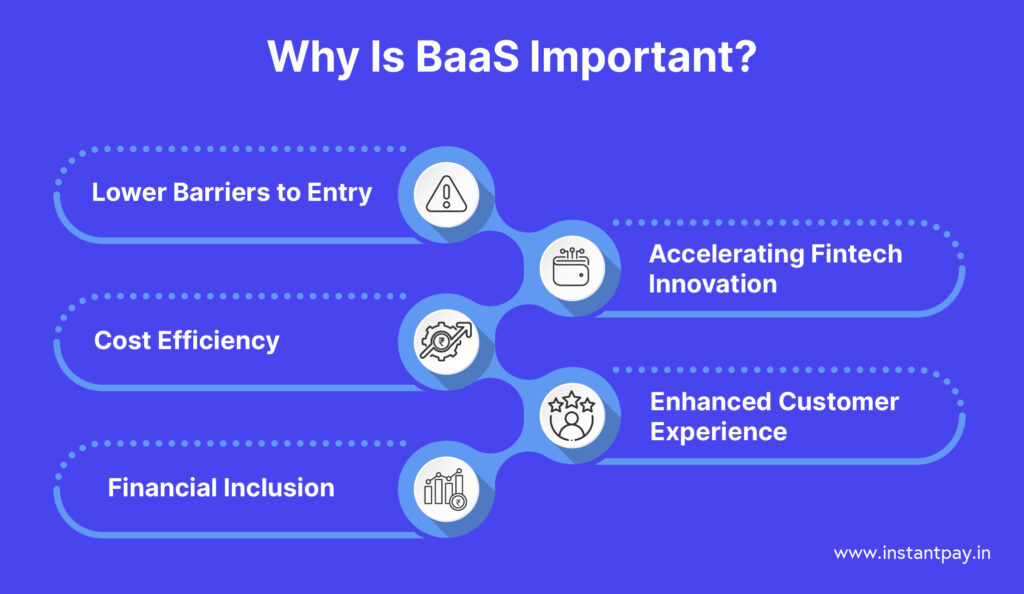
Decreased Barriers to Entering the Industry
In the past, in order for an entity to provide banking products or services, they would need significant funds to pay for the time it takes to establish a licensed bank. With the introduction of digital banking solutions, even non-financial companies can provide banking services without going through the cumbersome process of navigating all of the banking regulations. This has significantly decreased the barrier to entry and allowed a lot more firms to compete in the financial services market.
Increased Speed of Innovation by Fintechs
By using banking infrastructure platforms, Fintechs have been able to focus on building great customer experiences as opposed to spending time and money building the underlying infrastructure required to do so. Embedded banking has allowed for the creation of new products such as digital wallets or instant payment options. Overall, banking API has allowed for a tremendous acceleration of growth within Fintech, resulting in a faster pace of innovation and a greater variety of customised service offerings to both consumers and businesses.
Cost Savings
Building a traditional bank’s banking infrastructure from the ground up takes a lot of time and costs a lot of money. The banking API provides a more economical and faster alternative as it provides pre-built banking infrastructure that organisations can quickly connect to. With a digital banking solution, organisations are able to bring their financial product(s) to market in a fraction of the time and at a fraction of the cost than if they had built their own banking infrastructure.
Enhanced Customer Experience
By offering banking services within established platforms, BaaS allows businesses to create seamless and integrated user experiences within their applications. Users will be able to manage their finances through a ride-hailing app, an e-commerce website or financial services app without ever leaving these applications they are already using, which increases both customer satisfaction and customer engagement.
Increased Financial Inclusion
Banking API is important for expanding financial inclusion in underserved areas. Fintechs that utilise digital solutions can offer a digital-only banking experience accessible to a greater number of people who would not have otherwise had access to a traditional bank account.
Fintech Infrastructure is changing the way we think about the future of banking and will provide businesses with the tools they need to develop and grow quickly while allowing traditional banks to generate new revenues by partnering with fintechs.
The Role of APIs in BaaS
The core of the Banking-as-a-Service Model revolves around the functionality of Application Programming Interfaces (APIs). APIs allow different software systems to communicate with each other seamlessly, giving FinTech companies access to the core infrastructure of licensed financial institutions. Without the use of APIs, these models would not be feasible.
Here’s a closer look at the crucial role APIs play in the BaaS ecosystem:

| Enabling Seamless Integration: APIs allow third-party companies to integrate banking services into their platforms without having to develop these capabilities from scratch. For example, a fintech can use APIs provided by a BaaS platform to offer services such as account creation, fund transfers, loan applications, and even compliance checks—all through a single interface. This seamless integration is what enables non-banking companies to act as financial service providers. |
| Access to Core Banking Functions Through APIs, companies gain access to the full suite of core banking functionalities offered by their partner banks. This includes everything from payment gateways, credit assessments, and transaction processing to compliance and fraud detection systems. With APIs, companies can offer these services to their customers under their own brand, creating a fully embedded banking experience. |

| Real-Time Data Sharing APIs facilitate real-time data sharing between fintechs and banks, ensuring that customers receive up-to-date information regarding their accounts, transactions, and balances. For example, a digital wallet using BaaS APIs can instantly show users their available funds after a transaction, creating a frictionless banking experience. |

| Customisation and Scalability APIs allow fintechs to customise the services they offer based on their target audience’s needs. Whether it’s providing micro-lending services or offering instant payments, companies can pick and choose the banking services they want to integrate. Furthermore, as a company scales, APIs make it easy to add more services or expand operations into new markets without having to rebuild the entire infrastructure. |

| Regulatory Compliance: One of the key challenges in the financial services industry is meeting regulatory requirements. BaaS platforms use APIs to help fintechs maintain regulatory compliance by embedding security protocols, identity verification, and anti-money laundering checks into the system. This means that even though a fintech might be offering financial services, the underlying bank is handling the compliance side, making it easier for fintechs to meet legal and regulatory standards. |

| Security and Encryption Security is paramount in the financial industry, and APIs play a critical role in ensuring the safety of user data. APIs used in BaaS are built with advanced security protocols like encryption and tokenization to protect sensitive financial information, ensuring that data remains secure as it moves between systems. This allows companies to offer banking services without compromising on security. |
Fintech infrastructure has given non-bank and fintech companies a framework to modify, expand, and build their own offerings within the banking space, making it simple, fast, and affordable to deliver a wide range of financial solutions. APIs have become the core of FinTech innovation and enable enterprises to deliver rapid innovation while giving consumers choices and quality service.
Real-World Use Cases of Banking-as-a-Service
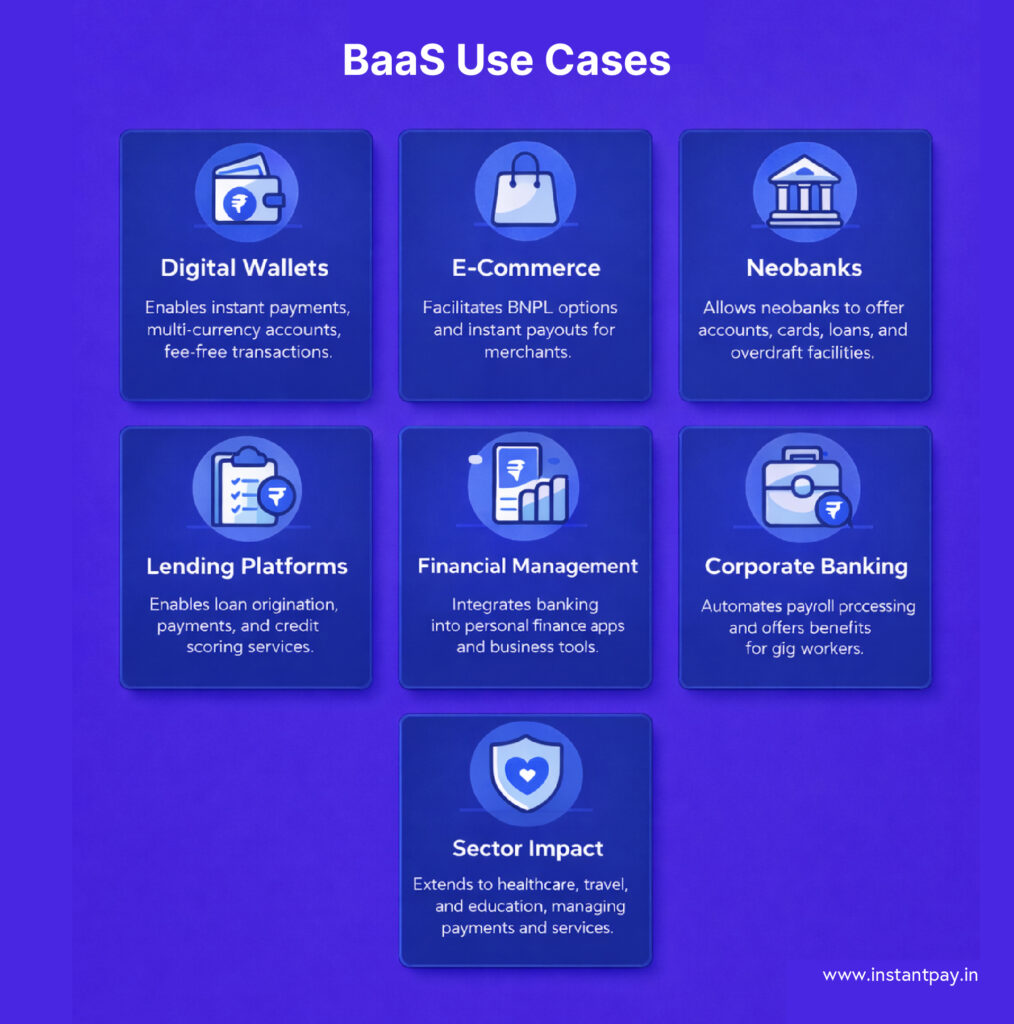
The digital banking model has moved rapidly from a niche to now be one of the biggest forces driving Fintech globally; numerous companies today are able to create exciting new financial products by leveraging banking API.
1) Digital Wallets & Payments
Many Fintech companies have taken advantage of BaaS by providing their customers with access to digital wallets. These wallets offer modern convenience on top of traditional banking services and are made possible by Banking API partners. Through these partnerships, fintech companies can provide:
- Instant Payments – Customers can send/receive money in real-time
- Multi-Currency Accounts – Customers can hold/transfer/convert funds in multiple currencies without needing multiple bank accounts
- Fee-Free Transactions – By partnering with a BaaS provider, companies can save on banking fees and provide those savings back to their customers
2) Embedded Finance within the E-Commerce Industry
E-Commerce has allowed the embedding of Financial Services through Banking-as-a-Service within e-commerce platforms via their ecosystems. Through API banking, merchants can now provide financing options, embedded payment solutions and rewards programs as well, without having to establish a direct relationship with a bank. A few examples of this are:
Buy Now, Pay Later (BNPL): Merchants that use embedded banking can provide the Customer an option to pay instalments more simply during the e-commerce checkout.
Instant Payouts to Merchants: Using platforms such as Instantpay will help merchants acquire funds faster after making a sale, as they are directly integrated into a digital banking solution.
3) Neobanks
Neobanks (also known as Digital-Only Banks) are the most visible expression of BaaS. Neobanks provide banking services, but aren’t actual banks themselves. As a result, they can provide the following services using BaaS platforms:
- Automated account opening, money management and debit card issuance for end users completed in an automated digital environment.
- Offering credit to end users by leveraging a banking infrastructure platform to offer loans or overdraft facilities, while not having to hold a banking license.
Using embedded banking allows Neobanks to deliver a 21st-century banking experience focused on speed, convenience and transparency while attracting millions of customers from all over the world.
4) Peer-to-Peer Loan Platforms
The rapid expansion of peer-to-peer loan and alternative finance platforms has been driven by Banking as a Service. The use of these models by companies is creating new ways to provide services relating to loan origination, payments, and credit analysis. BaaS enables peer-to-peer lending platforms to:
- Facilitate loan transactions between lenders and borrowers without being a lending source themselves.
- Automate both credit evaluations and loan disbursements through their existing partnerships with traditional banks.
By leveraging BaaS offerings, these companies will have the ability to focus their efforts on customer acquisition, risk management, and user experience while relying on the BaaS provider to handle banking activities.
5) Financial Management Applications
Businesses providing financial management solutions may also leverage BaaS to provide integrated banking capabilities to their customers directly from their platforms. Examples include:
- Using BaaS by personal finance applications, whereby the user can link their bank account(s) so they can monitor their spending and budgeting without having to leave the application.
- Integrating banking and payment capabilities with small business financial management tools, allowing businesses to bill customers, receive payments, and manage payroll with seamless operations.
The use of BaaS provides these companies with the ability to utilize banking infrastructure without having to assume the expense of funding, developing or maintaining banking operations.
6) Corporate Banking and Payroll
Corporate banking and payroll management, especially for freelancers and gig workers, also expand with the help of BaaS. Instantly pay out gig workers by automating payroll processing.
Provide flexible benefits administration (such as retirement accounts or health savings accounts) integrated into the payroll platform.
By providing banking services in a single seamless solution, BaaS provides greater affordability and convenience to employers and employees who participate in the gig economy.
7) Impact of BaaS Across Market Verticals
BaaS goes far beyond financial services; it has application across multiple industries including:
- Health Care – BaaS is used to process payments and claims for both patients and their providers.
- Travel – Travel applications using BaaS provide instant payment solutions for cancellations and refund requests.
- Education – Education institutions are using BaaS technologies for tuition management and student loan processing.
Challenges and Considerations in Implementing BaaS
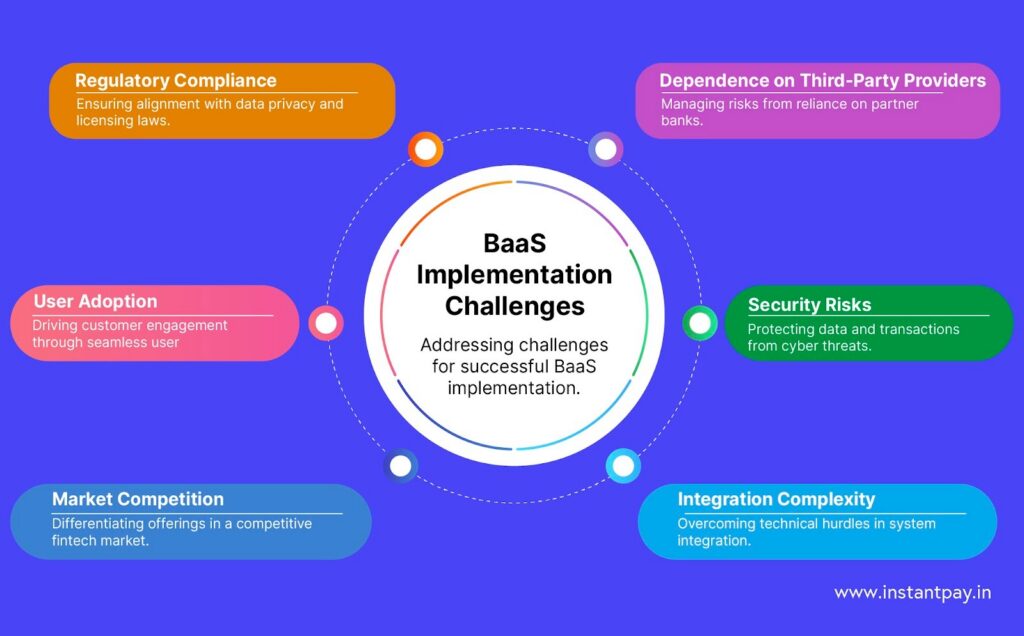
Successfully integrating and operating within the BaaS ecosystem means you must successfully navigate all of the challenges associated with BaaS and understand the following points briefly:
1. Regulatory Compliance
Although the partner bank will handle the regulatory compliance aspects, the FinTech company must ensure that its business operates in accordance with all of the applicable regulatory requirements. Below are several of the most important regulatory considerations for FinTech businesses that will provide BaaS solutions.
- Data Privacy: Ensuring that you are compliant with applicable data privacy regulations (e.g. GDPR and CCPA) is particularly critical when a Fintech business collects and/or maintains an individual’s sensitive personal information.
- Licensing Requirements: FinTech businesses may not be in compliance with the licensing requirements that are established by the applicable governmental agencies in the relevant jurisdictions to which they are providing services, especially if a FinTech business operates or plans to expand to jurisdictions outside of its home country.
- Anti-Money Laundering (AML)/Know Your Customer (KYC): AML and KYC processes must be implemented and maintained to help ensure that FinTech businesses are processing legitimate transactions and are not subject to fraud.
2. Security Issues
Integrating financial services using APIs poses numerous security threats for businesses. To protect users’ data and the integrity of transactions, security should be a top concern. Major security risks include:
- Data Breaches: Businesses need to put strong security measures in place to protect sensitive financial customer information in today’s world where cyber attacks are rising substantially.
- Fraud Detection: Businesses also have to be using an effective fraud detection system to identify and stop fraudulent activities – especially when it is done in real time.
- Secure API Management: Lastly, businesses must have their APIs well-managed and secured to reduce the chance of unauthorized access and data leakage.
3. Dependence on Third Parties
Partnerships with licensed banks to deliver Banking-as-a-Service (BaaS) are advantageous to the fintechs involved, but they also create some level of obligation on third party vendors. Some of the potential risks are:
- Reliability of Service: Should a bank partner experience an outage or service disruption, this will inhibit a fintech’s ability to provide its customers with uninterrupted access to their services.
- Quality of Service: The customers must receive quality service from companies to maintain their customer satisfaction level and that satisfaction can be harmed if the bank does not provide consistent quality.
4. Integration Complexity
Integrating BaaS with pre-existing systems is difficult and often requires major amounts of tech resources. You also need to consider:
- Technical Expertise – Organizations should expect to have to spend money on capable devs and engineers to support the development and continuing operation of BaaS solutions in an effective manner.
- Legacy Systems – Companies that have legacy systems will have even more difficulty integrating BaaS into their current tech (because they will probably have to upgrade or replace existing technology).
- Ongoing Maintenance – Businesses need to maintain and monitor their integrations so that they work correctly and stay within requirements as laws change over time.
5. Market Competition
The competition continues to increase in the marketplace, creating increased competition among the new fintechs that are created. You need to:
- Differentiate Offerings – Businesses must determine what makes their product unique (USP) to stand out in a crowded market and continue to innovate to stay ahead of the competition, gaining current and future customers alike.
- Establish Trust – Establishing trust with your customer is very important in the financial services industry. Providing customer service as agreed upon will ensure that you maintain credibility and provide value to the customer.
6. User Adoption
The success of BaaS relies on user adoption. Companies will need to consider how well they provide:
- User Experience: Creating a seamless and easy-to-navigate user experience will ultimately drive customer engagement and satisfaction.
- Customer Education: Developing educational resources to assist customers in understanding and utilizing these financial services may be an expense for companies.
- Feedback Channels: Incorporating ways for customers to provide feedback allows companies to enhance the BaaS product and better understand their customer base.
As companies address the issues outlined above, developing a strategy to implement BaaS is crucial to being able to take advantage of the benefits of this technology while mitigating potential risks associated with doing so.
The Future of BaaS: Trends and Predictions
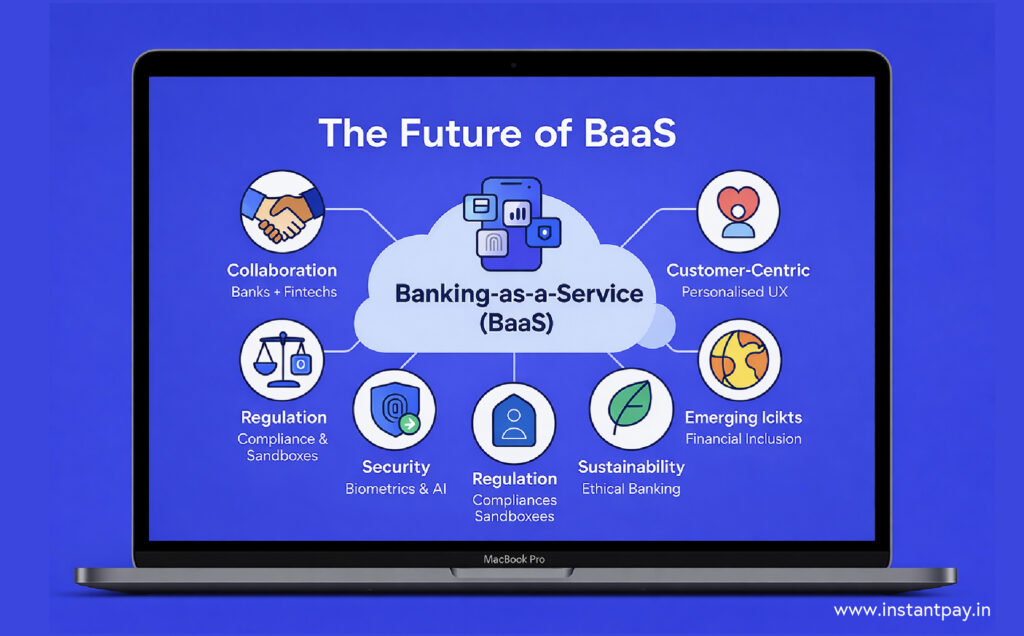
The BaaS (Banking-as-a-Service) ecosystem is evolving rapidly due to the rapid advancements in technology, changing consumer expectations and the growing fintech competition. Moving forward there are some emerging trends and predictions that are shaping the future of BaaS and its impact on financial services:
1. Greater collaboration between banks and fintechs
The future will see far more collaboration between traditional banks and fintechs as both entities will recognize a need to work together in order to provide comprehensive solutions for their customers.
This collaboration can take place in several ways, including:
- Partnerships and Alliances: Banks will increasingly seek to partner with fintechs to improve their services and reach new customer segments, providing benefits to both partners.
- Shared Innovation Labs: Financial Services companies may establish innovation labs that combine the expertise of banks with the technological innovation of the fintech industry to develop innovative products and services.
2. Rise of Super Apps
More super apps will likely emerge that combine banking, payment processing, investment, and insurance services, as well as lifestyle solutions into one application. The banking-as-a-service (BaaS) model will be essential in integrating these service types to allow businesses to:
- Establish All-in-One Solutions – By utilizing a BaaS infrastructure, businesses can create super applications that allow customers to perform all their required financial transactions within the same user interface.
- Improve Customer Engagement – Super applications will provide businesses with enhanced opportunities to engage their customers by delivering highly personalized, financially-related solutions through the aggregation of continually analyzing user behavior and preferences.
3. Customer-Centric Solutions
The battle for customers will continue to escalate, resulting in fintechs increasingly establishing customer-driven solutions that emphasize user experience. The introduction of BaaS will facilitate the quick development and delivery of customer-centric solutions. Kings of customer-driven solutions are:
- Personalization – Companies will use data analytics to create products tailored to their customers.
- Omnichannel Solutions – Companies will attempt to create a seamless experience across all of their customer interaction touchpoints; i.e., online, mobile device, and physical store interactions with customers.
4. Entry into New Markets
The demand for digital banking services is growing around the globe, and as it grows, banking as a service (BaaS) will be instrumental in entering developing countries. Expansion into these countries is driven by:
- Financial inclusion: BaaS provides the foundation for providing banking services to customers who have never had access to this type of service, and therefore expanding financial inclusion.
- Partnering with local businesses: As the BaaS industry expands into emerging markets, fintech companies will partner with local banking institutions to navigate the regulatory environment and understand the needs of their local customers better.
5. Increasing Security Measures
As cyber threats continue to change, security will be a major priority in the future of BaaS. Banks and fintech companies will make significant investments in cutting-edge security technologies and practices to protect customers’ personal information and conduct secure transactions. Possible developments include:
- Biometric authentication: More companies will use biometric authentication techniques (fingerprint recognition and facial recognition) as a way to provide better security and enhance the customer experience.
- Fraud detection using artificial intelligence (AI): AI will be an essential component of fraud detection and elimination in real-time, and this will help ensure secure financial transactions.
6. Evolving Regulation
With the increasing adoption of BaaS, the regulations surrounding BaaS will need to change to reflect the nuances of the model. Some of the anticipated changes are likely to include:
- New Regulations: To keep both banks and fintechs in compliance, and to keep the protection of customers at the forefront, regulatory agencies will need to issue new guidelines pertinent to BaaS.
- Regulatory Sandbox: If the creation of new BaaS solutions by fintechs is to be done in a way that is both innovative and safe, then a regulatory sandbox will need to be created.
7. Responsible Banking
As the world becomes more aware of the environmental and socially sustainable world, BaaS providers are likely to focus more on responsible banking. Examples may include:
- Green Banking Solutions: Offering banking solutions that align with the principles of environmentally friendly and sustainable banking; for example, providing loans for the purchase of renewable energy systems and banking services that reward customers for environmentally friendly activities.
- Banking with a Purpose: The BaaS providers that are responsible and ethical will meet the expectations of consumers for more transparency in the banking services offered.
Preparing for the Future of BaaS
To succeed in the rapidly changing BaaS market, companies will need to be agile and quickly adapt to new trends. By working collaboratively with other companies, developing customer-centric solutions and making security and compliance their priority; firms can set themselves up to take advantage of all opportunities within the dynamic fintech industry. There is tremendous opportunity for innovation, growth, and transformation in the future of BaaS leading to a better experience for both businesses and consumers that utilize financial products and services.
Frequently Asked Questions
1. How is fintech transforming the banking sector?
Fintech is revolutionizing the banking sector by introducing innovative solutions that improve the customer experience, streamline operations, and reduce costs. With technologies like mobile banking apps, digital wallets, and automated loan processing, fintech companies are enhancing accessibility and convenience. Moreover, fintech is enabling personalized financial services, faster payments, and seamless cross-border transactions, making traditional banking more efficient and customer-centric.
2. What is BaaS (Banking-as-a-Service) in India?
Banking-as-a-Service (BaaS) is a digital platform that combines multiple banking services in one place via an API (application programming interface) linking non-banking and banking businesses together to allow a broader range of companies access to traditional banking services like payments, loans and accounts. This is important for financial service expansion to the unbanked and to promote financial inclusion across the country.
3. What is an example of a BaaS service?
A service that offers customers an opportunity to access traditional banking services using technology would be a ride-hailing company that offers riders an account with an “embedded” feature of using the service as an electronic wallet (i.e., being able to save money) without ever having to go to a bank for the savings transaction or when they want to pay for their ride.
4. What is the use of BaaS?
The main use for BaaS occurs when banks team up with other businesses to enable these entities to deliver bank-like solutions (such as Payment Processing, Lending and Credit Products, Digital Banking, etc.) without needing to be entirely licensed and regulated as traditional banks. Organizations leverage BaaS to create innovative ways of providing their customers services quicker while developing more customizable banking experiences. Additionally, regulatory compliance will be maintained through established banking relationships..
5. What is the difference between API banking and BaaS?
API Banking enables third parties to utilize a bank’s applications through an API interface to create their own financial products while BaaS is a broader concept that gives businesses the ability to offer complete Banking services to their customers. While the focus of API Banking is based on specific functionalities (such as Payments and Account Access), the focus on BaaS is on the entire Banking process, providing organizations the opportunity to create a complete end-to-end Banking experience under their own branding.