India is a predominantly cash-based economy, which has seen considerable improvements in the form of Bank branches and ATMs that have been digitized. These upgrades and new technologies have successfully improved user experience while simultaneously allowing banks to optimize their resources without impacting their efficiency.
The Reserve Bank of India has asked all banks, ATM networks and white-label ATM operators to provide interoperable cardless cash withdrawal (ICCW) at their ATMs, with NPCI facilitating UPI integration for these transactions. To further promote the accessibility of banking services, Prime Minister Mr. Narendra Modi inaugurated 75 Digital Banking Units.
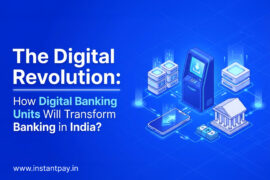
The digital revolution has now revolutionized how we do business and interact with the world. Technology has enabled us to do more in less time, from online shopping to digital banking. In India, digital banking is set to transform the banking landscape, offering customers more convenience, faster transactions, and enhanced security.
With the Reserve Bank of India (RBI) introducing new regulations, banks can now offer customers a wide range of digital banking services. Customers can now easily manage their finances from online bill payments to mobile wallets.
By leveraging technology, banks can also reduce costs and improve customer service. As a result, digital banking units are becoming an integral part of banking operations in India. This article will discuss how digital banking units transform India’s banking sector and the benefits customers can enjoy.
What is Digital Banking?
Digital banking uses technology-enabled services by banks that facilitate customers to perform banking transactions remotely, anytime, and anywhere. Digital banking includes internet banking, mobile banking, electronic money transfer, and other technology-enabled services.
Customers can perform various banking activities using their computers or mobile devices, including fund transfers, bill payments, and asset management. Digital banking makes banking more convenient and accessible, enabling customers to meet their banking needs anytime and anywhere.
The Digital Revolution in India
For many years, financial institutions relied on a traditional, branch-based model to serve their customers. Customers would visit a branch to conduct their banking transactions. However, with the advent of technology, banks could reach out to customers through multiple channels, including mobile and the internet.
Today, Indians are increasingly using digital banking channels for their transactions. Traditional banking services such as savings, deposits, and loans have been completely revamped with the advent of technology. Customers can now apply for a loan online, get their account balance and transaction details, and even make payments through their mobile phones or computers.
Digital Banking Regulations in India
The RBI has issued guidelines and regulations for digital banking services in India. Banks can now offer a wide range of digital banking services and can tie up with third-party service providers for these.
Digital banking services can also be provided to unlisted entities, such as small and medium enterprises (SMEs), contractors, and farmers.
Customers can now digitally transfer funds for various purposes, including paying bills, buying shares, and completing forex transactions. They can also digitally store their cash, gold, and other valuables to earn interest.
Digital Banking Services
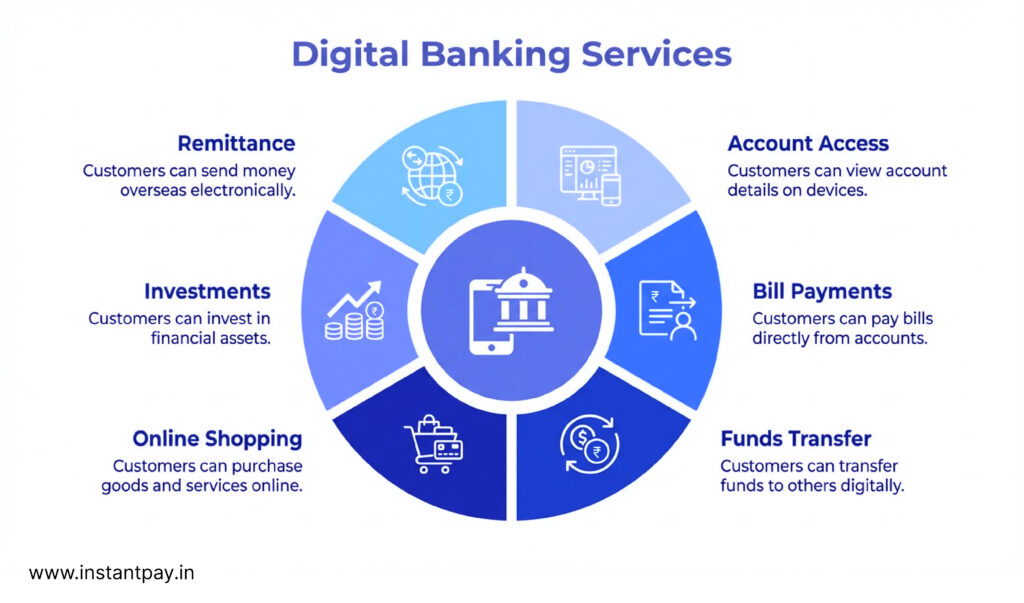
- Account and transaction details: Customers can access their account details on their computers or mobile devices, including account balance and transaction history.
- Bill payments: With digital banking services, customers can pay their various bills, such as electricity, water, and telecom bills, directly from their bank accounts.
- Funds transfer: Customers can transfer funds digitally to other bank accounts and make online money transfers. They can also send money to non-bank account holders.
- Shopping: Customers can purchase goods and services online using their digital accounts.
– Investments: Digital banking customers can invest in various financial assets, such as mutual funds, stocks, bonds, and gold.
– Remittance: Digital banking customers can electronically transfer funds to their overseas relatives and friends.
Digital Banking Units
A digital banking unit is a nodal center that coordinates with the bank’s IT and business teams to offer digital banking services. Usually, a single digital banking unit caters to multiple branches and provides standard services, such as internet banking, mobile banking, electronic funds, account opening, and other services.
The digital banking unit is responsible for client maintenance, transaction services, and product development. It hosts the website, provides customer support, and manages the data, such as account details, transaction logs, etc.
Benefits of Digital Banking Units for Customers

DBUs provide secure and connected digital banking facilities, allowing customers to access banking services cost-effectively, paperlessly, and conveniently. The self-service model will be available, but manual assistance will be available during certain times of the day to aid those from rural, semi-urban, tier III & below areas, senior citizens, or customers with little or no digital experience. This will increase digital payment awareness amongst a wider group of people.
For customers who are adept at digital banking, these DBUs will provide a more convenient and faster digital experience that is secure. This will be especially beneficial to those in remote areas with low banking penetration as the cost of operating & maintaining bank branches will be significantly reduced.
Here are the key benefits of DBU for Customers
1. 24/7 Banking Access
DBUs allow customers to access banking services anytime, providing flexibility through self-service platforms for tasks like money transfers, bill payments, and loan applications, even outside traditional banking hours.
2. Faster Transactions
With automated processes, DBUs ensure faster transactions, such as instant payments and loan approvals, without the need for paperwork. This reduces wait times and enhances customer convenience.
3. Increased Accessibility
DBUs play a crucial role in providing banking services to remote and rural areas. By offering Aadhaar-enabled banking, customers in underserved regions can easily access essential financial services.
4. Enhanced Security
DBUs provide robust security measures, including two-factor authentication and real-time fraud detection, ensuring that customers’ transactions and data remain secure.
5. Wide Range of Digital Services
Customers can manage accounts, apply for loans, and make payments digitally. With multiple payment options and seamless banking services, customers benefit from convenience and efficiency
6. Financial Education
DBUs offer user-friendly interfaces and educational resources to help customers understand and use digital banking tools, promoting financial literacy, especially in rural areas.
7. Eco-Friendly Practices
By promoting paperless transactions, such as digital statements and e-receipts, DBUs contribute to environmentally sustainable banking.
8. Quick Issue Resolution
AI-powered chatbots and digital help desks ensure that customers can quickly resolve banking issues, reducing the need for long wait times and enhancing overall satisfaction.
Who can Open For Digital Banking Unit (DBU)?
Digital Banking Units (DBUs) have been introduced by the Reserve Bank of India (RBI) to promote and expand digital financial services across the country. The objective is to provide easy access to financial services using digital platforms, ensuring greater financial inclusion and promoting a cashless economy. However, there are specific eligibility criteria for entities that wish to open a DBU.
1. Scheduled Commercial Banks (SCBs)
Only Scheduled Commercial Banks (SCBs) are eligible to set up a Digital Banking Unit in India. These banks are listed in the second schedule of the Reserve Bank of India Act, 1934, and are permitted to conduct banking operations, including accepting deposits and lending money. This includes:
- Public Sector Banks (PSBs): Government-owned banks like State Bank of India (SBI) or Punjab National Bank (PNB) can open DBUs to extend their digital services to remote areas or further enhance their existing digital offerings.
- Private Sector Banks: Privately-owned banks such as HDFC Bank, ICICI Bank, and Axis Bank are also eligible to set up DBUs. These banks, known for their strong digital presence, can use DBUs to deliver seamless digital banking services to customers in rural and semi-urban areas.
- Small Finance Banks (SFBs): Banks that focus on financial inclusion, particularly in underserved sections of society, can also open DBUs. SFBs like Ujjivan Small Finance Bank and Equitas Small Finance Bank can use these units to provide digital financial services to their target audience.
2. Financially Stable Banks
To ensure the sustainability and success of a Digital Banking Unit, only banks with a strong financial record and stability are allowed to open DBUs. This means that banks struggling with non-performing assets (NPAs) or those under regulatory restrictions are not eligible. The RBI has set these criteria to ensure that only banks with the infrastructure and capacity to deliver secure and efficient digital services can establish DBUs.
3. Banks with Robust Digital Infrastructure
Banks that already have a well-established digital banking infrastructure are better positioned to set up and manage DBUs. This includes banks that offer:
- Internet and mobile banking services
- Instant account opening through digital methods
- Digital lending platforms
- Secure online payment gateways
The idea is to ensure that banks with proven digital capabilities can extend these services through dedicated DBUs, particularly in regions where traditional brick-and-mortar banking is limited.
4. Non-Cooperative Banks Excluded
Banks classified as non-cooperative with the RBI or those that have regulatory concerns are not eligible to open a DBU. The RBI mandates that only banks that comply with regulatory standards and maintain transparency in their operations can be trusted to manage digital banking units effectively.
What DBUs Mean for Banks
For eligible banks, setting up a DBU presents a strategic opportunity. It allows them to enhance their reach, particularly in underserved or geographically remote areas, while reducing operational costs associated with traditional branches. DBUs also align with the broader push towards Digital India, further promoting financial inclusion and the use of technology in banking.
How to Apply for a Digital Banking Unit (DBU)?
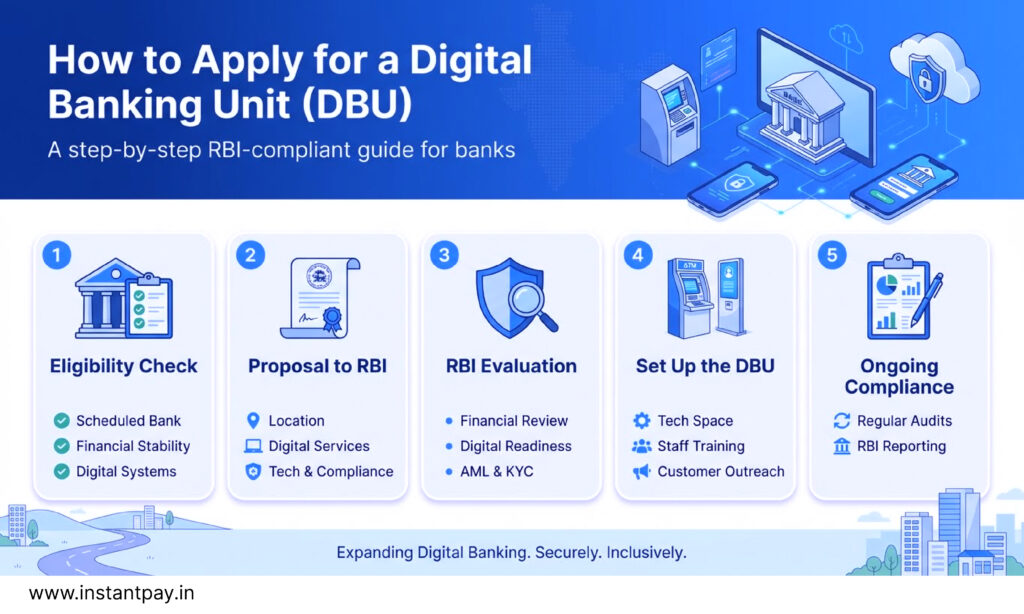
Setting up a Digital Banking Unit (DBU) is a key opportunity for banks to extend their digital services, particularly in areas where traditional banking infrastructure may not be viable. However, the process for establishing a DBU follows specific regulatory guidelines issued by the Reserve Bank of India (RBI). Here’s a step-by-step guide on how banks can apply for and set up a DBU:
1. Eligibility Check
Before proceeding with the application, banks must first ensure they meet the necessary eligibility criteria to establish a DBU:
- Must be a Scheduled Commercial Bank (SCB), such as Public Sector Banks (PSBs), Private Sector Banks, or Small Finance Banks (SFBs).
- Should have a proven track record of financial stability and regulatory compliance, with no major violations or significant Non-Performing Assets (NPAs).
- Must possess a robust digital banking infrastructure to ensure the smooth operation of digital services through the DBU.
Banks that meet these criteria can proceed with the formal application process.
2. Submitting a Proposal to the RBI
The next step for a bank is to submit a formal proposal to the Reserve Bank of India (RBI). The proposal should include detailed plans covering:
- Location: The bank must specify the location where the DBU will be established. The RBI encourages the setup of DBUs in Tier 2 to Tier 6 cities to boost financial inclusion in underserved areas, although units in Tier 1 cities are also permitted.
- Digital Services Plan: The bank must clearly outline the digital services it intends to offer through the DBU. This could include services like digital account opening, online loan applications, real-time fund transfers, and mobile banking solutions.
- Technology Infrastructure: Details about the technology and security measures that will be employed at the DBU must be provided. This should demonstrate the bank’s capability to handle digital transactions securely and efficiently.
- Compliance and Security: The proposal must address how the bank will comply with data protection and cybersecurity regulations as part of the DBU operations. Ensuring PCI DSS compliance and adherence to RBI’s digital banking guidelines will be essential.
Banks are expected to submit their proposals in line with RBI’s procedural guidelines, providing all required documentation and plans.
3. Approval Process
Once the proposal is submitted, it goes through an evaluation process conducted by the RBI. The bank’s financial stability, digital capabilities, and adherence to regulatory guidelines will be reviewed. The approval process typically involves:
- Assessment of Financial Soundness: The RBI will evaluate the bank’s overall health, focusing on its capital adequacy, risk management practices, and NPA levels.
- Digital Readiness Check: The RBI will assess the bank’s existing digital banking infrastructure and its ability to deliver secure and efficient digital financial services.
- Compliance Verification: The RBI will ensure that the bank meets all compliance standards, including anti-money laundering (AML) regulations, Know Your Customer (KYC) norms, and data privacy laws.
This approval process ensures that only banks capable of securely managing digital transactions are permitted to establish DBUs.
4. Setting Up the DBU
Once approved by the RBI, the bank can proceed with setting up the DBU. Key steps involved in this phase include:
- Location Setup: The bank will need to establish a physical space for the DBU. While DBUs are digital in nature, they often operate from small, tech-enabled spaces where customers can access digital services and receive guidance if needed.
- Technology Deployment: Banks must install the necessary hardware and software infrastructure to facilitate digital transactions. This includes point-of-sale (POS) systems, kiosks for self-service banking, and secure servers for real-time processing.
- Staff Training: While DBUs are primarily self-service, banks may appoint a small team to assist customers with digital tools. These staff members should be well-versed in handling queries related to the digital services offered.
- Digital Promotion: Banks are encouraged to actively promote the DBU among customers through online marketing and educational campaigns. This will help raise awareness about the DBU’s services and encourage wider adoption.
5. Ongoing Compliance and Reporting
After the DBU is operational, the bank must ensure ongoing compliance with RBI regulations. This includes:
- Regular Audits: The bank must conduct regular internal audits to ensure the DBU is functioning as per regulatory standards, especially concerning data security and transaction integrity.
- Periodic Reporting: The RBI may require periodic reports on the DBU’s operations, including data on customer adoption, transaction volumes, and any incidents of security breaches.
Key Benefits for Banks by leveraging DBUs
Digital Banking Units (DBUs) represent a forward-thinking initiative aimed at modernizing how banking services are delivered in India. By integrating advanced technology and digital platforms, DBUs provide a more accessible, efficient, and streamlined banking experience, particularly for underserved regions. For banks, establishing a DBU offers several strategic benefits that go beyond just expanding their customer base. Here’s an in-depth look at the key advantages for banks:
1. Reduced Operational Costs
One of the primary benefits of setting up a DBU is the potential to significantly reduce operational costs compared to traditional brick-and-mortar branches. Traditional branches come with high overhead expenses such as rent, utilities, staffing, and maintenance. In contrast, DBUs operate with:
- Minimal Physical Infrastructure: A DBU requires less space, fewer staff members, and reduced physical resources. Many DBUs rely on self-service kiosks, online platforms, and digital support tools, drastically cutting down on costs related to branch operations.
- Automation: DBUs focus on automating routine banking services, such as account opening, balance inquiries, loan applications, and payments. By automating these services, banks can eliminate the need for large support teams, thereby reducing staffing expenses.
- Cost-Effective Scalability: With digital infrastructure in place, DBUs can be scaled quickly and cost-effectively, without the heavy investment needed for setting up new full-service branches. This allows banks to expand their presence in new geographies or markets with minimal upfront costs.
For example, if a bank opens multiple DBUs in rural regions, the savings on physical infrastructure and staffing can be reallocated to technology upgrades or customer outreach efforts, enhancing overall efficiency and profitability.
2. Expanded Reach into Rural and Underserved Areas
One of the core objectives of DBUs is to promote financial inclusion by reaching areas that lack access to traditional banking services. Many rural and semi-urban regions in India still rely on informal financial systems or cash transactions due to the lack of nearby banks. DBUs can change that by:
- Serving Remote Locations: By setting up DBUs in Tier 2 to Tier 6 cities and rural areas, banks can offer digital banking services to customers who would otherwise have limited or no access to financial institutions. This includes providing services such as account management, digital loans, and online fund transfers.
- Bridging the Digital Divide: DBUs help bring formal banking to communities that have been left behind in the digital revolution. They enable people to transition from cash-based economies to digital transactions, encouraging savings and formal financial activities.
- Financial Inclusion for All: DBUs allow banks to fulfill government mandates related to financial inclusion, offering digital services like Aadhaar-enabled payment systems and Direct Benefit Transfers (DBT), which can be particularly impactful in rural areas.
By expanding into these markets, banks can tap into a largely underbanked population, boosting customer acquisition and contributing to national initiatives such as Digital India and Financial Inclusion.
3. Enhanced Customer Satisfaction
DBUs provide a seamless, quick, and convenient banking experience, which directly contributes to higher customer satisfaction. In today’s fast-paced world, customers prefer digital channels that provide them with instant access to banking services. DBUs can deliver this by offering:
- 24/7 Availability: Unlike traditional branches that operate within fixed hours, DBUs offer round-the-clock access to banking services. Customers can perform essential tasks such as fund transfers, loan applications, or bill payments anytime, anywhere, without having to visit a branch.
- Faster Turnaround Times: With automation in place, transactions are processed faster. Whether it’s applying for a loan or making a payment, customers can complete transactions in a matter of minutes, reducing waiting times and improving the overall banking experience.
- Self-Service Banking: Many customers appreciate the convenience of managing their own banking needs without relying on customer service representatives. DBUs equipped with interactive self-service kiosks allow customers to perform tasks such as updating their account details or managing investments on their own, empowering them to take control of their finances.
This customer-centric approach not only improves the experience but also helps banks build long-term relationships with their customers, leading to increased loyalty and retention.
4. Increased Digital Adoption and Innovation
For banks, DBUs serve as a critical platform to promote and accelerate digital adoption among their customer base. By introducing innovative digital solutions, banks can encourage customers to embrace the convenience and efficiency of digital banking. This has multiple benefits:
- Promoting Digital Literacy: Many customers, especially in rural or semi-urban areas, are not familiar with digital banking. DBUs provide an opportunity for banks to educate their customers on using digital platforms, mobile banking apps, and online services, fostering greater digital literacy.
- Introducing New Digital Products: DBUs enable banks to showcase their latest digital offerings, such as mobile apps, digital wallets, AI-powered chatbots, and personal finance management tools. These innovations not only simplify banking processes for customers but also position banks as leaders in digital transformation.
- Fostering Innovation: As digital banking evolves, banks can use DBUs as testbeds for new services and technologies. For instance, banks can introduce AI-based financial advisory services, personalized investment recommendations, or digital loan approvals, leveraging customer feedback to refine their offerings.
By driving digital adoption, banks can unlock new revenue streams, improve operational efficiency, and maintain a competitive edge in a rapidly evolving financial landscape.
5. Regulatory Compliance and National Initiatives
Setting up DBUs also aligns banks with the Reserve Bank of India (RBI)‘s regulatory framework and the government’s vision of a cashless, digital economy. This provides several strategic advantages:
- Alignment with Digital India Mission: DBUs contribute to the success of government initiatives like Digital India and Pradhan Mantri Jan Dhan Yojana, promoting a cashless society and offering digital financial services to every citizen.
- Simplified Compliance Reporting: DBUs are required to adhere to strict data protection and cybersecurity standards, ensuring that banks meet the RBI’s guidelines for secure digital transactions. By adopting a DBU model, banks can streamline their regulatory compliance efforts and maintain trust with customers.
- Environmental and Social Governance (ESG) Benefits: DBUs also help banks reduce their environmental footprint by cutting down on paper usage, energy consumption, and physical resources. This aligns with ESG goals, contributing to a bank’s sustainability efforts.
How Digital Banking Units are Transforming Banking in India?
Digital banking units are transforming the banking landscape in India by providing customers with more convenience, faster transactions, and enhanced security. Digital banking services allow customers to perform their banking transactions anytime, anywhere. They can even complete their transactions while on the go.
Digital banking units are also helping banks extend their branchless banking services to customers yet to be banked. Digital banking is improving financial inclusion in India by reaching out to unbanked and underbanked sections of the population. It is also helping in the growth of digital payment methods, such as credit/debit cards, UPI, and wallets.
Challenges of Digital Banking Units
Digital banking units face a few challenges: low trust, inadequate customer support, and customer awareness about digital banking services. Due to a lack of confidence in digital banking services, customers prefer visiting the bank branch for their transactions.
Banks have been trying to address this issue by providing more digital banking services and conducting skilling workshops for their customers. Digital banking units also need more human resources and infrastructure to provide customers with adequate support. Banks are now trying to overcome this challenge by upgrading their systems, hiring more staff members, and training their employees.
Conclusion
Digital banking units are transforming the Indian banking sector by offering customers financial services digitally and securely. People who do not have access to the internet or smart devices can conduct paperless banking transactions at DBUs.
Additionally, digital banking units offer educational resources and tools to help customers better understand and manage their accounts. By making banking services more accessible and convenient, particularly among underserved and disadvantaged communities, DBUs can help enhance financial inclusion in India.