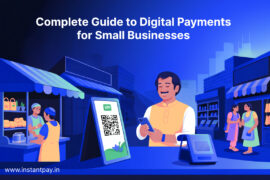
The Indian digital payments ecosystem is maturing, and the results are showing. Digital payments for Small Businesses have grown from less than five percent of the population in 2016 to more than 25 percent in 2019.
Since 2015, the number of mobile wallet users has grown from just over 10 million to about 220 million, and the number of transactions has increased from 100 million to nearly 400 million.
Globally, Small Businesses account for more than 98% of all businesses, representing the backbone of the economy. Moreover, 98% of jobs are created in these sectors.
An economic survey indicates that only 42% of small and medium-sized businesses have a strategic plan for growth and retirement. During times of economic uncertainty, these businesses need access to tools to help them succeed and thrive.
We will explore what’s driving this growth, identify the key trends that are emerging as a result of these changes, and discuss how any company can take advantage of them to unlock value in the Small Business market. This blog post will examine how Digital Payments. For Small Businesses help in different ways, such as transactions, and creating new revenue streams. in different ways, such as by making transactions faster and cheaper, creating new revenue streams, and reducing payment processing costs.
Basics of Digital Payments in India
In India, the digital payments for small businesses, landscape is quite diverse, with many stakeholders, including banks, card networks, wallet providers, and payment gateways. Since the payment landscape in the United States or China is centralized, Indian payments are decentralized.
Due to the decentralized nature of the Indian payments ecosystem, businesses need to be aware of a few implications. In order to optimize the payments ecosystem, a company must first understand the role of its stakeholders. Choosing the right payment partners for its services is the next step.
Learn More:
- How Digital Banking Units Will Transform Banking in India?
- Digital Payments: For Better and Cashless India
- The Rise of the Digital Payments Landscape in India
Factors that have affected the Growth of Digital Payments for Small Businesses
The growth in digital payments in India has been fueled by several factors, which are briefly summarized below:
1. Card Network Adoption
Despite slow adoption in the past, EMV (Europay, MasterCard®, and Visa®) has picked up pace in recent years. At the end of 2018, the number of EMV terminals increased from less than 30 percent of all card-accepting terminals in 2017 to over 75 percent of all terminals.
It has increased the use and adoption of credit cards over the past few years. Despite all the progress that has been made, this is only the beginning. As a result of the government’s push to create a cashless economy and its implementation of GST, the market has been poised to grow explosively.
2. Digital Wallet Growth
The increase in digital payments in India has also been a direct result of the growth of mobile wallets, which are standard in the Indian market. Even though wallets are not new to the Indian market, their adoption has increased dramatically, primarily due to the government’s push for a cashless economy.
The value of digital wallet transactions has increased from about INR 4,000 crores in 2016 to nearly INR 50,000 crores in 2018, and it is expected that by 2021, it will reach INR 120,000 crores.
3. Reduce Fraud and Increase Transparency
Small businesses face fraud as one of their biggest challenges. Approximately $40 billion is lost annually due to fraud committed against businesses. This is partly due to a lack of transparency and visibility into the payment process, which is one of the reasons why this happens.
With a digital payment method, you can solve this problem by providing a single source of information and a digital record of every transaction. This will ensure that, if a transaction does occur, you will have everything you need to trace it in the event it occurs. In the event of fraud, you will be able to identify it quickly and close the account as soon as possible.
Advantages of Digital Payments For Small Businesses
1. Create New Streams of Revenue
As a business owner, generating revenue is the key to growing your business and creating new jobs if you want to grow. The fact that there is a need for a higher revenue stream is why it is so important to look for ways to do so. If you want to accomplish this, you can think outside the box and offer services you are not currently offering.
For instance, you may offer your customers the option to make online payments through your platform if you are in the financial services sector. You can generate new revenue streams and expand your business by doing so.
2. Make Transactions Cheaper and Quicker
Every minute that passes, your business loses potential revenue, money that could be used to expand operations or hire more people to stimulate the business’s growth. Having digital payments in place can help to eliminate the amount of time it takes for a transaction to be completed, which is one of how they can be helpful. Revolutionary technology such as real-time, instant payments has allowed you to drastically reduce the time it takes for a transaction to be completed thanks to innovations such as these.
3. Reduce Payment Processing Costs
The majority of all payments for goods or services involve the use of a credit or debit card. Approximately 80% of transactions are made using plastic cards in the U.S., for instance. While cash is still the most widely used method of payment for small items, such as groceries and gas, it is still the most popular one.
Card machines were the only way to accept plastic payments for many years. Unfortunately, that method of accepting payments came at a high cost and cost associated with that method of accepting payments. Digital payments offer a more cost-effective way to accept payments, and this is where they can help.
Key Takeaway
There is no doubt that digital payments are rapidly changing as the digital economy gains traction in India. There is an increase in the use of digital payment channels, such as credit cards, UPIs, and digital wallets, as a preferred payment method, whereas cash usage is declining.
Among the factors driving this growth is the government’s push toward a cashless economy and the implementation of GST, the adoption of EMV, and the development of digital wallet companies like PhonePe. There are likely to be significant implications for businesses due to these changes.
Digital payments like Instantpay, for instance, could improve customer satisfaction and brand loyalty. It could also present businesses with new challenges, such as making sure that payment channels are fraud-proof, that customers have a seamless experience, and that they receive value.
Small Businesses can unlock value from digital payments in several ways, as you can see here. You must stay up-to-date on the latest developments in the payment industry if you own your own business. As a result, your business will be prepared for the future and will be able to take advantage of the latest trends.
The good news is that there are now more payment options than ever before. With digital payments, you can accept payments across all channels – online, mobile, bricks-and-mortar, etc. No matter your business type, you can find a solution that meets your needs.