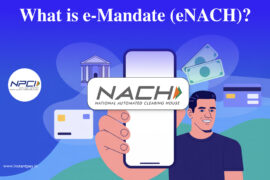
In the past recurring payments were associated with missed due dates, penalties and other reminders throughout the process. However, with the ways payments are made in India, there has been a clear shift as a result of e-mandates on the payments stack. According to the Reserve Bank of India (RBI), retail digital payment transactions have increased from 162 crore (1.62 billion) in FY 2012-13 to over 16,416 crore (164.16 billion) in FY 2023-24. An almost 100x increase in transaction volume in a period of just 12 years. Additionally, as reported by the RBI in CY 2024 there were over 20,787 crore (207.87 billion) of digital payments with a value of Rs.2,758 lakh crore (INR 27.58 trillion), showing how ingrained the digital/automated behaviour is on day-to-day money movement.
To facilitate the positive growth of the digital payment landscape and create a safer environment for eNACH recurring payments, RBI has increased the upper limit for certain categories of eNACH (recurring) transactions from Rs.15,000 (INR 15,000) to Rs.100,000 (INR 100,000), thus reducing friction for legitimate recurring payments while still implementing guardrails around them.
In this guide we will provide you with information moving from what e-mandates are to how eNACH are used: Real life examples / use cases; industries using eNACH; RBI limits; eligibility; documentation; and some practical do’s/don’ts to help improve your collections and decrease failure rates.
Traditional Mandates VS e-Mandates
| Feature | Traditional Mandate | e-Mandate |
| Process Type | Manual, paper-based | Fully digital, API/eSign enabled |
| Approval Time | 7–14 business days | Instant to 48 hours |
| Documentation Required | Physical NACH form with signature | No paperwork; Aadhaar OTP / Bank credentials |
| Authentication Method | Signature verification by bank staff | OTP-based or Aadhaar eSign (legally valid) |
| Platform Accessibility | Bank branches only | Web portals, mobile apps, and branch access |
| Integration Infrastructure | Manual routing between banks | Centralized via NPCI’s NACH platform |
| Real-Time Status Tracking | Not available | Yes, via API dashboards and alerts |
| Security & Compliance | Basic verification, no encryption | Encrypted data, NPCI compliance, and multi-factor auth |
| Error & Rejection Rate | High (~30%) due to form errors, courier delays | Low (<5%) due to digital validation |
| Customer Convenience | Low — branch visits, manual form filling | High — mobile/online form, auto-payment setup |
| Operational Cost for Business | High — manpower, processing, courier, follow-ups | Low — self-service flow and real-time mandate onboarding |
| Use Case Suitability | Rural branches, legacy systems | Fintech, insurance, SIPs, subscriptions, utilities |
Use Cases of e-Mandates

1. Loan EMIs: Timely Debt Repayments
How It Works:
Customers give permission for their bank to automatically withdraw their monthly payments via eNACH at the time of receiving their loan. Once the eNACH is established, the bank will withdraw funds automatically each month without a customer having to do anything.
Example:
When a customer applies for a home loan from a bank, they can sign an automated debit mandate to automatically transfer their loan payment of Rs.25,000 (or the current amount due) every 5th day of the month.
Benefits:
- Borrowers have a better chance of not missing their payments, therefore improving their credit score.
- Borrowers will not incur any late payment fees or reminders for their payment being late.
- Lenders will be able to provide much more predictable cash flow.
Do recurring auto-debits need OTP every time?
Not always. RBI allows relaxations for subsequent recurring transactions under specified conditions and limits for eligible categories.
2. Insurance Premiums: Prevent Policy Lapse
How It Works:
A policyholder has the ability to create an e-Mandate when purchasing or renewing an insurance policy, allowing an insurer to automatically withdraw premium payments on the scheduled due date, whether the schedule is monthly, quarterly or yearly.
Example:
LIC allows their customers to use an Aadhaar eSigning automated debit mandate for automatically deducting premiums on the scheduled due date with no customer involvement.
Benefits:
- Policyholders will have continuous coverage of the policy they purchased.
- Policyholders will have a significantly reduced chance of losing their policies due to policy lapsing.
- Insurance companies will have significantly less expense from follow-up or reminder communications with customers to continue on their premium payments.
3. Utility Bills: Hassle-Free Bill Settlements
How It Works:
The customer signs a mandate that allows the utility provider (e.g., Tata Power, Indraprastha Gas) to automatically debit their monthly dues from the customer’s account.
Example:
If a household customer signs up for an automated debit mandate for their electricity bill, the exact amount of the bill will be automatically charged to their account each month.
Benefits:
- Electronic mandates help prevent service interruptions due to late payments.
- Customers save time because they no longer have to make manual payments each month.
- Electronic mandates provide providers with improved on-time collection rates.
Impact:
After the implementation of recurring payment setup by utility companies, on-time payments have increased by approximately 30% based on industry data.
4. Subscription Services: No More Renewals
How It Works:
If you use recurring subscription services (like OTT platforms such as Netflix or Disney+ Hotstar, gyms, magazines, etc.), most businesses will have a built-in recurring payment setup during checkout.
Example:
If a customer signs up to a subscription service for a Rs.499 monthly plan and completes the checkout process with automated debit mandate functionality, e-Mandates will automatically debit the Rs.499 from the customer’s account each month for uninterrupted service.
Benefits:
- Customers no longer need to worry about manually renewing their subscription each month.
- Enhances customer retention and satisfaction through nearly perpetual seamless service.
- The benefits of recurring payment setup can be applied across the spectrum of B2C (content, fitness) and B2B (SaaS,cloud) subscription services.
5. Educational Fees: Structured Fee Management
How It Works:
Parents allow recurring quarterly or monthly debits to pay school/college tuition through an automated debit mandate.
Example:
Delhi Public School allows parents to set up quarterly automatic debit of Rs.15,000 per quarter to pay their tuition. The school receives tuition fee payment on time without having to send reminders or collect cheques
Benefits:
- Timely receipt of fees ensures adequate cash flow for the school.
- Reduced administrative burden on schools.
- No penalties for late payment; students will have uninterrupted access to education.

Top 5 Industries Adopting e-Mandates (eNACH)
Recurring payment setups have revolutionized the manner in which many industries manage recurring payments throughout numerous industries. With NPCI’s eNACH platform in place, industries are experiencing increased payment reliability, fewer failures to pay, and improved cash flow.

1. Banking & NBFCs
Use Case: Loan EMIs, Credit Card Bills, Mutual Fund SIPs
How it works: When banks and NBFCs are onboarding customers as borrowers, they use automated debit mandate to automatically deduct the borrowers’ monthly EMI or credit card payments without hassle when the borrowers authorize a recurring deduction. This is also true for mutual fund investors through the use of eNACH for Systematic Investment Plans (SIPs).
Example: A person setting up a Rs.5,000 SIP with the ICICI Prudential AMC. The e-NACH will allow them to automatically deduct the Rs.5,000 every month.
Benefits:
- Decreases missed payments and EMI defaults
- Increases credit discipline
- Saves on customer service and follow-up costs
- Provides Lenders/AMCs with consistent cash inflow
Impact: e-NACH reduce operational headaches and significantly lower the bounce rate of EMI payments for lenders.
2. Insurance
Use Case: Life, Health, Motor, and Term Insurance Premiums
How it works: Policyholders can authorize their insurer to auto-debit premiums at scheduled intervals. automated debit mandate replace the need for manual renewals or late fee reminders.
Example: An HDFC Life policyholder sets a quarterly e-NACH using Aadhaar eSign, ensuring that their Rs.3,500 premium is auto-deducted every three months.
Benefits:
- Prevents policy lapses due to missed payments
- Improves customer retention and coverage continuity
- Reduces costs of sending renewal reminders
Stat Insight: Insurers using e-NACH reported a 40% drop in lapse rates, especially in term and health insurance segments.
3. Utilities
Use Case: Electricity, Water, Gas, Broadband Bill Payments
How it works: Utility companies enable their customers to set up eNACH to auto-debit bills on the due date based upon usage.
Example: Mr Patel Is A Tata Power Customer And Has Set Up A Monthly automated debit mandate With NACH, Allowing Him To Automatically Pay His Monthly Electricity Bill.
Benefits:
- Eliminates Payment Delays And Service Disconnects
- Reduces Customer Service Calls And Collection Activities
- Improves Customer Service Reliability & Customer Loyalty
Impact: Utility companies realised a 30% increase in on-time bill payments after implementing eNACH.
4. Education
Use Case: School and College Tuition, Hostel, and Exam Fees
How it works: Parents/guardians can create recurring mandates to automate payment of fees on a monthly, quarterly or semester basis, thus taking the effort out of paying the fee manually.
Example: Delhi Public School has created automated debit mandate that allow Rs.20,000 to be automatically debited on a quarterly basis from the parents’ bank account.
Benefits:
- Smooths fee collection process for educational institutions
- Decreases cash handling and manual error
- Minimises fee defaults and associated administration follow-up process
Result: Schools and colleges that use digital mandate registration experience fewer reconciliation discrepancies and better predictability of collections.
5. Telecom
Use Case: Mobile, DTH, and Internet Bill Payments
How it works: Telecom companies provide automated debit mandate registration via customer portals or mobile applications. After registration has been completed, bills will be automatically debited from the user’s bank account every month.
Example: If a Vodafone Idea customer registers for an digital mandate registration, their postpaid monthly bill will be deducted on the due date, without needing to log into an app.
Benefits:
- Eliminates possible disconnection of services due to non-payment
- Reduces churn due to billing issues
- Encourages users to remain on premium or family plans as a result of easier payment
Business Impact: The average revenue per user (ARPU) for telecom companies has increased while reducing the manual recovery effort required.

RBI Limits on e-Mandates
The Reserve Bank of India (RBI) has established specific value limits for recurring transactions initiated through digital mandate registration in order to protect consumers, reduce fraud and maintain the integrity of the payments ecosystem.
The limits are designed to provide balance between the security of transactions and the automation of payments; specifically:
What is the RBI limit for automated debit mandate Rs.RBI increased the recurring digital mandate registration limit from Rs.15,000 to Rs.1,00,000 per transaction for specific categories like mutual fund subscriptions, insurance premiums, and credit card bill payments (subject to conditions).
1. Maximum Limit: Rs. 1 Lakh per Transaction (Without AFA)
- The RBI has indicated that Rs.1,00,000 is the maximum amount of a recurring payment that can be made via digital mandate registration without requiring additional authentication (AFA).
- This means that customers can authorize recurring payments (or auto debits) for amounts under Rs.1 lakh without needing to use an OTP or any other form of additional verification (e.g., biometric) for each transaction.
Why this matters:
- This limit allows for auto debit transactions to his a high value but still ‘everyday’ purchase ie. insurance premiums, school/college fees, SIPs, EMIs on loans etc. all of which can be made in excess of the Rs.1 lakh threshold.
Business Impact:
- Encourages digital mandate registration usage by removing friction from mid-range recurring payments.
- Increases the efficiency of fintech lenders, insurers, mutual funds and subscription-based businesses.
2. Above Rs.1 Lakh: Requires AFA (OTP or Equivalent Verification)
- The RBI requires an Additional Factor of Authentication (AFA) for a transaction greater than Rs.1 lakh.
- The AFA typically takes the form of a One-Time Password (OTP) sent to your registered mobile number or an alternate second-factor method that you have previously approved (biometric or app-based).
Why this matters:
- An extra level of protection for high-value debits that occur on accounts unauthorized to you.
- Reduces the risk of fraud for large transactions without disabling the ability to perform recurring transactions.
Use Case Example:
A policyholder who pays Rs.1.2 lakh annually for their life insurance policy would receive an OTP at the time of deduction, unless there is a flow already set up to use AFA.
3. Minimum Limit: No Official Lower Cap
- The RBI has not established any lower limits for recurring payments made via eNACH, allowing for micropayments (e.g., Rs.50-Rs.100 for in-app subscriptions or EMI protection plans) to be automated by e-NACH.
Why this matters:
- Encourages the continuing adoption of subscribers’ services like subscription services, mobile recharge applications, financial technology companies (many were created to provide small insurance policies, micro-loans, and wellness subscriptions).

What is The Eligibility Criteria to Set Up an e-Mandate?
1. You have to be at least 18 years old:
Since automated debit mandate are a legal way for automatic debiting from bank accounts, any account holder will need to be a minimum of 18 years old. If an account holder is a minor, the e-Mandate must be initiated by their parent or guardian.
2. Open a NACH enabled Account:
automated debit mandate are processed through the NPCI NACH network, therefore your bank needs to support NACH transactions in addition to automatic debits. Most of the major Indian banks (SBI, ICICI, HDFC, Axis, PNB, and Kotak) support NACH transactions and must be able to perform direct debit transactions from your bank account, to allow you to use e-Mandates.
3. Complete Your KYC Process:
In order to use automated debit mandate, an account holder will need to provide valid proof of identity (in the form of a PAN card, Aadhaar, Voter ID, Passport, or Driving Licence) as part of completing the KYC process. Completing the KYC process provides security against fraudulent activity or transactions from your bank account.
4. The Payment Service Provider Must Be Registered with NACH:
All payments made using e-Mandates must be made to an entity that is a registered user of the NPCI. Only authorised Users (Banks, NBFC’s, Insurers, Utilities, etc) may collect payment from you using automated debit mandate. In order to collect payments using e-Mandates, Providers must work with a Sponsor Bank to process the payments on behalf of the Provider through the NPCI.

Required Documents for e-Mandate Setup
| Document Type | Accepted Examples / Description |
| Bank Account Proof | Passbook or latest bank statement |
| ID Proof | Aadhaar Card, PAN Card, Passport, or Voter ID |
| Address Proof | Utility bill, rent agreement, or other valid address documents |
| e-Mandate Form | Duly filled and signed (only if using the physical mandate method) |
| Contact Details | Registered mobile number and email (for OTPs, alerts, and confirmations) |
Types of e-Mandates in the eNACH Framework

As per the eNACH guidelines from NPCI, Electronic Mandates can be divided based on the initiation of the transaction as well as the movement of funds between the accounts.
By Initiation Method
1. eMandates of the Bank
Initiated Via: Netbanking or in a bank branch
How It Works: The customer initiates an eMandate for recurring payment by authenticating with OTP and/or bank account and the eMandate is routed from the customer’s bank to NPCI to the service provider.
Examples: Loan EMI’s, SIPs, Insurance Policies
2. eMandates of Service Provider
Initiated Via: Merchant or biller website/app
How It Works: During the buyer’s payment experience, the customer provides authorization for an eMandate on the eNACH network via netbaking, Debit Card, Aadhhaar e-Sign. The Merchant’s sponsor bank works with NPCI and the customer’s Bank to take the eMandate for the initiated eMandate.
Examples: OTT subscriptions, SaaS subscriptions, Gym Memberships, Utility Bills
Can I cancel an e-Mandate?
Yes. Cancellation can typically be done through the bank/service provider’s mandate management flow (timelines depend on the institution
By Transaction Method
3. e-Mandates for Debits
Purpose: To decrease the amount of manual input required by the Individual with respect to automated debit mandate while automating any recurring payments to be debited out of the account.
How it works: Create automated recurring payments for the repayment of Loan EMI, Insurance, SIP, Subscription charges, etc. to deduct on the pre-decided dates.
Key Takeaway: All preferences of the Individual can be eliminated as per the arrangement. The Individual can avoid late payment penalties for failing to pay on time.
4. e-Mandate for Credits
Purpose: To provide for a repeated transfer of funds from the company’s account to the customer’s bank account.
How it works: An organization’s bank or financial institution has received a directive from the entity to automatically process the transfer of funds periodically.
Common Use: Payroll Disbursements, Refunds of taxes and fees, Reimbursement of expenses and dividends.
Key Benefit: Provides an automatic means of distributing funds.

How e-Mandate Supports Financial Wellness?
Through the eNACH structure, automated debit mandate automate recurring bills, assisting users in being financially disciplined, less stressed about payments and managing their finances more effectively.
1. Automated Payments Promote Financial Discipline
What They Are:
Automated debit mandate are created to automatically debit loans, utility bills, insurance premiums and subscription payments when they are due.
Why This Matters:
Recurring payment setup allow individuals to avoid fines for late or missed payments, maintain a stable credit rating and develop more effective budgeting for regular payments.
2. Strong Security Reduces Risk
What They Are:
recurring payment setup are processed through the NPCI’s NACH platform, using a variety of methods, such as OTP and Aadhaar e-sign, to authenticate the user and encrypt their information.
Why This Matters:
Using recurring payment setup provides individuals with a lower risk of making unauthorised payments, eliminates the risk of using non-secure payment methods and builds confidence within the consumer’s mind when making automatic payments online.
3. Less Stress, More Control
What They Are:
With automated payments through recurring payment setup you will no longer have to remember to pay your bills or manually write cheques.
Why This Matters:
The use of automated payments through e-Mandates will reduce the mental burden of keeping track of your payments day-to-day. In many cases, this can improve the individual’s credit rating, keep them connected to their services and save them time and stress in the process.
Final Thoughts
India’s financial system is quickly being modernised, with e-Mandates at the very centre of this advancement. Whether you are a business looking to improve your collections or an individual who wants a more convenient way to manage your finances, recurring payment setup take you one step closer to taking control of your money and managing it better.
Don’t wait to catch up. Automate and Lead the way.
FAQs
1. What is the full form of eNACH?
eNACH stands for Electronic National Automated Clearing House.
2. How secure is e-Mandate?
It uses OTP, encryption, and multi-factor authentication.
3. Can I cancel an e-Mandate?
Yes, through your bank’s portal or by contacting the service provider.
4. Is Aadhaar mandatory for e-Mandate?
Required for eSign-based mandates; not mandatory for API-based ones.
5. How many mandates can I set up?
No upper limit unless restricted by your bank.
6. Are e-Mandates valid for all banks?
Only NACH-enabled banks support them. Check NPCI’s list.
7. What if I have insufficient balance?
The payment fails. Penalties may apply as per provider terms.
8. How long does e-Mandate activation take?
Usually, within 24–72 hours for API-based or eSign mandates.
9. What’s the difference between eNACH and ECS?
eNACH is fully digital and faster. ECS is older and semi-manual.
10. What happens if a mandate is rejected?
You’ll be notified, and the provider may retry or ask for manual payment.