In recent years, there’s been a noticeable shift in how urban Indians perceive life insurance. According to the Max Life Insurance India Protection Quotient (IPQ) 6.0 survey, the Protection Quotient has risen to 45, indicating increased awareness and adoption of life insurance products among urban populations.
This growing awareness has led policyholders to seek more comprehensive coverage options. One effective way to enhance a term insurance plan is through term insurance riders, optional add-ons that provide additional benefits tailored to individual needs.
Riders such as critical illness, accidental death benefit, and waiver of premium offer targeted protection against specific risks, ensuring that policyholders and their families are better prepared for unforeseen events. By integrating these riders, individuals can tailor their term insurance plans to better align with their unique life circumstances and financial goals.
In this guide, we’ll delve into the various term insurance riders available in 2026, exploring their benefits, activation conditions, and strategic considerations to help you make informed decisions about enhancing your life insurance coverage.
What Are Term Insurance Riders?

Term insurance riders are optional add-ons to a base term insurance policy, allowing policyholders to enhance their coverage by addressing specific risks, such as critical illness, accidental disabilities, or income loss. These riders provide additional financial security without the need to buy a separate policy.
Example:
Raj, a 35-year-old working professional, has a standard term plan. But after seeing a friend struggle financially during cancer treatment, he added a Critical Illness Rider to his policy. A year later, Raj is diagnosed with early-stage kidney disease. Thanks to the rider, he receives a lump sum that helps cover medical costs and ensures his family’s lifestyle remains unaffected, all while his main policy stays intact.
This illustrates how riders transform a plain term plan into a comprehensive financial safety net, especially when facing real-life disruptions.
Why it matters:
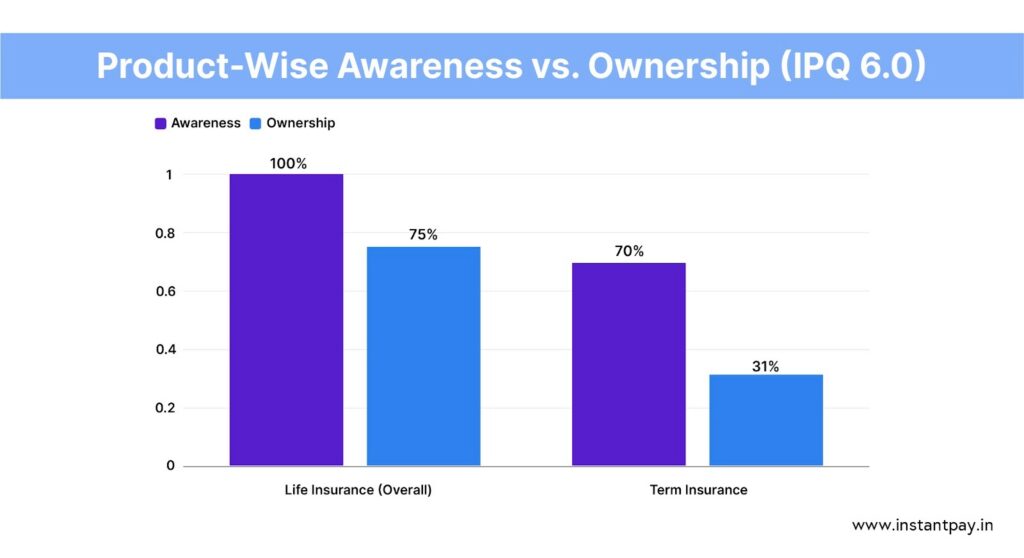
Urban India has shown significant progress in financial readiness, with 3 out of 4 urban Indians now owning life insurance products. This shift underscores a growing awareness and adoption of comprehensive insurance solutions, including riders, to safeguard against unforeseen events.
Why Are Riders Important in Term Insurance?
Think of riders as customization tools for your term policy. They let you tailor protection to your lifestyle, family needs, and future uncertainties, making your policy smarter and more responsive.
- Riders address ‘living risks’, not just death. For instance, a critical illness rider pays out while you’re alive and undergoing treatment, helping manage medical bills and income loss.
- They’re cost-effective. For a small bump in premium, you can unlock substantial added benefits that would otherwise require buying a whole new policy.
- They close the protection gap. Riders can convert a one-dimensional life cover into a multi-layered financial safety net.
Essential Add-Ons to Boost Your Term Insurance Coverage
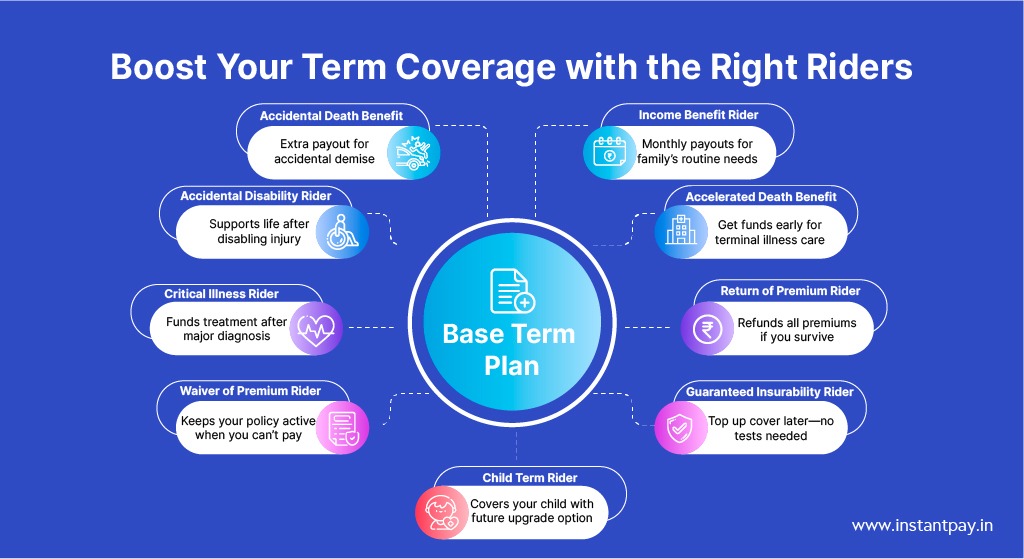
In 2026, riders play a pivotal role in making term plans more responsive to real-world risks. While offerings can vary slightly between insurers, several riders continue to deliver consistent value and relevance across the board.
Accidental Death Benefit Rider
If death occurs due to an accident, this rider pays out an additional lump sum on top of the base sum assured. It’s especially valuable for those in high-risk professions or frequent travelers, as it provides enhanced financial support to beneficiaries in case of sudden mishaps. This rider shares features similar to personal accident insurance, which also offers financial protection against accidental death and injuries.
Accidental Total or Permanent Disability Rider
In the event of a life-altering injury that leads to permanent disability, this rider offers either a lump sum or periodic payouts. It helps bridge income loss and covers ongoing medical and lifestyle support costs, ensuring financial resilience when it’s needed most.
Critical Illness Rider
Among the most popular add-ons, this rider pays a lump sum upon diagnosis of serious illnesses like cancer, heart disease, or stroke. It empowers the policyholder to manage treatment costs, recovery-related expenses, or income gaps without depleting savings. Understanding the scope of critical illness coverage can help you make informed decisions about your term plan and related benefits.
Waiver of Premium Rider
If the policyholder becomes critically ill or permanently disabled, this rider waives all future premiums while keeping the policy active. It’s a safety net that ensures continued coverage during financially unstable times without placing the burden on the family.
Income Benefit Rider
Instead of receiving a lump sum alone, beneficiaries get a steady income for a defined term (e.g., 5–10 years) after the policyholder’s death. This rider adds a layer of financial continuity for dependents, helping with routine expenses and lifestyle maintenance.
Accelerated Death Benefit (Terminal Illness Rider)
This rider allows policyholders diagnosed with a terminal illness to access a portion of their death benefit while still alive. The payout supports end-of-life care, medical bills, or other urgent needs, offering both dignity and financial control.
Return of Premium (ROP) Rider
A feature that refunds all premiums paid if the policyholder survives the term. Though it raises overall policy cost, it appeals to those seeking a “no-loss” proposition from term plans, effectively making the coverage feel like a refundable investment.
Guaranteed Insurability Rider
At significant life milestones, such as marriage or the birth of a child, this rider allows you to increase your coverage without fresh medical checks. It’s a strategic advantage for individuals whose health may change over time but want long-term protection and scalability.
Child Term Rider
This covers the life of a dependent child, offering a small death benefit if the child passes away. In many cases, this rider can be converted to a full life insurance policy for the child later, offering flexibility and early-start protection.
Which Rider Is Best for Term Insurance in 2026?
The ideal rider depends on your life stage, financial obligations, and health profile. However, critical illness, accidental death, and waiver of premium riders are among the most commonly chosen due to their broad coverage and real-life relevance. They enhance protection without needing a second policy, ideal for modern-day risks.
Key Term Insurance Riders: Activation & Sutability
| Rider Type | What It Covers | When It Helps / Activates | Who Should Consider It |
| Accidental Death Benefit | Additional payout if death occurs due to an accident | Upon death from a covered accident | Frequent travelers, high-risk workers |
| Critical Illness Benefit | Lump-sum payout on diagnosis of specified critical illnesses | On diagnosis of a listed critical illness | Those with family history of illness, smokers |
| Waiver of Premium | Waives future premiums if policyholder is disabled or critically ill | Upon diagnosis of critical illness or disability | Anyone with dependents, risk of income loss |
| Accidental Disability | Payout if policyholder is permanently disabled in accident | Upon permanent disability from an accident | High-risk jobs, on-road workers |
| Terminal Illness Rider | Advance payout if diagnosed with terminal illness | On certified diagnosis of terminal illness | Those at risk of life-threatening diseases |
| Income Benefit Rider | Regular income to family after policyholder’s death | After death of policyholder | Financial dependents |
| Return of Premium (ROP) | Returns all paid premiums if you survive the policy term | At end of policy term, if insured survives | Those seeking “money-back” assurance |
| Permanent Disability Rider | Lump sum for total permanent disability | Upon total permanent disability | Individuals with risky occupations or health concerns |
| Child Term Rider | Death benefit for child insured under policy | Upon death of covered child | Parents or guardians wanting child coverage |

When Riders Kick In: Key Conditions to Watch
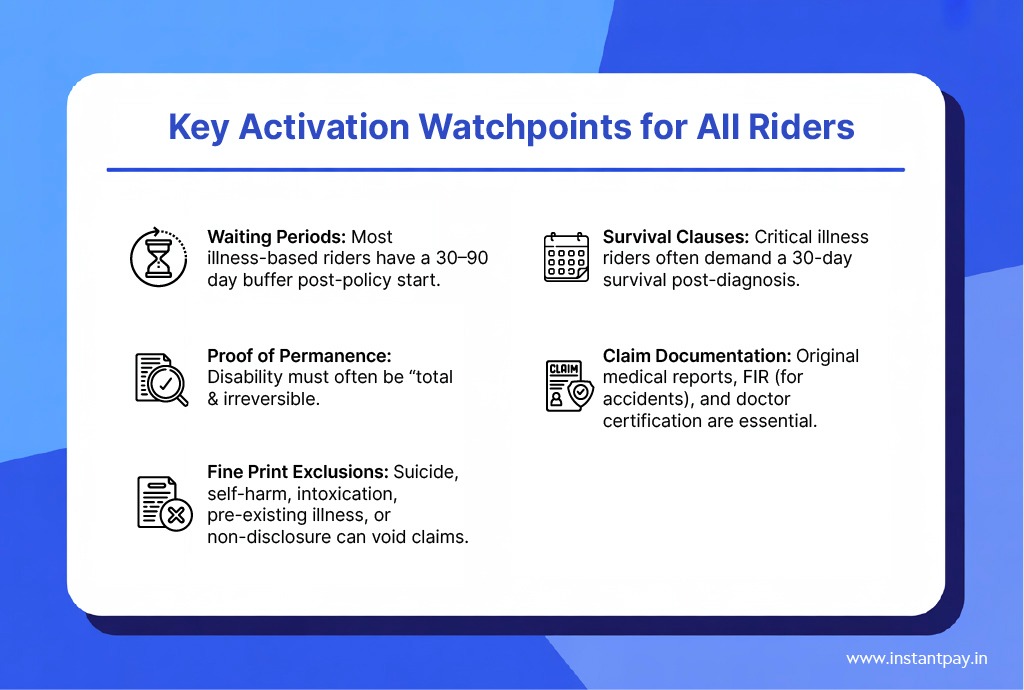
Many policyholders misunderstand when term insurance riders come into effect. Below are key activation conditions to look out for, based on rider types:
Rider-Wise Activation Conditions & Triggers
| Rider Type | Activation Trigger | Waiting/Survival Period | Major Exclusion Example |
| Critical Illness Rider | First diagnosis of covered illness | 90 days / 30-day survival | Pre-existing disease |
| Accidental Death Rider | Death from an accident | Within 180 days post-event | Intoxication or war injury |
| Waiver of Premium Rider | Permanent disability / critical illness | None (once diagnosed) | Temporary disability |
| Accidental Disability Rider | Total & permanent physical disability | Medical certification | Partial disability |
| Hospital Cash Rider | 24–48+ hrs of continuous hospitalization | 1–2 day threshold | OPD/daycare, cosmetic surgery |
How Riders Enhance Your Term Insurance Coverage?

Riders are not just policy add-ons; they’re strategic tools that fine-tune your term insurance plan to reflect your personal risks and responsibilities. While a base term plan covers life loss, riders prepare you for life’s uncertainties while you’re still living, from medical emergencies to income disruption.
Here’s why adding the right riders can enhance your coverage and reduce future claim complications:
- Low-Cost Customisation
Riders offer extended protection at a fraction of the cost of a standalone insurance plan. Instead of buying multiple policies, a few smart add-ons do the job—efficiently and affordably. - Covers Real-Life Uncertainties
From critical illness to accidental disability or hospitalization, riders plug protection gaps that a plain term plan can’t. - Bridges Gaps in Base Coverage
Term insurance is robust for death coverage but silent on scenarios like hospital stays, loss of earning capacity, or chronic illness—riders fill that silence with coverage. - Helps Prevent Claim Rejection
Certain riders (like waiver of premium) keep your policy active even when you can’t pay premiums, reducing the chances of lapse-related claim issues down the line.
Lean how term plans work and which rider combinations make sense, explore the comprehensive breakdown of term life insurance plans. It can help you map coverage to your specific life stage and risks.
Choosing the Right Riders: Who Should Consider Them?

Riders aren’t one-size-fits-all—they should reflect your lifestyle, financial responsibilities, and health risks. The right add-ons can turn a plain vanilla term plan into a policy that actually responds to real-world uncertainties. Here’s who should pay special attention to term insurance riders:
- Young Parents: Managing school fees, EMIs, and a growing family’s expenses calls for financial cushions like waiver of premium or income benefit riders in case something goes wrong.
- Salaried Individuals with Debt Commitments: If you’re juggling home or car EMIs, riders like accidental death or critical illness can secure repayment continuity and family stability.
- Self-Employed or Gig Economy Workers: With inconsistent income and limited social security, riders like hospital cash or disability benefits offer dependable fallbacks during health or income disruptions.
- People in High-Risk Occupations: Field workers, frequent travelers, or drivers should explore accidental death and disability riders as essential layers of risk protection.
- Those With Family History of Illness: A critical illness rider can significantly reduce financial strain if you’re diagnosed with a covered condition, especially where early detection and treatment costs are steep.
If you’re at the stage of comparing term plans, it’s smart to factor in how riders complement your financial goals. This Guide on Things You Must Know Before Buying a Term Life Insurance Plan in 2026 walks you through essential criteria and trade-offs worth knowing before you decide.
How Riders Create Real-World Financial Protection?
1. Living Through Critical Illness (CI Rider)
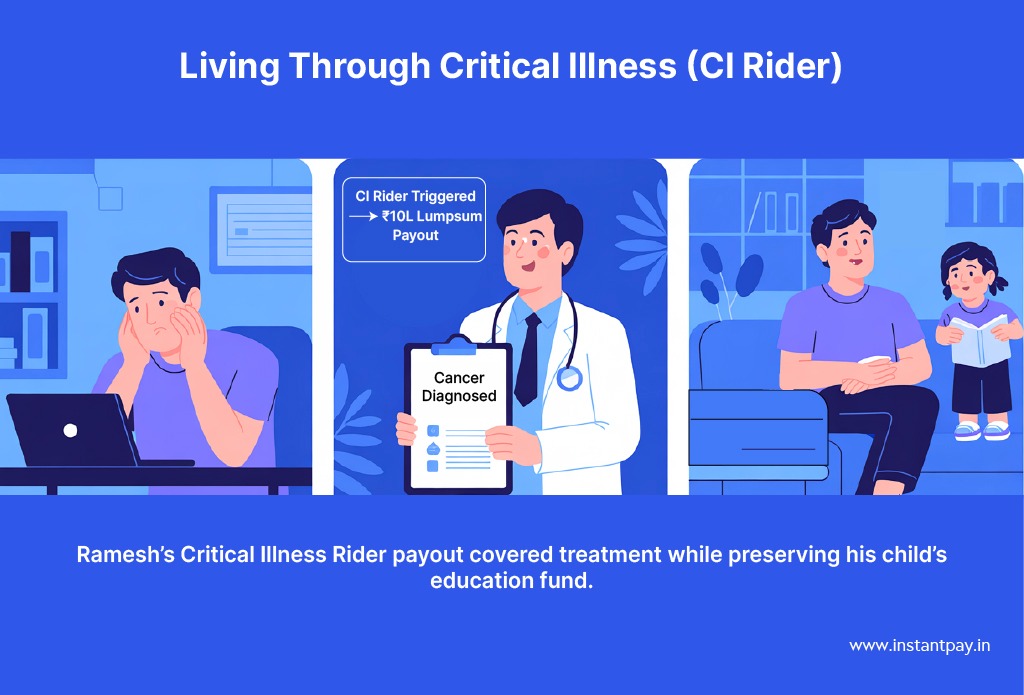
While working in a high-pressure job, Ramesh was diagnosed with early-stage stomach cancer. His base term plan wouldn’t help until death—but the Critical Illness Rider did. He received a Rs.10 lakh lump sum upon diagnosis, which covered hospital bills, post-treatment care, and gave him breathing room to take a medical leave. The payout helped him avoid dipping into his child’s education fund.
2. Accident Disrupts Income (Disability Rider)
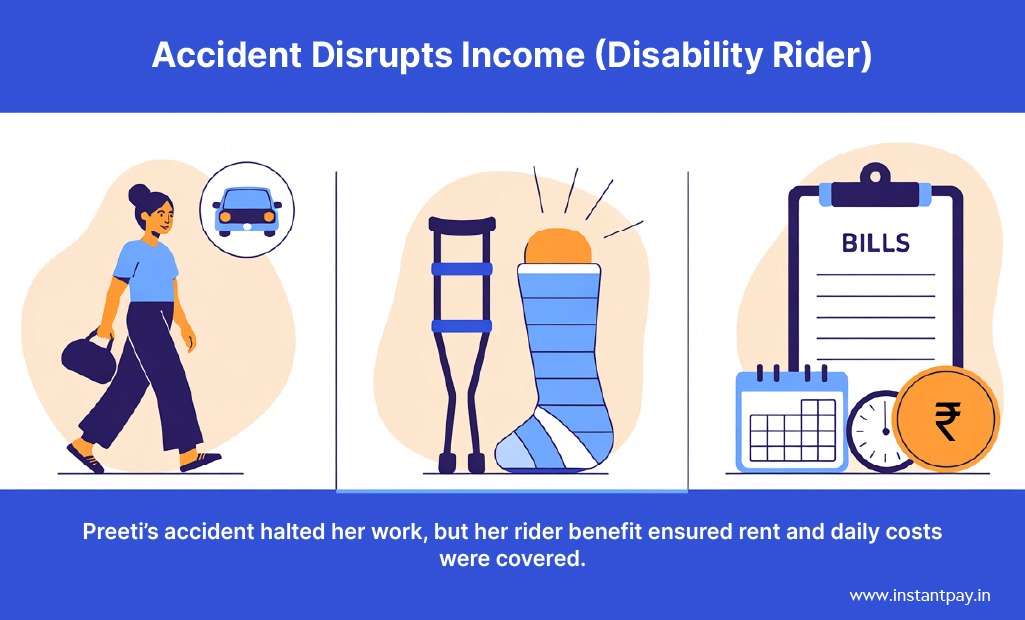
Preeti, 42, Field Sales Manager, Jaipur
On a routine work trip, Preeti met with a serious road accident and fractured her pelvis. She was out of work for nearly three months with no paid leave. Her Accidental Disability Rider paid out a lump sum benefit that helped her cover rent, household bills, and even arrange for temporary help at home. Without it, she would have had to take a high-interest loan or break her emergency savings.
3. Policy Continuity Amid Job Loss (Waiver of Premium)
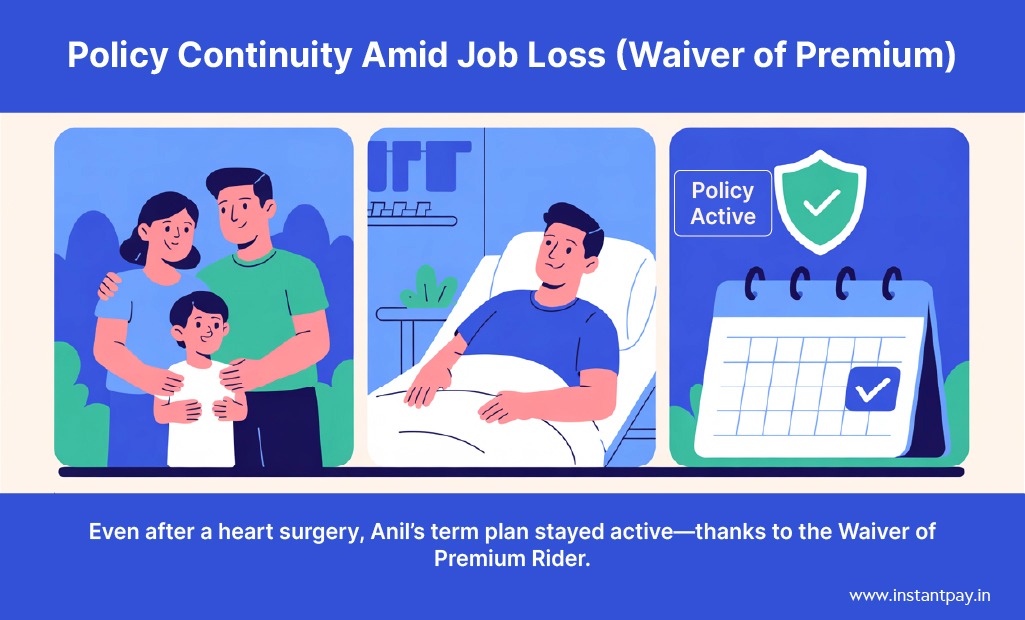
Anil, 45, Sole Breadwinner, Mumbai
After undergoing open-heart surgery, Anil couldn’t resume his job as an insurance advisor for over six months. With hospital bills already taking a toll, he was worried about missing policy payments. But his Waiver of Premium Rider ensured that his term plan stayed active even though he wasn’t paying premiums. His family’s financial safety net remained intact during the toughest phase of his life.
Best Term Insurance Rider Combinations to Choose in 2026
| Combo | Covers | Ideal For | Scenario Example |
| Accidental Death + CI + WOP | Death by accident, illness payout, premium waiver | Salaried with EMIs | Raj dies in an accident ,family gets full + rider payout |
| CI + Income Benefit + WOP | Illness, ongoing income, premium waiver | Breadwinner parents | Kavita is diagnosed with cancer, receives payout + monthly support |
| Accident Death + Disability + Child Support | Death/disability + child coverage | Field workers, parents | Ramesh is injured; child benefit secures education |
Points to Remember About Term Insurance Riders
Before you decide to enhance your term plan with riders, here are a few critical things you should keep in mind. These practical checks can help you avoid common mistakes and ensure your coverage truly meets your needs.

Quick Checklist for Smarter Rider Choices:
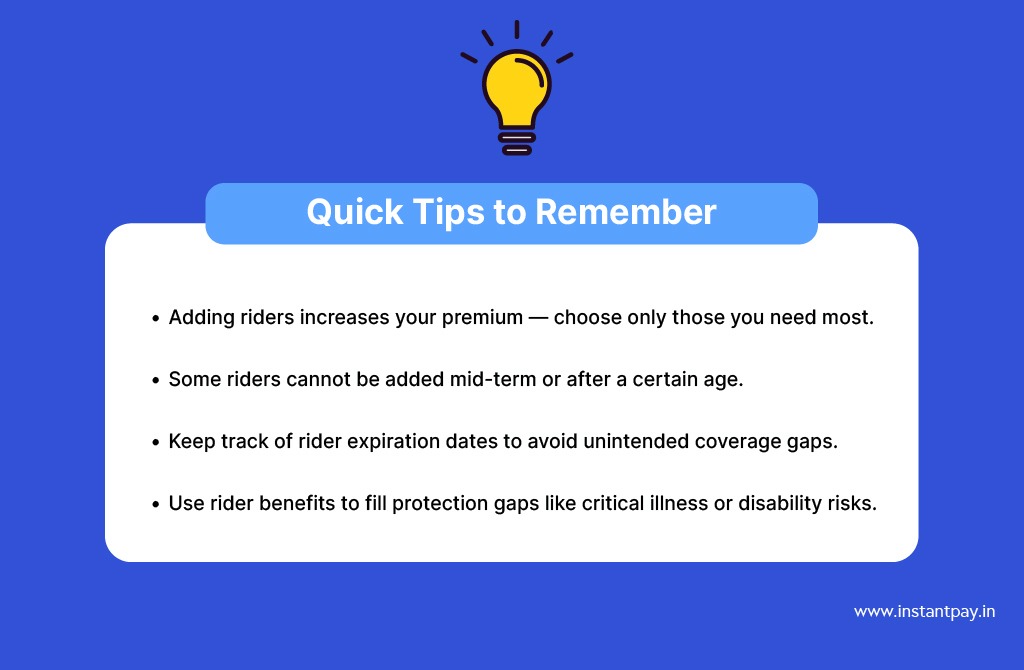
- Riders are typically fixed for the entire policy term.
Once added, they can’t be removed mid-policy, so assess their long-term relevance before including them. - More riders mean more cost.
Premiums for each rider get added to your base plan. Choosing too many can strain your budget over time. - Not all riders last as long as your base policy.
Some have a shorter term (e.g., up to age 60), even if your main cover runs till 70 or 80. Always verify the rider tenure. - Rider payouts are usually separate from your base sum assured.
For example, an accidental death rider adds an additional amount, not just an early payout of your main cover.
How to Choose the Right Riders in 2026?
Match riders to your health, dependents, and job risks. Don’t over-buy. Use comparison tools. Focus on high-risk areas like illness, disability, or income loss.
Smart Selection Tips
- Use online rider comparison platforms (many insurers now offer them in-app).
- Avoid duplicate coverage if you already own health or accident plans.
- Don’t add for the sake of it—prioritize real gaps (e.g., family history of illness).
- Check activation triggers and exclusions before signing
What are The Latest Trends in Term Insurance Riders for 2026?
Insurers in 2026 are transforming riders from static add-ons into dynamic, tech-powered tools. The biggest trends include bundled riders by life stage, wearable-linked wellness benefits, and real-time customization through mobile apps.

Key Term Insurance Rider Trends to Watch in 2026
1. Wellness Riders Powered by Wearables
Modern policies are integrating fitness trackers and health apps. These wellness-linked riders reward you for maintaining a healthy lifestyle, potentially reducing premiums or unlocking add-on benefits.
- Data from wearables (like steps, heart rate, or sleep) is now used for dynamic risk assessment
- Some insurers offer premium discounts or coverage boosts for consistent wellness goals
2. Bundled Rider Packs for Life Stages
To simplify choices, insurers are offering pre-packaged rider bundles based on your life stage or need:
- Starter Pack – for young earners (includes accidental death + waiver of premium)
- Family Pack – includes critical illness, hospital cash, and income benefit riders
- Senior Pack – includes terminal illness and long-term care-linked benefits

3. Real-Time Rider Add-Ons via Mobile Apps
2026 is seeing a shift from “one-time selection” to ongoing customization. You can now add or modify certain riders directly from the insurer’s app, based on new needs or life events.
- Add riders after major life changes like childbirth or job shifts
- Get alerts on rider eligibility or limited-time offers
4. Behavior-Based Dynamic Pricing
Some insurers use AI to tailor rider premiums based on your behavior or lifestyle inputs:
- Non-smokers or those with active fitness profiles may get lower-cost riders
- Digital health reports may help reduce waiting periods or improve coverage terms
5. Faster Claims and Instant Payout Triggers
Riders like Accelerated Death Benefit or Critical Illness are being reengineered for real-time payouts using AI-verified documents and pre-approved scenarios.

6. Zero-Cost Term Plans Are Reshaping Rider Strategy
Zero-cost term plans (where you get your premiums back on early surrender) are gaining popularity. This shifts how consumers evaluate the value of riders—many now view them as short-term protection tools rather than long-term liabilities.
How Term Insurance Riders Have Evolved by 2026
| Feature | Traditional Riders (Pre-2023) | Next-Gen Riders (2026 Outlook) |
| Selection Process | Chosen once at policy start | Can be added/modified via app after life events |
| Customization | Limited to fixed options | Highly personalized with bundles by age/life stage |
| Technology Integration | Manual processes | Linked to wearables, apps, and digital health records |
| Pricing Structure | Static premium based on age | Dynamic pricing based on behavior and risk data |
| Claim Payout Speed | Manual claims with long processing | AI-driven, some claims paid within 24–48 hours |
| Wellness Benefits | Not included | Actively rewards – healthy lifestyle through lower premiums |
| Access to Information | Via agents or websites | Full control through mobile dashboards |
| Risk Assessment Tools | Basic underwriting | AI + real-time data for deeper risk personalization |
How to Add Riders to Your Term Plan?
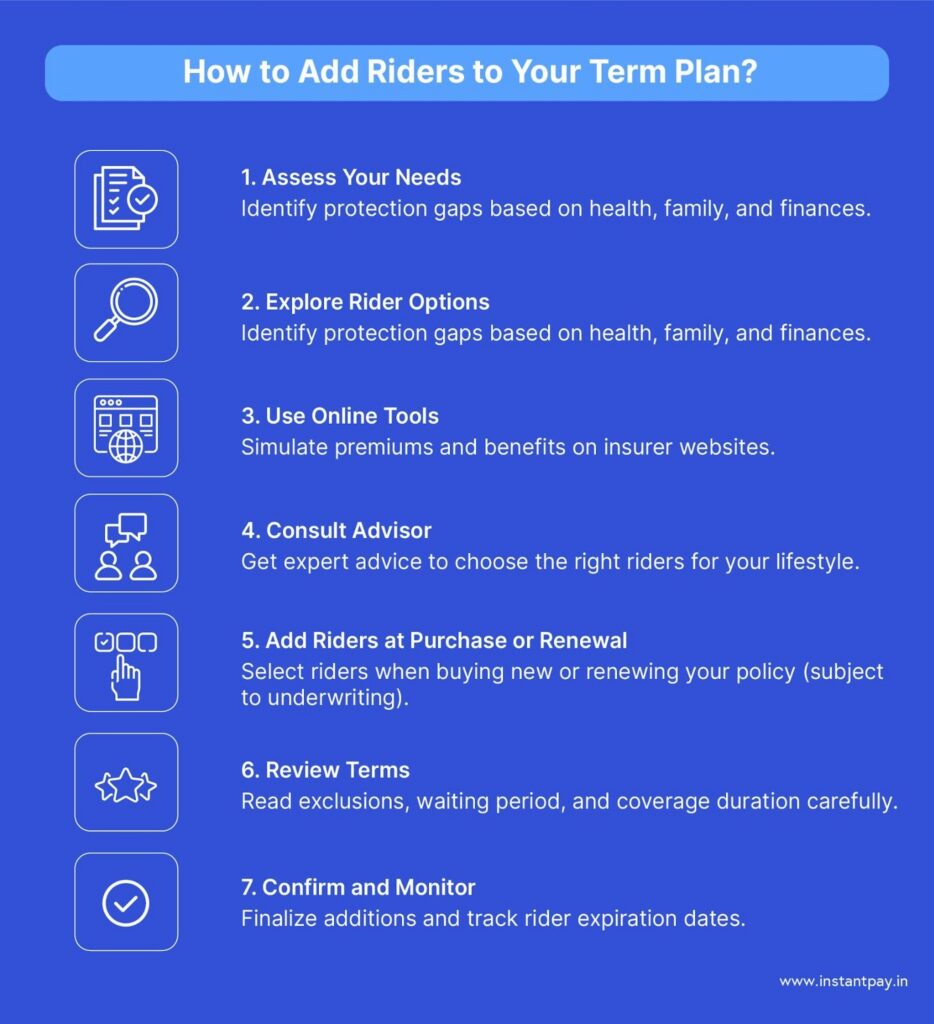
Adding riders to your term insurance plan is simpler than you might think, but it requires careful consideration to ensure they fit your needs and budget. Here’s a straightforward guide to help you add the right riders effectively:
Step 1: Assess Your Coverage Needs
Start by reviewing your existing term plan and identifying protection gaps. Consider factors like your health risks, family responsibilities, and financial goals. This helps you decide which riders complement your base cover.
Step 2: Explore Available Riders
Check which riders your insurer offers. Common options include Critical Illness Rider, Accidental Death Benefit Rider, Waiver of Premium Rider, and HospiCare Rider. Compare their benefits, costs, and activation conditions carefully.
Step 3: Use Online Comparison Tools
Most insurers provide digital platforms where you can customize your term plan by adding riders. Use these tools to simulate premium changes and rider benefits before finalizing your selection.
Step 4: Consult Your Insurance Advisor
If you’re unsure which riders suit you best, consult a trusted advisor. They can help balance your protection needs against your budget and explain the fine print like waiting periods and exclusions.
Step 5: Add Riders During Policy Purchase or Renewal
You can add riders either when buying a new policy or at renewal, depending on the insurer’s rules. Keep in mind some riders require fresh medical underwriting, especially if added after policy inception.
Step 6: Review Rider Terms Thoroughly
Before confirming, read all rider documents carefully. Pay attention to exclusions, claim conditions, and whether the rider coverage aligns with your policy term.
How Instantpay Simplifies Adding Term Life Insurance Riders
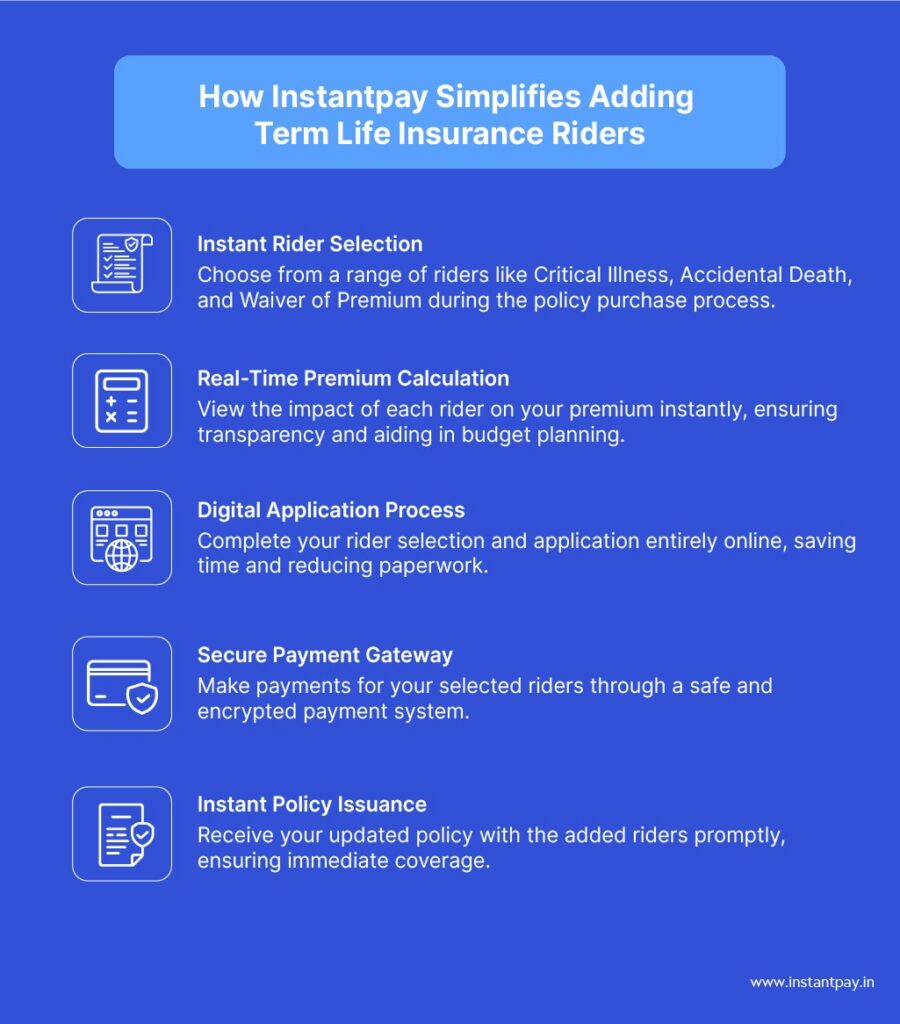
Instantpay offers a seamless digital platform to enhance your term life insurance coverage with customizable riders. Here’s how you can benefit:
By integrating rider options, Instantpay empowers you to tailor your term life insurance policy to suit your evolving needs.
Final Thoughts
Riders aren’t just extras, they’re powerful add-ons that transform a basic term plan into a personalized protection tool. In 2026, with smarter, tech-integrated, and wellness-linked riders gaining traction, choosing wisely can significantly improve your family’s financial safety net.
Before you buy, always:
- Match riders to your life stage and risk profile.
- Compare benefits and costs, don’t overload your policy.
- Read the fine print, especially activation conditions and exclusions.
- Use trusted digital platforms like InstantPay to compare and opt for riders effortlessly.
The right rider doesn’t just add coverage, it adds confidence.
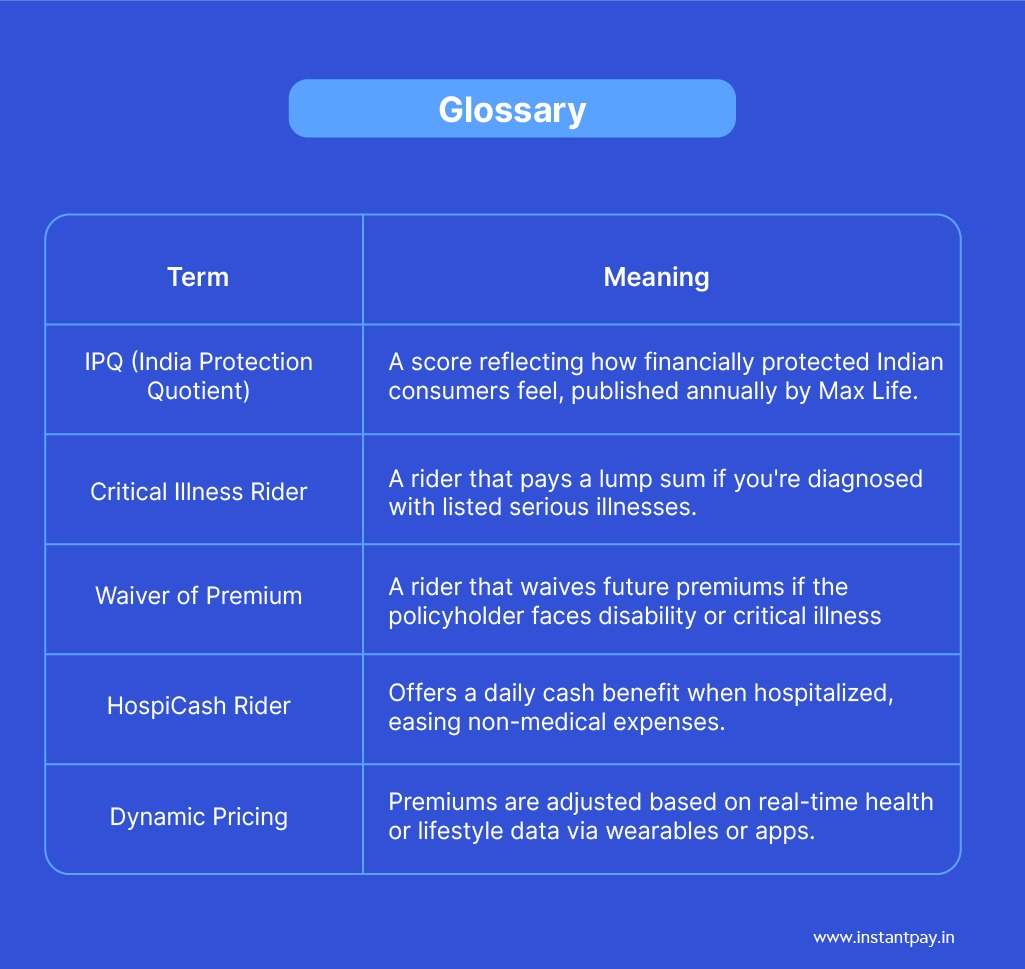
FAQs
1. What is a rider in term insurance?
A rider is an optional add-on to your base term insurance plan. It offers extra coverage like critical illness, accidental death, or disability benefits for a small additional premium.
2. Are term insurance riders necessary?
Riders aren’t mandatory but can significantly enhance your coverage. They’re useful if you want protection against specific risks not covered in your base policy.
3. Do term insurance riders affect premiums?
Yes, riders increase your overall premium. Each rider has its own cost, added to your base term insurance plan.
4. Are term insurance riders expensive?
Most riders are affordable individually, but costs can add up if you choose many. It’s best to pick only the ones relevant to your needs.
5. What is the income benefit rider in term insurance?
It provides monthly payouts to your family (instead of a lump sum) if the insured passes away — ensuring steady financial support over time.
6. Will term insurance premiums increase in 2026?
Premiums may rise in 2026 due to inflation, enhanced features, and stricter underwriting. Buying early still ensures lower lifetime costs.
7. Can I remove riders from term insurance?
No, once a rider is added, it typically stays fixed for the policy term. You can’t remove it midway unless the insurer offers that option.
8. What is the 3-year rule in term insurance?
It’s a common clause where the insurer cannot reject a death claim after 3 years of policy issuance, except in proven fraud cases.
9. Should I add riders with term insurance?
Yes, if they match your personal risks. Riders like critical illness, accidental death, and premium waiver are often worth considering.