The necessity of determining identities both promptly and securely is a critical challenge for companies operating in India during this time of digital transformation. The Aadhaar Verification Application programming interface (API) can alleviate some of the challenges associated with determining the identity of an individual via their Aadhaar card information as well as facilitate proper government compliance in the onboarding of customers by allowing businesses to do so quickly and economically.
With the ability to access and authenticate an individual’s identity via the government-maintained national database of the Aadhaar system (Unique Identification Authority of India), the Aadhaar Verification API offers businesses a method of completing the verification process quickly. By accessing the database in a digital format rather than relying upon lengthy, manual processes, there is less likelihood of errors being made during the identity verification process, thus creating efficiencies in business operations.
Over 1.3 billion users are currently enrolled in the Aadhaar system, and it is being used to verify identity for financial institutions as it is an integral part of India’s financial infrastructure. The Aadhaar verification process reflects numerous benefits, including increased speed and cost savings on verification of identity as well as contributing significantly toward financial inclusion, especially in rural areas due to a lack of other identification alternatives.
According to numbers provided by the government, during the period of October – December FY 2022-23, there were more than 8.48 billion transactions performed through the Aadhaar Verification API, representing 18.53% growth compared to the previous quarter; a continued increase in the number of Aadhaar e-KYC (Electronic Know Your Customer) since December alone resulted in more than 3.249 billion e-KYC transactions (positioning this number significantly higher than in November, when there were 2.0 billion e-KYC transactions).
In April 2023, more than 250 million Aadhaar e-KYC transactions were processed with an immense increase of 19.3% from the same month the previous year through more than 1.96 billion Aadhaar authentication transactions. These statistics demonstrate an increasing reliance on digital verification while confirming the continuing reach of Aadhaar, which has been adopted by nearly 95% of all ages in the adult population.
Evolution of Aadhaar Security – A Historical Perspective
2009 – Aadhaar was initially implemented when UIDAI was formed to build a centralized, secure database for identity verification.
2016 – The introduction of the Aadhaar Act established a legal framework for ensuring security and privacy of data by enforcing encryption of data along with restricting who can access data.
2017 – The Supreme Court of India’s ruling at this time reaffirmed that Aadhaar would be used voluntarily for private businesses while recognizing that adequate protection for user data will be required.
2021 – Draft legislation, known as the DPDP Bill, was being developed to ensure that Aadhaar’s implementation aligns with several global standards regarding the protection of personal data, including GDPR.
The above milestones have laid the foundation for the current levels of security incorporated into the Aadhaar Verification API.
Insights About Aadhar Verification in India
- In March 2023, there were about 2.31 billion authentication transactions via Aadhaar. This shows how widely used Aadhaar has become and how Aadhaar has helped make it quicker for customers to get new accounts opened.
- Over 219.3 million transactions took place through the Aadhaar Enabled Payment System (AePS) in March 2023. This demonstrates how well the API can help make transactions and provide services more efficiently.
- By using biometric Aadhaar-based authentication to verify beneficiaries of government subsidies through the Public Distribution System (PDS), Aadhaar reduces leakage of subsidies by up to 15%.
- Insurance companies can use Aadhaar-based verification to help reduce fraudulent claims, and the Insurance Regulatory and Development Authority of India (IRDAI) recently reported that 10% of all claims filed each year are fraudulent; therefore, Aadhaar-based verification greatly reduces this number.
- Businesses can use the Aadhaar Verification API to document compliance with regulations and avoid being fined for noncompliance as well as reduce costs from having to manually document compliance.
What is the Aadhaar Verification API?
The Aadhaar Verification API allows companies doing business in India to verify and authenticate people’s identities based on their Aadhaar number using a digital method. The Aadhaar Verification API is part of India’s digital infrastructure that allows for easy access to an individual’s demographic and biometric information.
Importance of Aadhaar Authentication API in India
The Aadhaar Authentication API acts as an important verification method when engaging in business transactions and other interactions as more businesses go away from physically conducting business with individuals.
The Aadhaar Authentication API is very important in providing businesses a method to quickly verify an individual’s identity and to reduce fraud and identity theft in India. This verification is vitally important for a number of business sectors, including banking, insurance, telecommunications, e-commerce, etc., where it is vitally important to be able to verify a customer’s identity
Key Features of Aadhaar Verification API
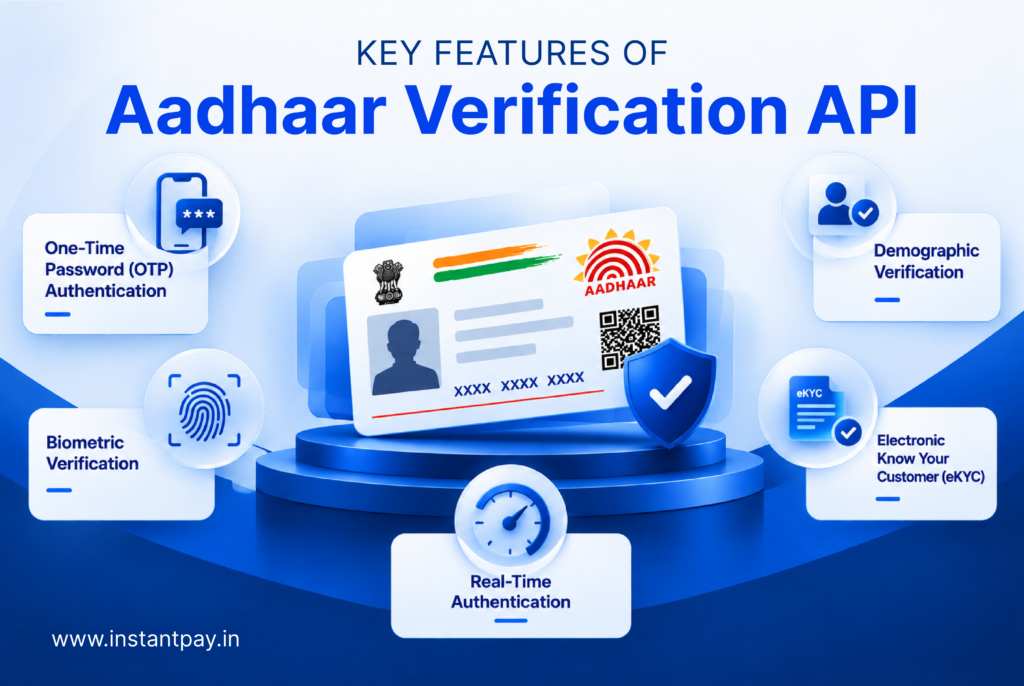
The API is packed full of robust features for the purpose of identity verification via Aadhaar documents. Here are a few:
- One-Time Password (OTP) Authentication – To establish a rightful identity, the user receives via SMS a one-time password to verify registration on his/her mobile device.
- Demographic Verification – Basic demographic information (e.g., name, date of birth, residential address) about users is verified against the Aadhaar database.
- Biometric Verification – Biometric data (e.g., fingerprints, iris scans) about a user is checked against another biometric record stored within the Aadhaar database.
- Electronic Know Your Customer (eKYC)—Companies utilize this process when establishing a customer’s identity and can do so with high accuracy quickly and securely.
- Real-Time Authentication—Instantaneous authentication enables no delays in conducting transactions between the company and customers.
How Aadhaar Card Verification Online Works
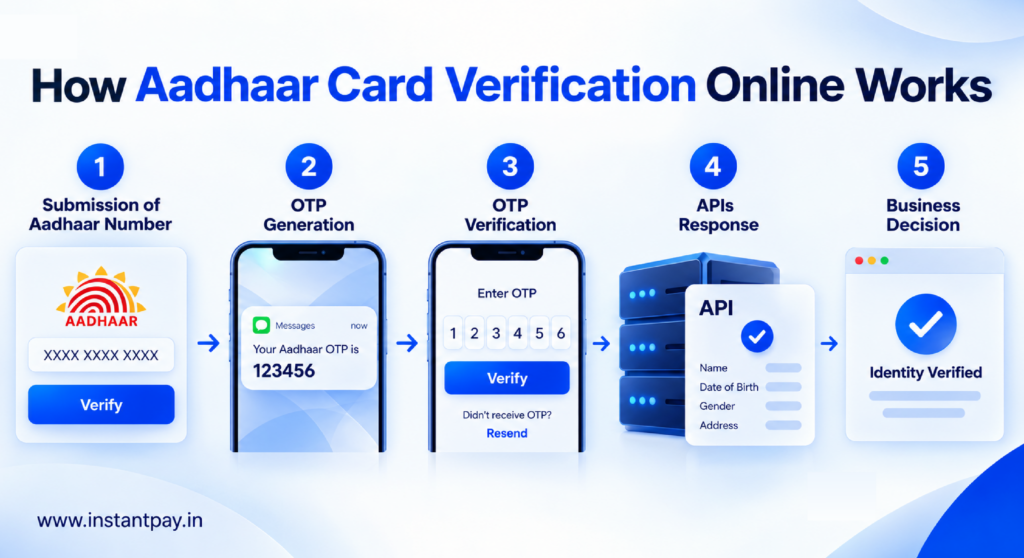
The online Aadhaar card verification process involves a few straightforward steps:
1. Submission of Aadhaar Number: The individual inputs their Aadhaar number for verification.
2. OTP Generation: An OTP is generated and sent to the mobile number registered with the Aadhaar account.
3. OTP Verification: The individual inputs the OTP, confirming their identity.
4. API Response: Once verified, the API retrieves necessary demographic data and shares it with the requesting business.
5. Business Decision: The business processes the information and completes the necessary transaction or access grant.
Utilizing the Aadhaar Verification API, businesses can quickly and effectively validate the identity of their users, ensuring compliance and security.
Benefits of Aadhaar Authentication API for Businesses

Incorporating the Aadhaar Authentication API into your business processes will give you many benefits and significantly enhance operational efficiency and customer trust.
Streamline Customer Onboarding with Instant Aadhaar Verification
Using the Aadhaar Verification API significantly reduces the time and effort associated with onboarding new customers. Instant identity verification allows companies to shorten their time to acquire new customers by improving the overall onboarding experience for their customers by eliminating the bureaucracy that is typically involved in signing up for a new service.
Verify Aadhaar Card Details for Secure Transactions
Businesses need to ensure that they provide a secure environment for customers to protect their private information and financial transactions. By utilizing the API to verify Aadhaar Card data, businesses can provide customers with confirmation that only legitimate users can have access to their services. The establishment of customer confidence through secure verification will create a high level of trust when customers conduct transactions with the business; therefore, the possibility of impersonation or fraud is minimized.
Reducing Fraud with Aadhaar KYC API
Fraud prevention is of the utmost importance to any business that collects private information from its customers. The Aadhaar KYC (Know Your Customer) API plays a critical role in eliminating fraudulent activities by enabling companies to verify the true identity of customers efficiently and accurately. The retrieval of vast amounts of biometric and demographic data for each individual will enable companies to identify potential fraud in an efficient manner. Companies that operate in a secure manner will also help to create a positive image for businesses that are perceived to be secure and reliable.
Enhancing User Experience Through Quick Aadhaar Checks
In today’s digital world, consumers expect quick and seamless service. One of the many ways the Aadhaar Verification API enhances the overall customer experience is through the ability of businesses to perform instant identity verifications, therefore reducing customer wait times and enhancing overall service. Whether a customer is opening a new bank account, requesting a new SIM card for their phone, or establishing customer accounts with an online store, the speed and convenience of an Aadhaar check will enhance customer experience. As a result, customers are more likely to return for future business and to develop a long-term relationship with the company.
Using the Aadhaar Verification API is a valuable and efficient tool for businesses looking to conduct reliable and efficient identity verification procedures. In addition to process streamlining, security enhancement, decreasing Fraudulent activity, increased customer satisfaction, and improving services to customers in today’s rapidly changing digital age, the Aadhaar Verification API will provide businesses many valuable and impactful benefits
How to Verify Aadhaar Details Online in India?
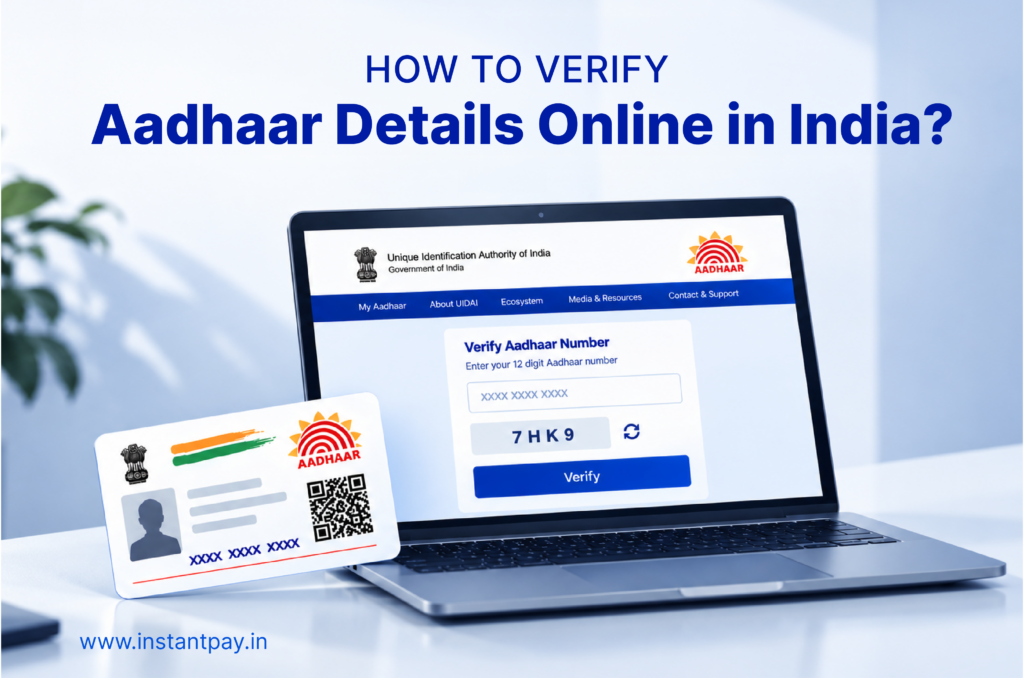
In India, the process for validating your Aadhaar information online has gotten easier and more important when looking for fast ways to identify people. This section will provide you with information about how to verify people’s Aadhaar information online, especially through using the Aadhaar Verification API, which can be considered a modern tool for performing these types of verifications.
Steps to Check Aadhaar Details Online
To check your Aadhaar registration online, just follow these basic steps:
1. Go to the UIDAI Official Website: You can use the online UIDAI Official Site to help find out if you’re registered with Aadhaar or not.
2. Choose the Aadhaar Verification Option: There will be an option on the front page that allows you to verify your Aadhaar number and if it is still active.
3. Indicate Your Aadhaar Information: Enter your 12-digit Aadhaar number that you want to verify. Make sure that you enter your Aadhaar number correctly, or an error will occur.
4. Complete the CAPTCHA Process: You will then have to complete a CAPTCHA to verify that you are making this request and not an automated program.
5. Submit Your Request/Receive Results: Once all of your requested information has been completed, you will receive the verification result back from the system. If the Aadhaar Number that was submitted is still an active Aadhaar Number, the system will inform you of the active status.
Using Aadhaar Card Verification API for User Verification
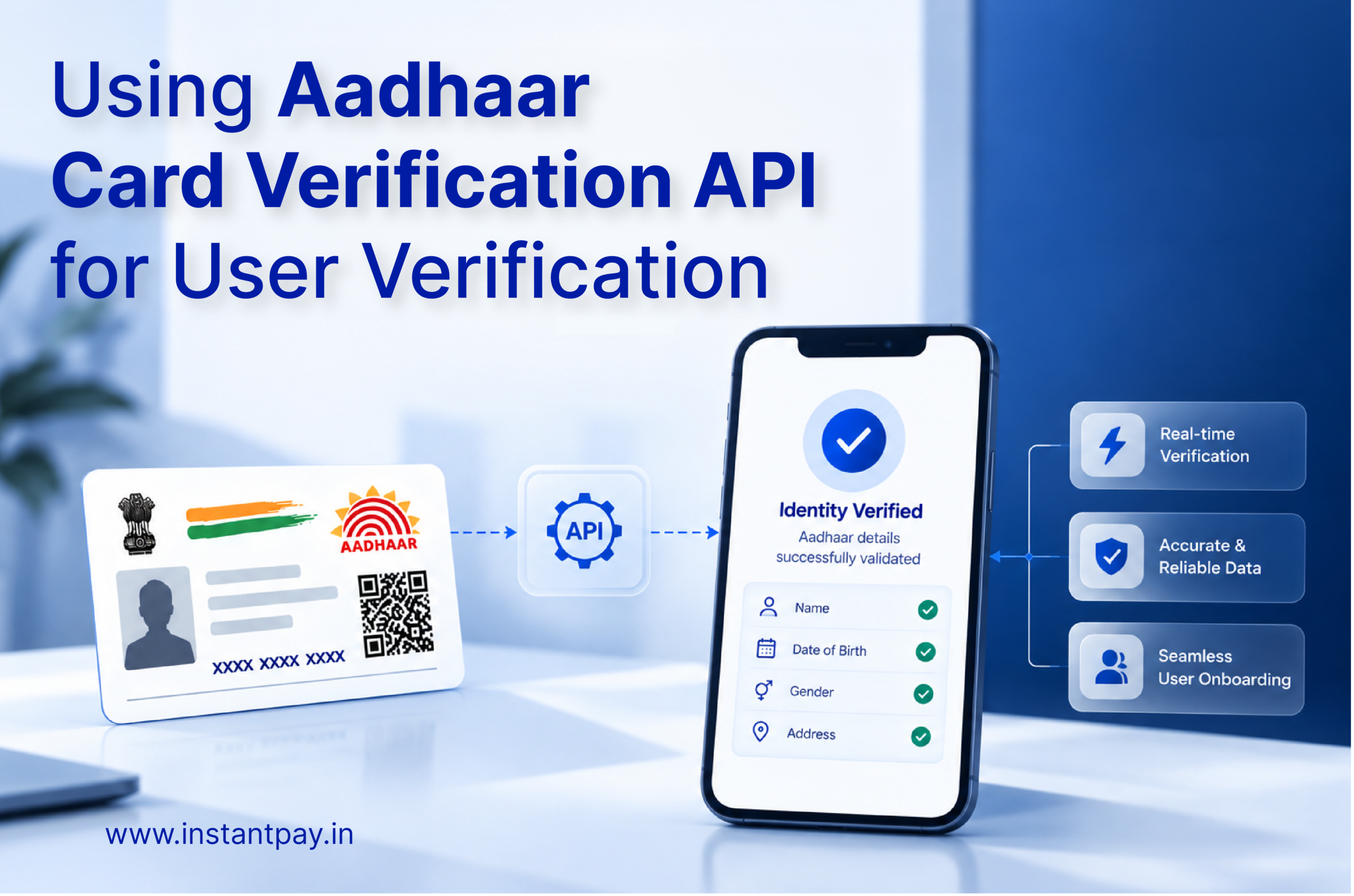
The Aadhaar Card Verification API is an effective way for businesses to verify user identity. This API can be used by companies in many different ways:
- Automate User ID Verification Process: The process of verifying user identity can be done by developing an automated method that uses the Aadhaar database and does not require human involvement.
- Validate User Data through an Automated Process: The accuracy of user data can be verified by comparing the data supplied by users and the Aadhaar database.
- Enhance User Security Procedures: Use robust and secure API technologies to perform any user data verifications.
Real-Time Verification with eKYC Aadhaar Card
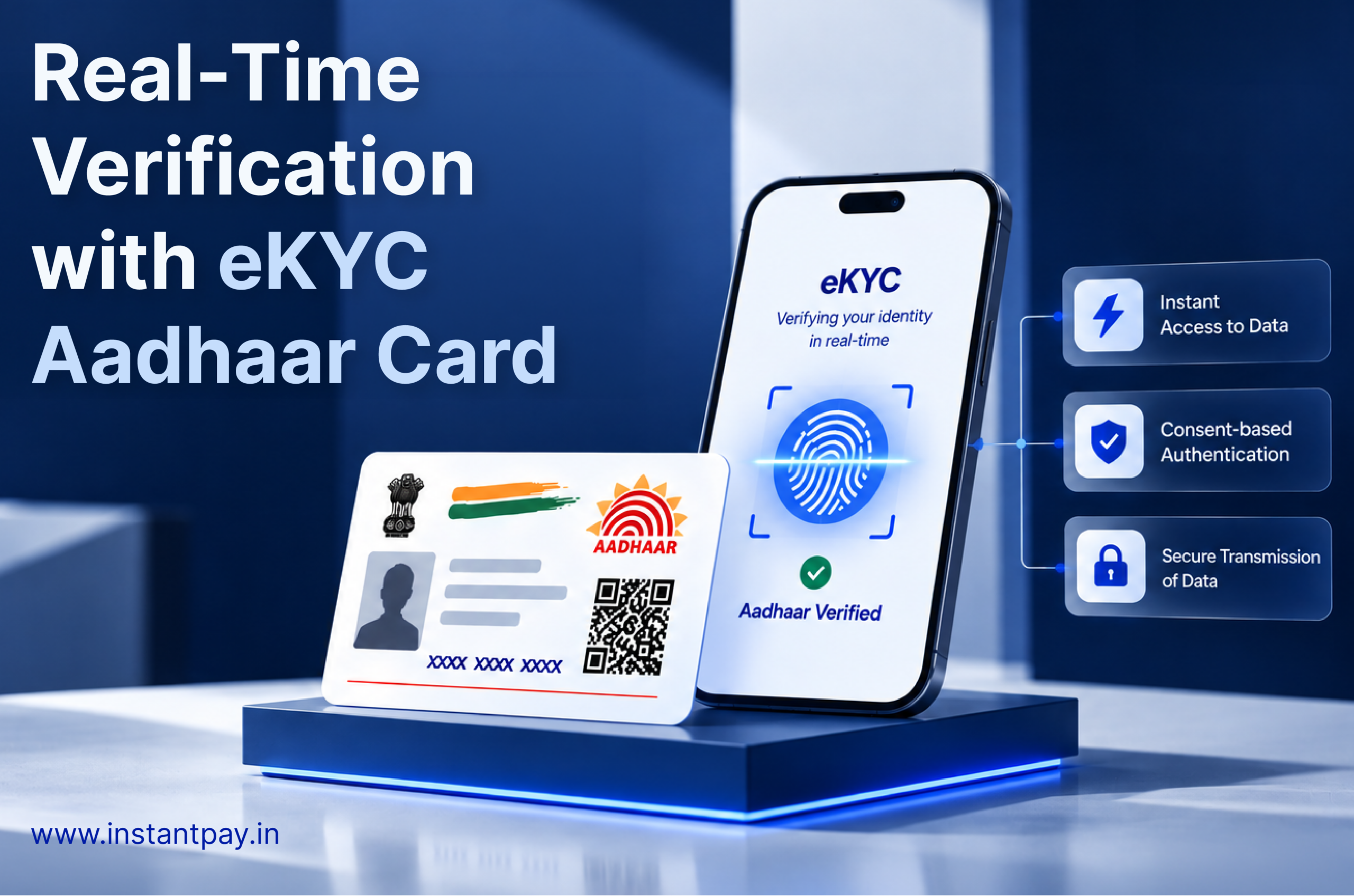
Electronic Know Your Customer (eKYC) is an online verification of Aadhaar cards which facilitates real-time verification of the cardholder’s identity. Here’s how eKYC conducts real-time verification.
– Instant Access to Data: Because eKYC can access user data from the Aadhaar database, the user does not have to submit any paper documents.
– Consent-based Authentication: Users give eKYC explicit consent by providing an OTP (one-time password) that they receive via text message to their registered mobile number, which protects the user’s privacy and confidentiality.
– Secure Transmission of Data: All information exchanged during the eKYC verification process is transmitted securely and encrypted in compliance with applicable laws.
Ensuring Accuracy with Aadhaar OCR API
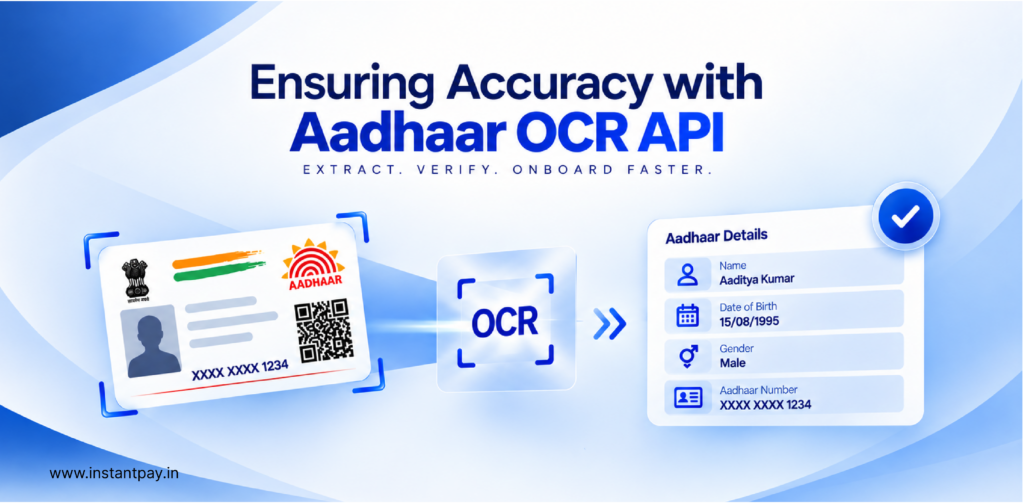
An Optical Character Recognition (OCR) API is a revolutionary tool that is able to digitally capture your Aadhaar card data. By using an OCR API, it provides the following accuracy improvements:
- Convert your printed Aadhaar card to digital: The OCR API automates the conversion of all printed Aadhaar card information into a digital format, making it easier to manage your data.
- Reduce the Chance of Errors When Capturing Your Data: With the automated data capture process provided by the OCR API, you will have much less chance of making the types of mistakes that occur when you enter your data by hand.
- Quickly Process Your Aadhaar Card Data: The API allows you to process your Aadhaar Card Data through its system quickly, enabling you to verify your identity faster than ever before and onboard customers smoothly.
Key Features of Aadhaar Number Verification API in India
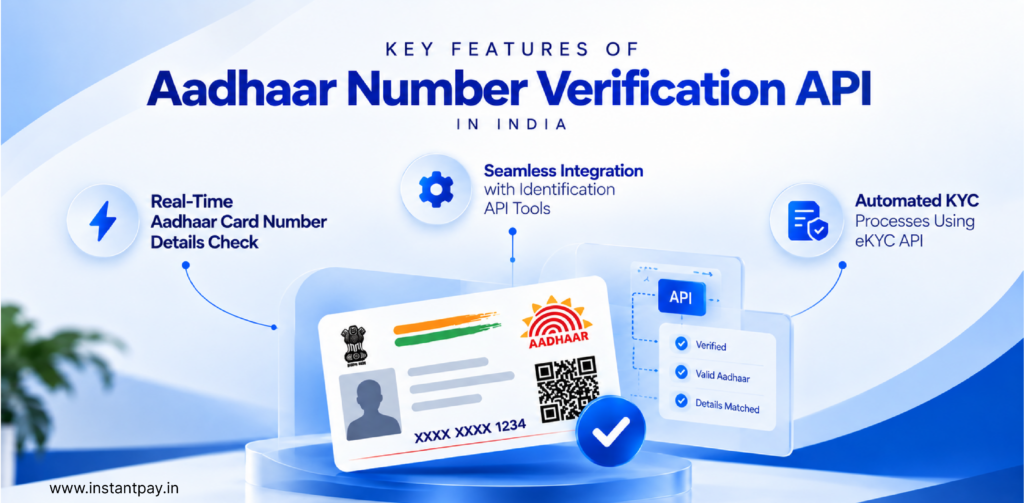
The Aadhaar Number Verification API has changed the way that companies in India verify their customers’ identities through its many features. Here are some important features that show why this is an essential tool for companies.
Real-Time Aadhaar Card Number Details Check
With this feature, companies can check a person’s Aadhaar number in real-time:
- Businesses will be able to receive real-time status updates on an Aadhaar number. As a result, companies will be able to make quick decisions based on this information.
- Companies can streamline the verification process of their customers’ identities by using real-time data.
Seamless Integration with Identification API Tools
The Aadhaar Verification API allows integration with your existing identification services without having to change how they operate right now:
- Integration of Verification APIs Easily integrated into your current identification systems, enhancing the identification function of your system without having to change the way your systems currently operate.
- Can be used with other verification APIs Designed to work with other identification and verification systems to create a comprehensive verification solution for your organization.
Automated KYC Processes Using eKYC API
Using the eKYC API to automate KYC (Know Your Customer) processes is revolutionizing business operations:
- Decreased Miscellaneous Workload: KYC manual processes are now streamlined with KYC automation, meaning your business has less paperwork and more available time for employees as well as a lowered risk of human error.
- Speedy Customer Onboarding: When KYC processes are automated, customer onboarding is becoming considerably quicker, leading to overall improved customer experience.
- Regulatory Compliance: Businesses that utilize the eKYC API have peace of mind knowing that they will meet the regulatory standards of all respective regulations, including but not limited to anti-money laundering laws.
Benefits of Instant Aadhaar Verification for Businesses
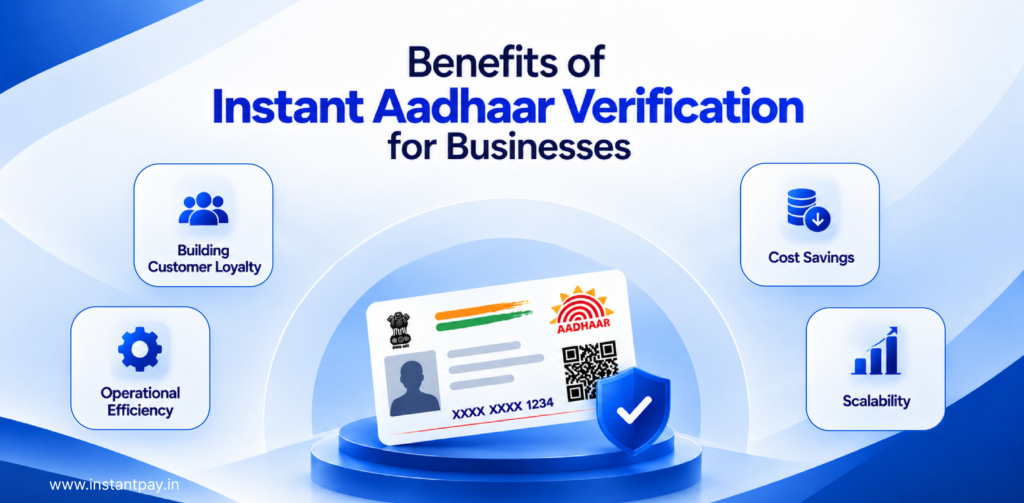
The benefits of implementing Instant Aadhaar The verifications for businesses are vast and include the following:
- Building Customer Loyalty – Customers are more confident in their identities being validated accurately and securely and therefore create greater loyalty to the business.
- Operational Efficiency – With Instant Aadhaar Verifying, the amount of time taken to perform an identity verification is reduced, and thus overall efficiency across all business activities is improved.
- Cost Savings – Automating the identity verification process via instant verification can significantly decrease the cost of the manual identity verification process.
- Scalability – As businesses grow, the API can grow with them, providing additional validation capabilities without compromising on speed or accuracy.
In summary, the Aadhaar Verification API has become an essential tool for businesses in India that want to update how they identify and validate their customers. By implementing real-time validation checks and seamlessly integrating with existing systems, businesses are able to meet their compliance obligations while streamlining their processes and increasing customer loyalty.
No matter what size or stage of growth your company may be at, integrating Aadhaar verification APIs can help you significantly enhance your verification process while providing a more secure and digitally efficient future.
Integration Process
Integrating an Aadhaar Verification API into the way you do business can significantly increase the effectiveness of your identity verification processes. The integration process of an Aadhaar Verification API consists of a sequence of planned steps, as well as certain technical requirements that must be kept in mind for a successful implementation. In this section we will describe the integration process to provide assistance with the seamless integration of an Aadhaar Verification Service (AVS) within your system.
Step-by-Step Guide to Integrating and Using Aadhaar Verification API
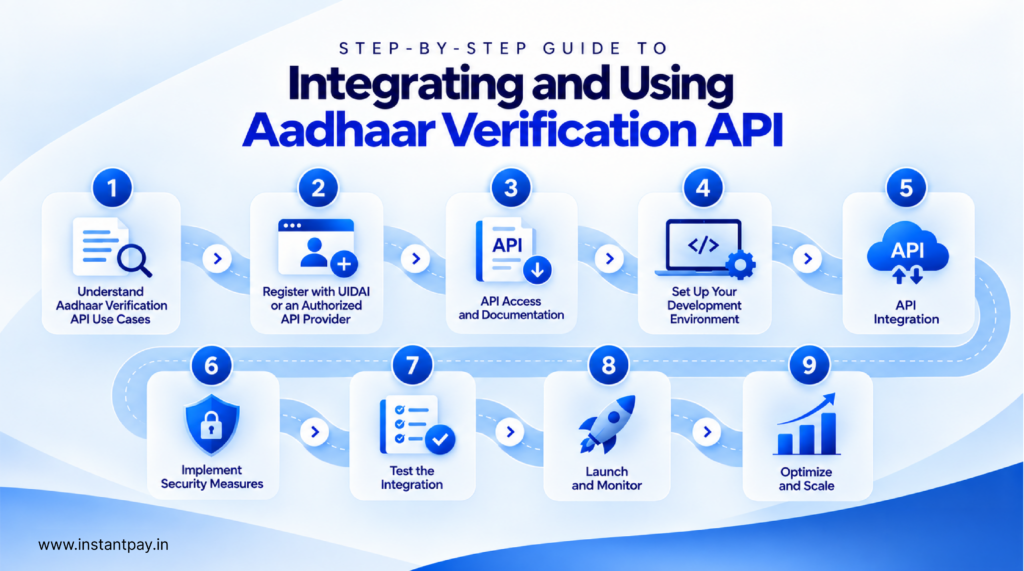
Aadhaar Authenticating API allows companies and organisations to verify the Aadhaar number of individuals. The combination of these services will give users a simple and quick means of reliably authenticating Aadhaar data in real time that meets all applicable laws and regulations. The purpose of this article is to provide you with detailed information on how to effectively integrate and use the Aadhaar Authentication API.
Step 1: Understand Aadhaar Verification API Use Cases
Establishing identification standards is important to verify that a person does indeed have an Aadhaar and is who they say they are. Requirements for using Aadhar for identity verification may include:
- KYC (Know Your Customer) verification – to validate customers at the time of onboarding/finding new customers
- Fraud prevention – to verify identity or prevent an identity from being taken.
- Service Access – to provide secure access to digital services or platforms.
Identifying the specific use case will also help ensure that Aadhaar verification has been properly implemented.
Step 2: Register with UIDAI or an Authorized API Provider
- UIDAI Registration:
- You can submit an application to UIDAI, including the name of your organization and how you plan to use the API.
- You must satisfy your compliance obligations, including data security procedures and being operationally ready.
- After obtaining approval, you will be able to get credentials for accessing the API.
- Third-Party Providers:
- There are many approved providers (e.g., Instantpay) that make it easier for you to integrate into Aadhaar API.
- Establish a partnership with a recognized provider so that you may easily access the API they provide for you.
Step 3: API Access and Documentation
When you have completed an application:
- Acquire all of the necessary credentials to access the API, including your apiKey, clientId, and secretKey.
- Obtain technical specifications from either UIDAI or your service provider.
- Familiarize yourself with the API endpoints, their request and response formats, and data fields.
Step 4: Set Up Your Development Environment
- Backend Configuration:
- You have the choice of backend programming language such as Python, Java, or Node.js, which will be used to interface with the API.
- You will need to install appropriate libraries that can provide a secure means of connecting to the API, such as HTTPS for secure communication and OAuth for authentication.
- Infrastructure Requirements:
- A reasonably good internet connection is necessary to operate this system.
- A secure server environment must be established to ensure the secure storage of API Keys and other sensitive data.
- Database Integration:
- The database you choose will need to be linked to store Aadhaar authentication logs.
Step 5: API Integration
- Choose the Verification Method:
- Demographic Confirmation: In order to validate their identity, a user will provide specific information (such as date of birth).
- Fingerprint/Iris Verification: The validation process will use either a fingerprint or an iris scan.
- One-Time Password Validation: The user will receive a one-time password (OTP) via text message to verify their identity.
- Build API Requests:
- Structure your API according to your developer documentation.
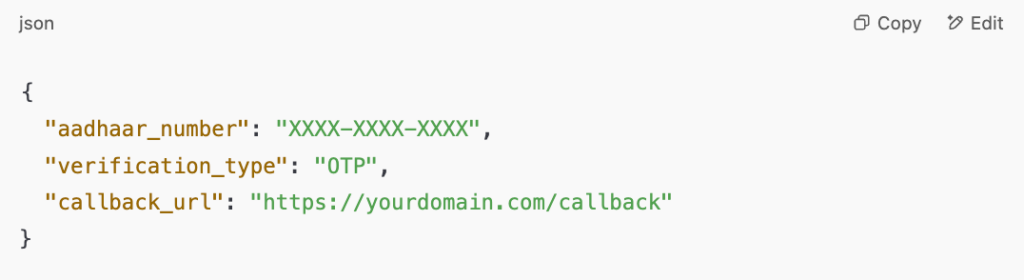
- The request must include the recipient’s Aadhaar number and a parameter designating how you will validate their identity and a callback URL for your application to send the response back to.
Example Request (for OTP Verification):
- Handle API Responses:
- Successful verification returns user details like name and address.
- Log errors for debugging (e.g., invalid Aadhaar numbers or connectivity issues).
Step 6: Implement Security Measures
- Data Encryption:
- Use end-to-end encrypted transactions (for example, AES256) for all transactions.
- Log and interface AADHAAR numbers should be masked.
- Tokenization:
- Replace AADHAAR numbers with unique tokens to reduce the possibility of bad actors accessing AADHAAR data.
- Secure Storage:
- Do not store Aadhar data unless you have written authority to do so.
- Use a secure database with restricted access based on the user’s role in your company.
Step 7: Test the Integration
- Conduct End-to-End Testing:
- Validate all types of requests (e.g., demographic, OTP).
- Validate all responses (i.e., based on different scenarios: i.e., invalid Aadhaar number, server down, etc.)
- Load Testing:
- Simulate a large number of concurrent requests to ensure the system can scale effectively.
- Compliance Testing:
- Validate adherence to guidelines set by UIDAI and data protection laws (e.g., DPDP Act).
Step 8: Launch and Monitor
- Deploy to Production:
- Move the fully tested integration from your testing environment into your production environment.
- Establish end-user dashboard monitoring to view verification requests as they occur.
- Monitor API Usage:
- Utilize metrics to track overall number of requests processed, how many were successful (successful rate), and how many errors occurred (i.e., failed requests) to identify trends in usage.
- Implement alerts with the intention of notifying about any abnormal or unexpected activity.
- Maintain Logs:
- Retain transaction logs to adhere to audit and compliance regulations.
Step 9: Optimize and Scale
- Regular Updates:
- Keep your API version updated to leverage new features and security patches.
- Expand Use Cases:
- Explore additional applications, such as multi-factor authentication or fraud analytics.
- Customer Feedback:
- Continuously gather feedback to improve the user experience and address potential issues.
Technical Requirements and Considerations for Aadhaar Verification API
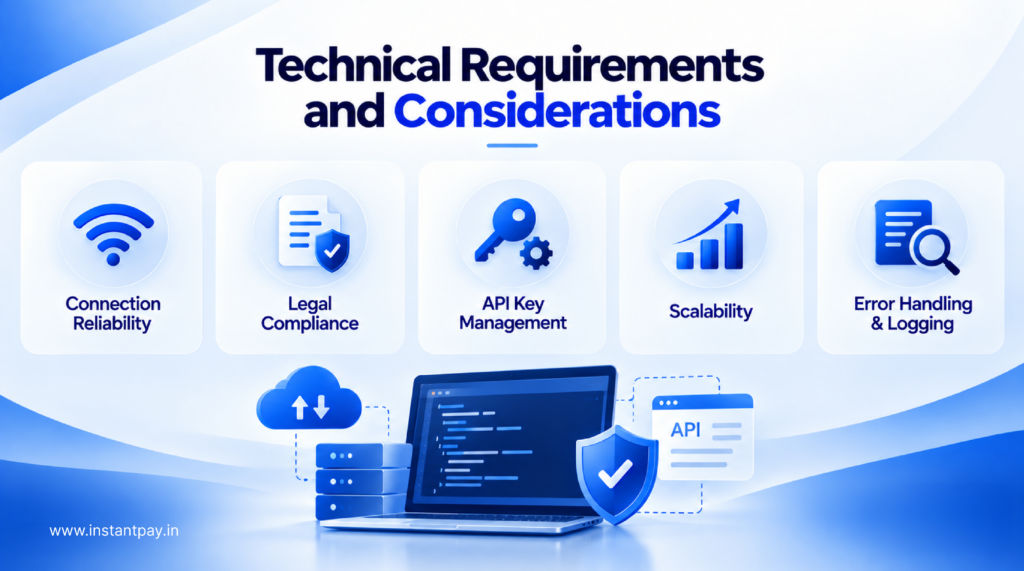
In order for Aadhaar Verification API integration to function smoothly and remain compliant, there are technical conditions that must be in place:
- Connection Reliability – There must be reliable and stable internet connectivity to provide seamless communications between systems. If the connection is not stable, the verification process may not function correctly.
- Legal Compliance – All regulations surrounding collection, storage and processing of data provided by the Unique Identification Authority of India (UIDAI) must be followed.
- API Key Management – API keys must be securely stored and managed to prevent unauthorized access to the API services. For example, using secure methods such as environmental variables, or secret management applications, to store sensitive credentials.
- Scalability – Your system should be capable of scaling as your business grows and should be able to handle increased number of API request without any degradation in performance.
- Error Handling & Logging – There must be a good practice for implementing robust error handling and effectively managing/logging errors, as error logging will assist with troubleshooting and ensure the verification process runs smoothly.
Common Challenges and Solutions
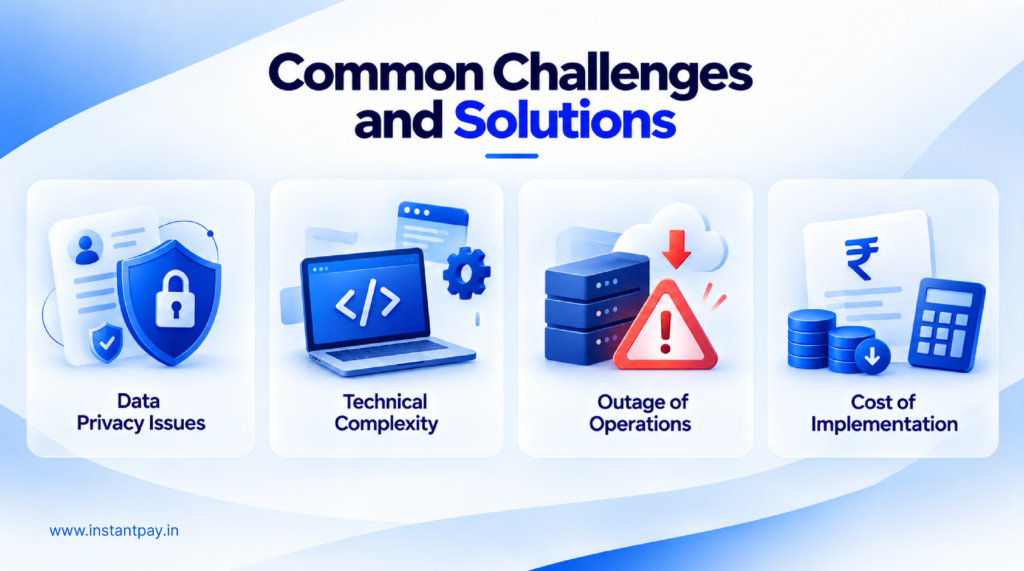
A number of obstacles may arise when trying to implement Aadhaar Verification API into your organization; some of them include the following:
• Data Privacy Issues: Working as an organization with customers’ Personally Identifiable Information presents a real need for concern about how that type of information is processed; therefore, your organization should work to comply with laws regarding data privacy (i.e., GDPR) and implement strong methods to protect that data (i.e., encrypt it).
• Technical Complexity: The implementation of an API can very well be challenging from a technical perspective. Comprehensive API documentation and possibly working with third-party providers for assistance may ease the way forward.
• Outage of Operations: Implementing the API may cause an outage. It is important that your organization develop an outage management strategy that includes having the implementation completed during a low-volume sales period and has undergone extensive testing prior to going live.
• Cost of Implementation: Some API costs are high. Your organization should, therefore, shop around for an API provider that has a fee process that meets your business requirements and objectives. Also, consider any potential no-cost or low-cost options available to you in the marketplace that can meet your organization’s needs.
By addressing any of these challenges proactively, your organization should be able to seamlessly implement the Aadhaar Verification API.
Industry Applications
The Aadhaar Verification API is integral to several industries in India and serves as an enabler of identity verification and the implementation of processes more efficiently. There are a considerable number of additional use cases for the Aadhaar Verification API, including in the fintech and telecommunications sectors, among many other.
Use Cases in Fintech
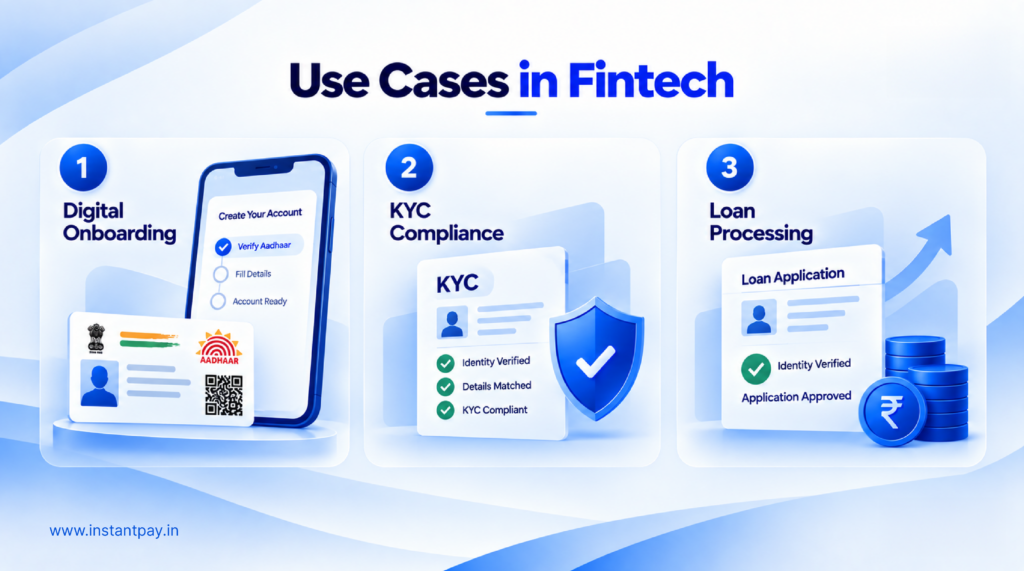
The fintech industry has been one of the first sectors to adopt the Aadhaar Verification API to improve operations and create better customer experiences. Some of the largest applications of the Aadhaar Verification API include the following:
- Digital onboarding: Fintech companies use the Aadhaar Verification API to streamline customer onboarding by verifying Aadhaar number reactivity quickly and easily. Because the Aadhaar Verification API provides customers with customer-identifying information (such as name, address, and birthdate) in real time, onboarding can take as little as a few minutes rather than days or longer.
- KYC Compliance: Know Your Customer (KYC) is a necessary process for financial institutions to ensure their compliance with regulatory requirements. The Aadhaar Verification API assists fintech companies in ensuring that their customers’ identities are verified as required by KYC regulations.
- Loan Processing: Lenders rely on the Aadhaar Verification API to verify the identity of borrowers quickly and efficiently, thereby reducing the time required for loan approvals and disbursements and increasing customer satisfaction.
Applications in Telecom Industry
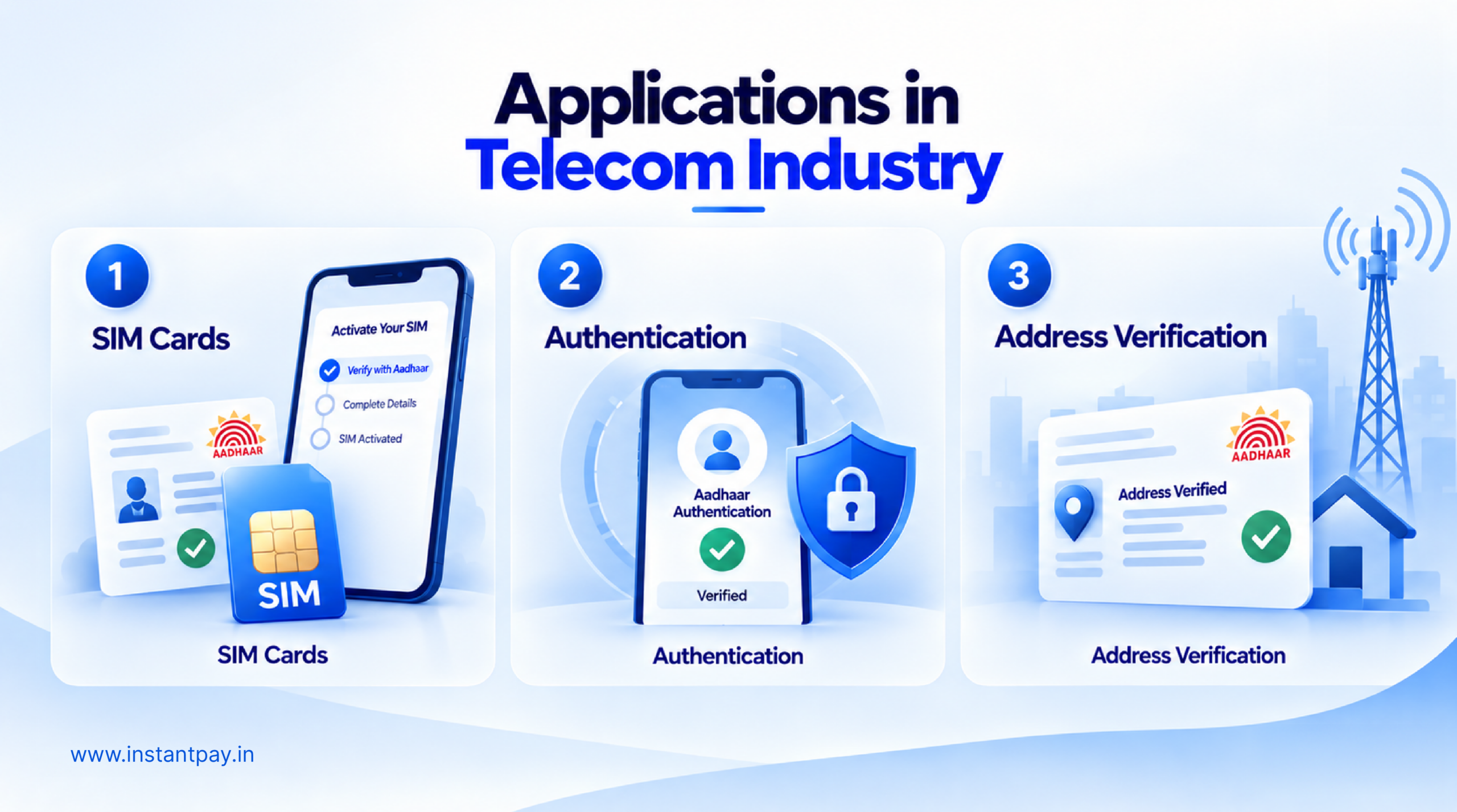
Telecom is another vertical that has benefited from Aadhaar verification, as this technology helps them to streamline their operations and simplify the overall customer verification processes.
- SIM Cards: The Aadhaar API enables telecoms to authenticate customers using Aadhaar during the process of SIM card activation; this eliminates the need for paperwork and greatly expedites the entire customer verification process.
- Authentication: To help reduce fraud, telecoms will use Aadhaar-based authentication to authenticate their customers so that only legitimate users can have access to their services.
- Address Verification: The Aadhaar API also facilitates address verification for providing billing and service delivery through the address verification process.
Other Industries Benefiting from Aadhaar Verification
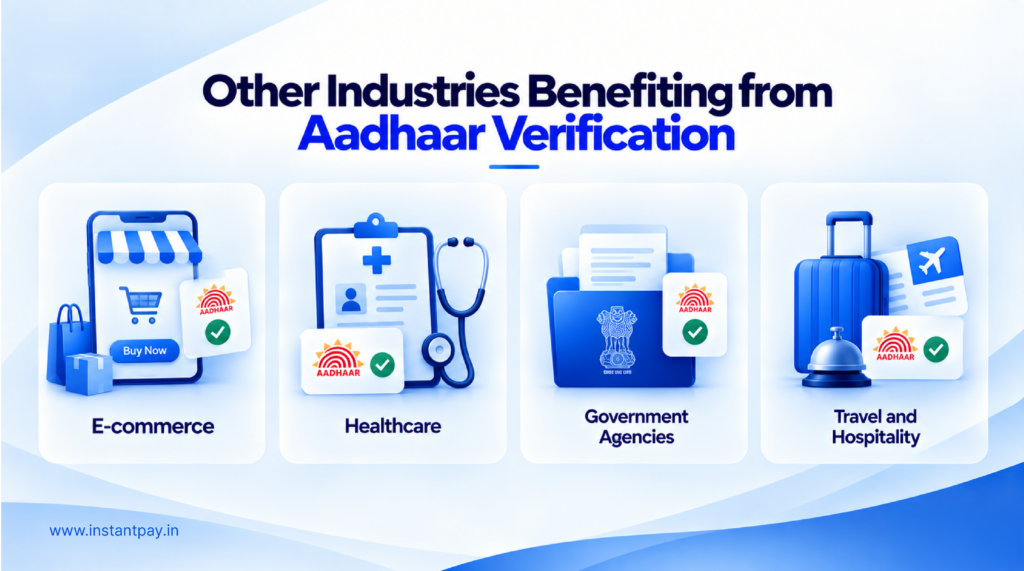
Beyond fintech and telecom, many other industries are reaping the benefits of Aadhaar Verification API:
- E-commerce: Online retailers use Aadhaar Verification to authenticate users and reduce fraud in transactions, ensuring a safer shopping experience.
- Healthcare: Hospitals and clinics apply Aadhaar Verification for patient registration and record-keeping, improving service efficiency and reducing manual errors.
- Government Agencies: Government departments utilize Aadhaar Verification for public service delivery, ensuring services reach the intended recipients without duplication or fraud. This streamlines processes such as benefit distribution, subsidies, and pension payments.
- Travel and Hospitality: Hotels and travel agencies employ Aadhaar Verification to authenticate guest identities, enhancing security and check-in procedures.
The Future of Aadhaar Verification API in India
Emerging Trends in Aadhaar-Based Authentication
As we look to the future, Aadhaar-based authentication is becoming more robust and secure. Emerging technologies like blockchain and machine learning are poised to enhance data security and accuracy. Biometric verification is seeing advancements, which will improve the reliability of Aadhaar authentication. Businesses need to be aware of these trends and prepare to integrate such technologies to stay ahead of the curve in digital identity verification.
Expanding Applications of Aadhaar KYC API
The Aadhaar KYC API’s applications continue to expand across different sectors. Beyond banking and finance, industries such as healthcare, telecommunications, and e-commerce can leverage Aadhaar KYC for quicker and more reliable customer onboarding. It aids in:
- Reducing paperwork
- Enhancing customer experience
- Mitigating fraud risks
These expanded applications offer businesses opportunities to streamline operations and improve service delivery across various touchpoints.
Addressing Challenges in Aadhaar Number Verification
Despite its benefits, Aadhaar number verification does face some challenges. Data privacy concerns and system outages can affect reliability. Addressing these requires:
- Strengthening data protection measures
- Building resilient verification systems
- Collaborating with regulators to ensure compliance
By tackling these challenges, businesses can improve customer trust and maintain seamless verification processes.
Opportunities for Businesses Using Aadhaar APIs
The usage of Aadhaar APIs opens up numerous opportunities for businesses. They can enhance operational efficiency, reduce errors in ID verification, and offer tailored services based on accurate customer data. Companies can also cultivate:
- Insights into customer behaviors
- Tighter security protocols
- Better scalability options
Harnessing these opportunities will allow businesses to innovate and excel in a competitive marketplace, leveraging the full potential of Aadhaar-based solutions.
Building Trust, One Verification at a Time
In today’s digital world, trust is the currency that defines relationships between businesses and their customers. Aadhaar Verification API is not just a technical tool—it’s a gateway to creating that trust. By enabling secure, real-time identity verification, businesses can promise their customers something invaluable: safety, reliability, and fairness.
Think of the countless individuals relying on your services—families securing loans, small business owners opening accounts, or young professionals trusting you with their data. Every verification is a step toward empowering these lives, ensuring their data is respected and their identities protected.
When you integrate the Aadhaar Verification API, you’re not just improving processes; you’re telling your customers, “We value your trust, and we’re committed to safeguarding it.” This commitment transforms transactions into relationships and clients into advocates.
Now is the time to act. Use Aadhaar Verification API to build a business that thrives on trust and transparency, one that leads with integrity in every interaction. Together, let’s create a future where digital connections are as secure as they are seamless.
Take the first step today—because trust isn’t given; it’s earned.
Frequently Asked Questions (FAQs)
1. How secure is the Aadhaar Verification API?
The API ensures data security through end-to-end encryption, tokenization, and compliance with UIDAI guidelines. Sensitive information is not stored beyond the verification process,safeguarding user privacy.
2. Is the Aadhaar Verification API easy to integrate into existing systems?
Yes, the API offers seamless integration with plug-and-play capabilities. It supports multiple formats (e.g., JSON, XML) and includes detailed documentation to simplify implementation.
3. Can Aadhaar Verification API handle large-scale requests?
Absolutely. The API is built to handle high transaction volumes and concurrent requests, making it suitable for enterprises with extensive verification needs.
4. What are the common use cases of Aadhaar Verification API?
The API is widely used for:
- KYC (Know Your Customer) verification
- Fraud prevention
- Customer onboarding
- Enabling digital signatures (eSign)
- Accessing government subsidies and benefits
5. Does the API support biometric verification?
No, Aadhaar Verification API focuses on demographic verification. For biometric authentication, businesses need to integrate Aadhaar eKYC or other biometric-enabled APIs.
6. How does the API ensure compliance with Aadhaar and data protection regulations?
The API strictly adheres to UIDAI guidelines, the Aadhaar Act, and other relevant data protection regulations like the DPDP Bill. It minimizes data retention and ensures secure handling of user information.
7. What happens if Aadhaar verification fails?
If verification fails due to discrepancies in details or network issues, the API provides a detailed error response. Businesses can retry or prompt users to re-enter correct information.
8. Can Aadhaar Verification API be used for international customers?
No, Aadhaar Verification API is specific to Indian citizens and residents who possess an Aadhaar card. It cannot be used for verifying details of non-Aadhaar holders or international customers.
9.What is the cost of the Aadhaar API?
Yes, there is a cost associated with using the Aadhaar verification API. The cost of each e-KYC transaction resulting in sharing of Aadhaar number holder’s e-KYC information depends on volumes.
10. Is there any API for Aadhar card?
The Aadhaar authentication API is quite easy to use. You simply have to enter the details in the Aadhaar API and the rest will be done by our Aadhaar card verification API. It will give you the result in no time.