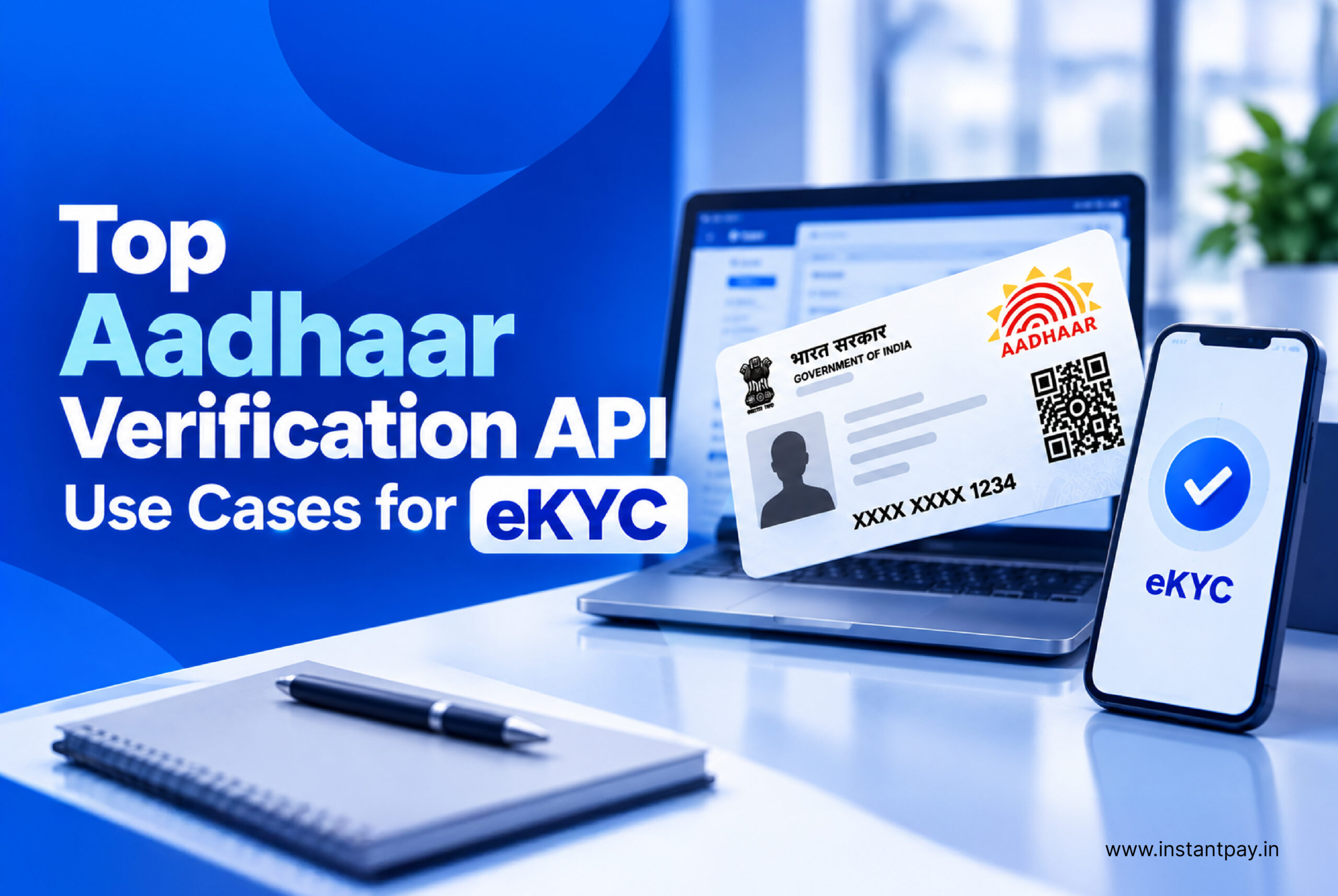
With India’s progress toward a fully digitized economy, the use of identity verification has shifted from manual verification involving physical checks to real-time verification involving the use of Aadhaar-based authentication through API technology. The Aadhaar Verification API enables firms to verify customers’ identities with instantaneous results using data provided by the government, thereby ensuring there is no customer friction, fraud, or legal compliance. The UIDAI reported that the number of Aadhaar authentication transactions crossed 2,707 crore in 2024–25, while e-KYC transactions reached almost 45 crore by the end of March 2025.
Aadhaar-based e-KYC presents a perfect contrast to conventional KYC processes that stand for manual verification using physical documents. With e-KYC methods, customers can be onboarded within a matter of seconds through real-time APIs, the transaction volumes flowing through real-time authentication increasing to more than 284 crore.
This blog presents ten top use cases of the Aadhaar Verification API in major industries while comparing the Aadhaar authentication system with other means of KYC authentication and discussing the advantages of implementing the Aadhaar system.
Aadhaar Verification API is a digital service that enables businesses to instantly verify user identity using Aadhaar-linked data. It supports fast, secure, and consent-based eKYC for onboarding across financial services, telecom, e-commerce, healthcare, and public platforms.
1. Financial Services: Banking, NBFCs, FinTech & Lending
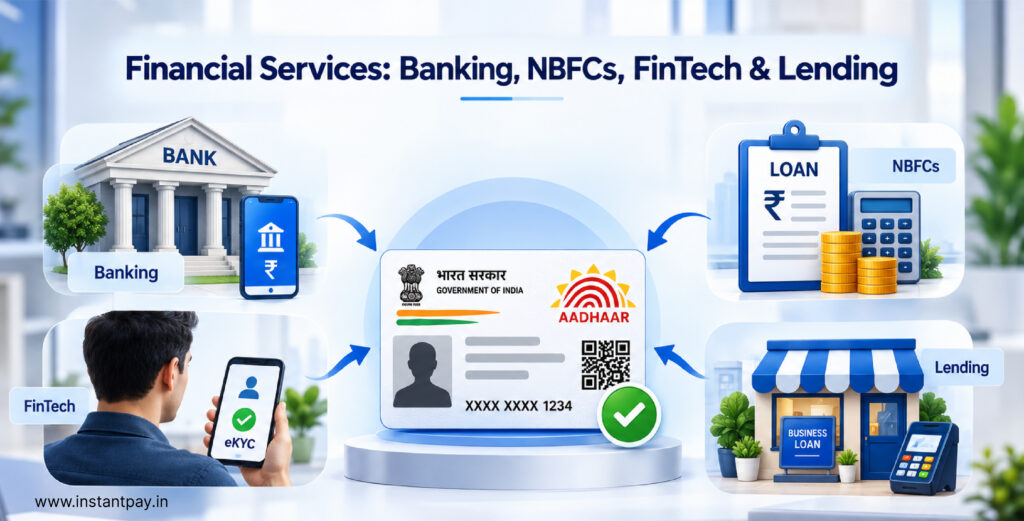
Due to rigorous KYC, AML, and audit regulations, the area of financial services becomes a dominant user of Aadhaar verification APIs.
Expanded use cases:
– Instant opening of a bank account: The usage of Aadhaar eKYC technology allows the launching of savings and checking accounts via remote means and without the presence of customers in physical bank offices.
– Instant loans and BNPL services. Lenders verify borrowers’ identities when submitting applications by using Aadhaar verification, helping to get approvals quicker and prevent fraud based on false identity.
– Mobile wallets and prepaid cards. Payment service providers and issuers use Aadhaar to complete their compliance requirements.
– Merchant onboarding by payment consoles: Given the basic data provided with the Aadhaar system, the validation of individual merchants, entrepreneurs, and small businesses could be done more quickly.
Reasons for the Functionality of Aadhaar:
Banks and financial companies want a guarantee of efficient identity verification, a reliable audit trail, and protection from regulators. The Aadhaar-based eKYC system enables immediate and consent-based verification of identity, thus reducing the costs of customer onboarding.
2. Telecom Industry: SIM Activation & Subscriber Verification
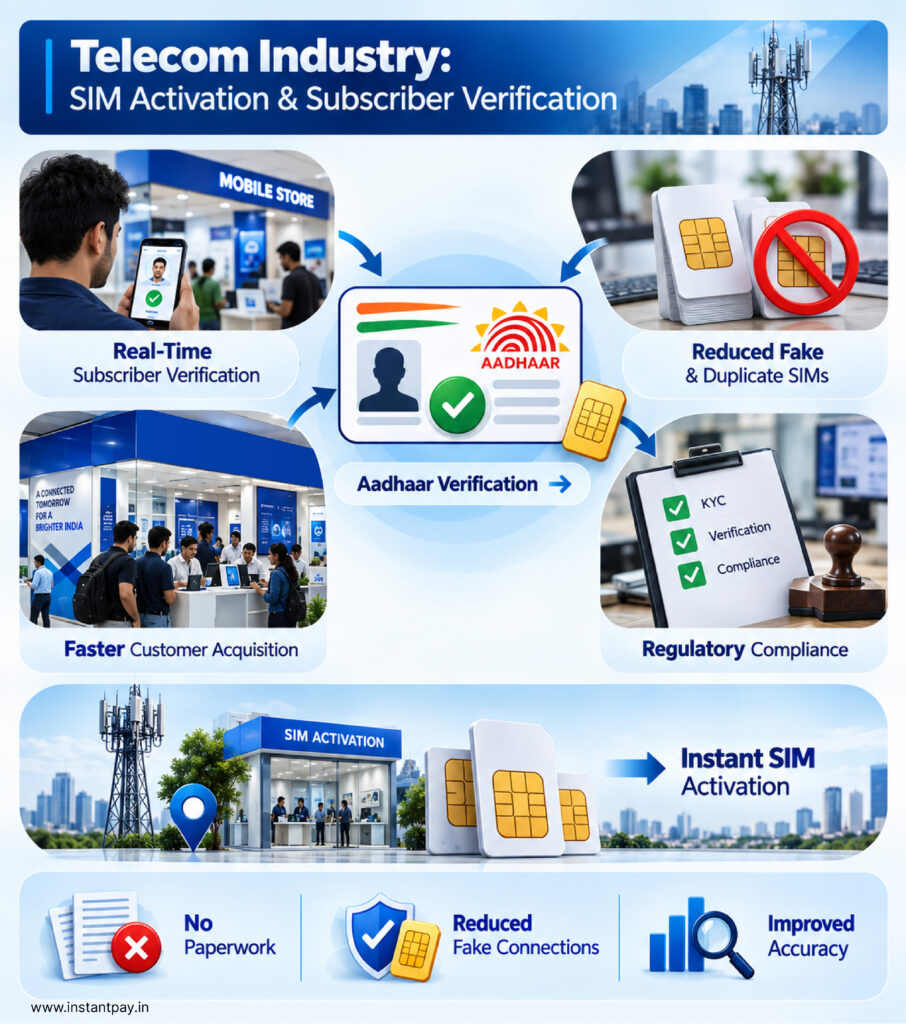
Telecom operators leverage Aadhaar API for the purpose of telecom and SIM activation in adherence to the compulsory subscriber verification standards given by the authorities.
Benefits:
– Instant SIM activation: Utilizing Aadhaar eKYC leads to instant customer verification, which in turn facilitates rapid SIM activation in a matter of minutes.
– Elimination of fictitious connections: Identity verification through Aadhaar effectively removes the problem of ghost consumers, fake documents, and bulk SIM anarchy.
– Quick customer onboarding: Online customer registration eliminates paper processes, cuts down waiting time in stores, and increases conversion rates.
By eliminating the use of Customer Application Forms (CAFs), Aadhaar KYC enhances operational efficiency, improves compliance with regulators, and provides for subscriber tracking.
3. E-Commerce Platforms: Buyer & Seller Onboarding
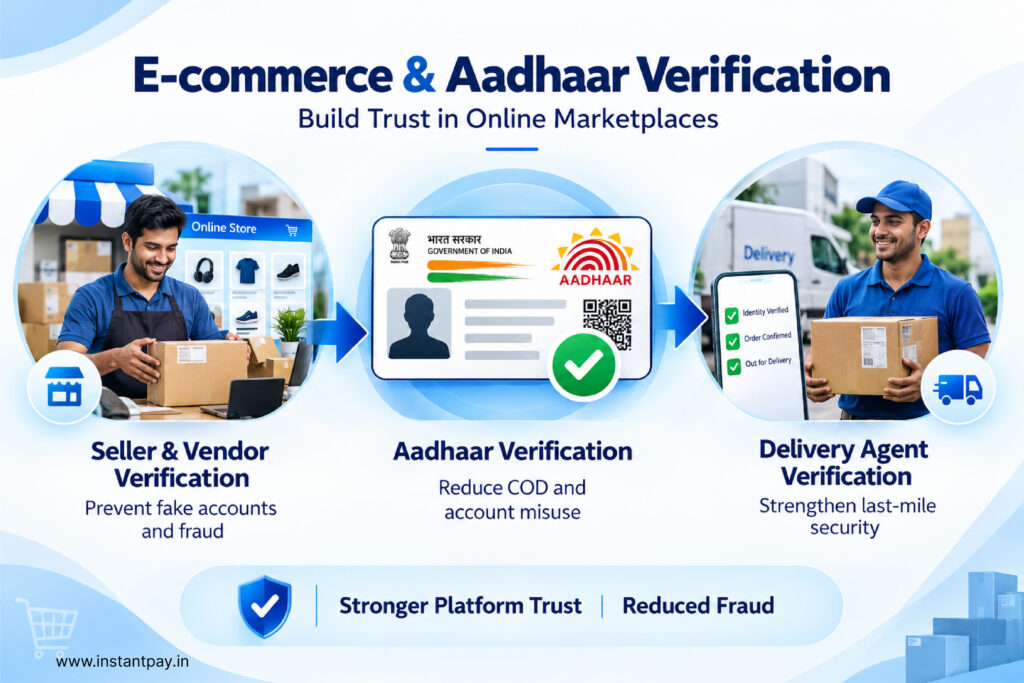
Aadhaar verification through its API has been playing a significant role in helping e-commerce and marketplace platforms garner trust across the different participants in their ecosystems in bulk.
Widened use-cases:
– Seller and vendor verification: It helps verify the seller’s identity and avoid fake stores, account hijacking, and non-compliance activities.
– High-value buyer verification: Aadhaar KYC is used selectively to establish the legitimacy of buyers for high-value purchases and instances of repeat COD abuse.
– Logistics partners and delivery persons: Aadhaar verification helps in verifying last-mile carriers to decrease the risk of theft and fraud.
Therefore, it helps in bolstering the reputation of the platform, minimizing account abuse, and enhancing fraud prevention with the help of the Aadhaar API.
4. Transportation & Logistics
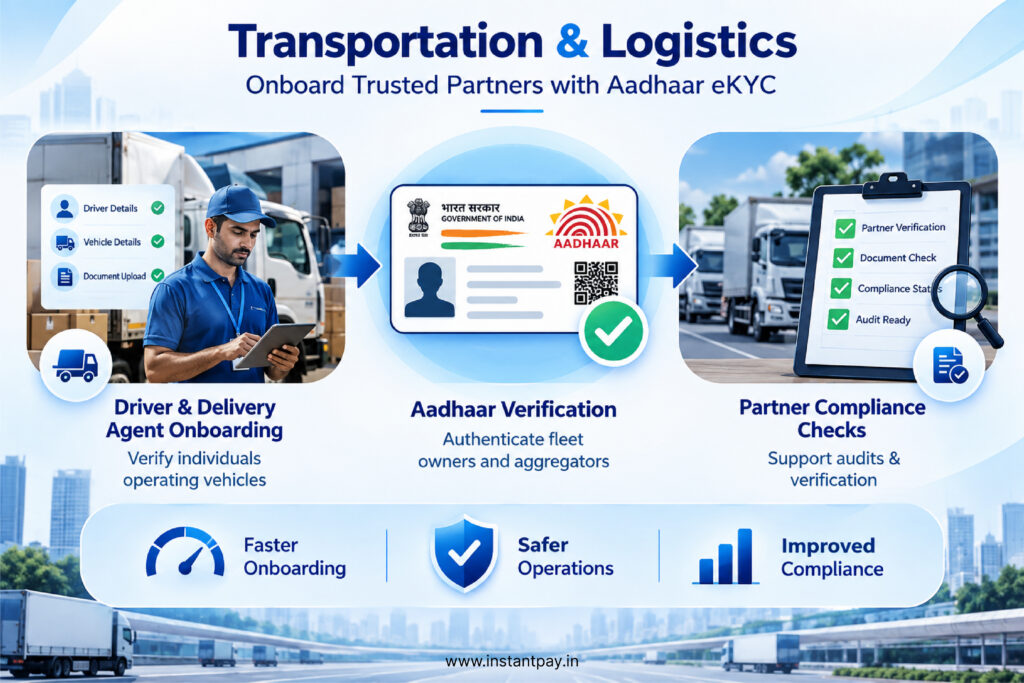
The procedure of validating the identity and credentials of those who are involved in processes of transporting goods, people, and money usually depends on Aadhaar verification.
Expanded use cases:
- Onboarding the delivery personnel and drivers: Aadhaar is a guarantee that only authenticated individuals will work on the platform.
- Aadhaar helps fleet operators verify fleet owners and aggregators prior to employing them.
- Aadhaar allows users to carry out compliance checks on partners.
Fast Aadhaar KYC streamlines the onboarding while adding safety and accountability.
5. Real Estate Transactions

Real estate dealings are characterized by substantial financial outlays, prolonged settlement times, and risk of fraud.
Broader uses include the following:
– Buyer-seller identity authentication: Aadhaar guarantees the identification of purchasers and sellers before transaction processing.
– Broker and agent commencement: Disallows impersonating intermediaries within real estate.
– Registration for renting KYC: Assists in electronically verifying entities for leasing papers.
KYC based on Aadhaar enhances transparency and curtails the chances of unauthorized transactions, falsified identities, and impersonation.
6. Insurance Industry
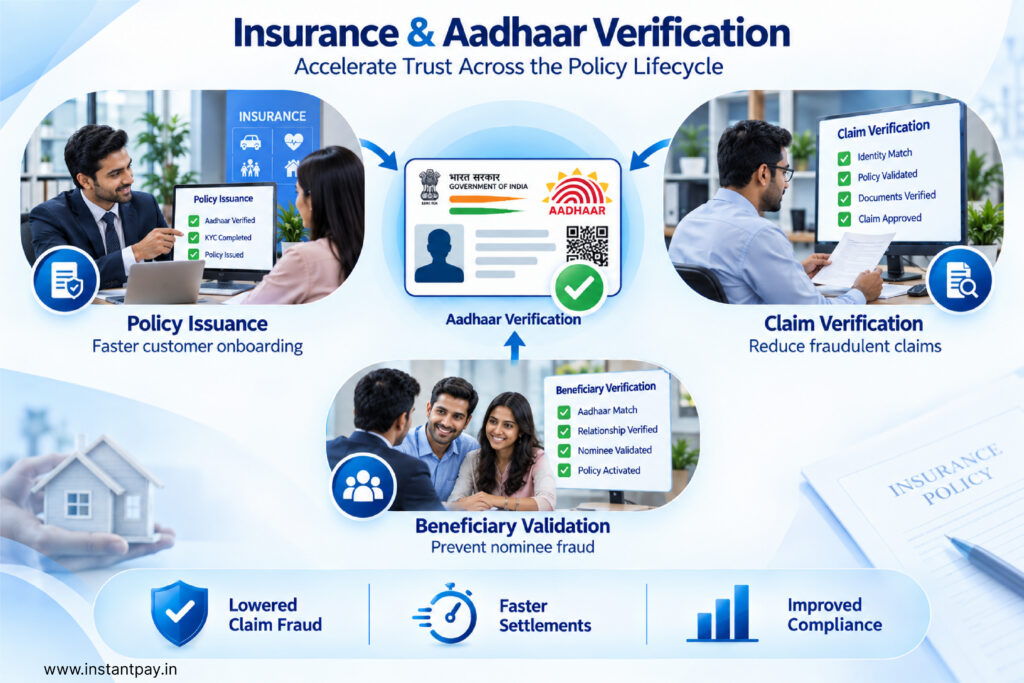
To fulfill their functions, several steps require insurance companies to verify the identity of their clients—not only during onboarding.
Examples of the expanded goals are the following:
– Insurance: eKYC speeds up the receipt of clients and the issue of insurance policies.
– Insurance claim verification: eKYC verifies identity to prevent fraudulent claims of non-legitimate clients and beneficiaries.
– Beneficiary validation: eKYC helps make sure that disputes about the beneficiaries of insurance compensation are avoided as much as possible.
To benefit from Aadhaar KYC APIs, the insurance companies would ensure reduced risk of fraud and multiplied efficiency in settlement processes.
7. Educational Initiatives & EdTech Platforms
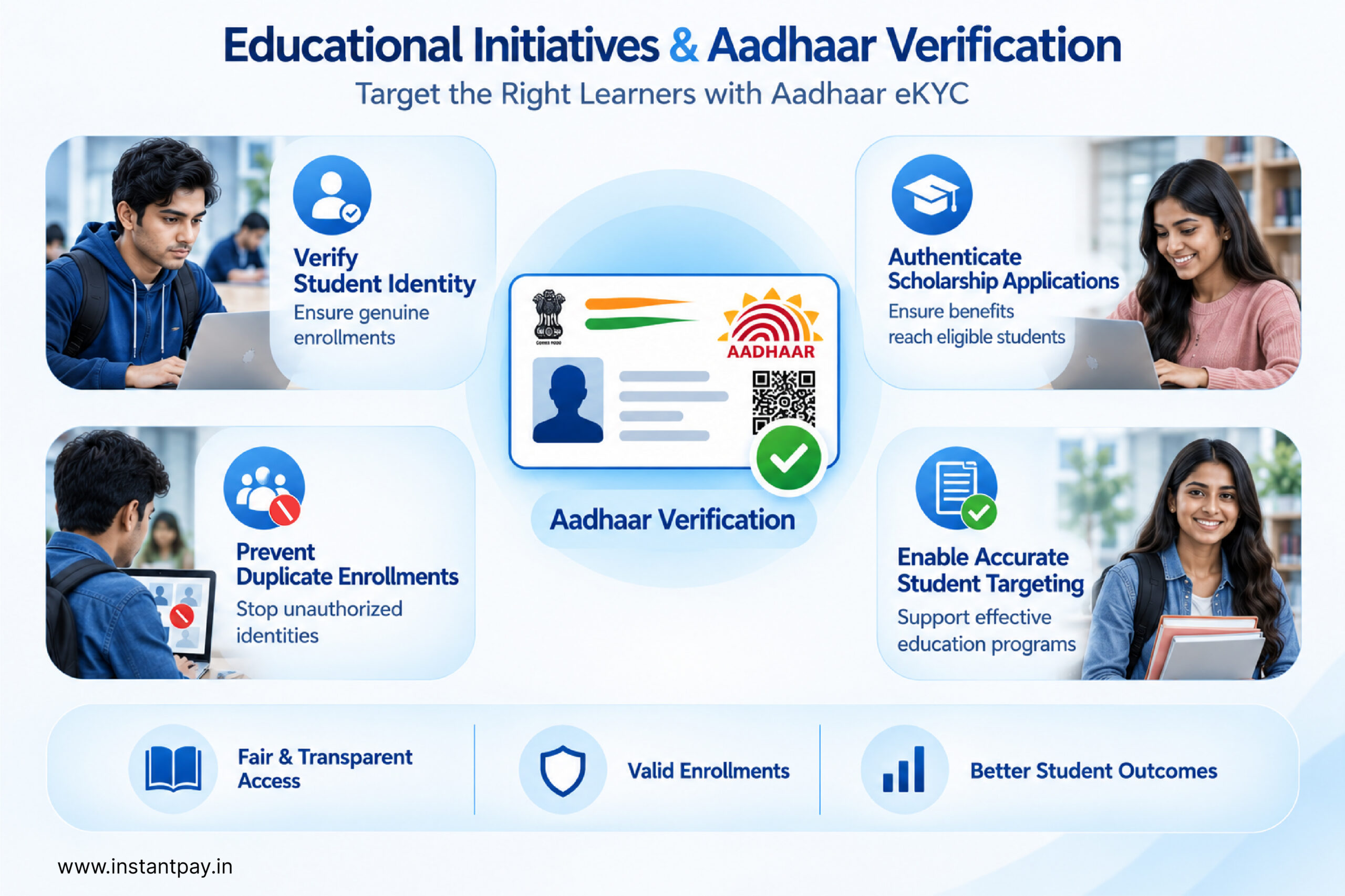
Education-based platforms deploy the verification process employed by the Aadhaar platform in order to ensure equitable access and the integrity of identification.
Extended usage for Aadhaar verification:
– Verification of the identity of students: Establishes that the individual is a bona fide learner during the process of admission and examinations.
– Stopping duplication of enrollments: Prevents individuals from creating many identities for the purposes of the abuse of the benefits.
– Verification of scholarship beneficiaries: Makes sure that the funds reach where they should go.
As a result, this process improves the targeting of beneficiaries, reduces misuse, and increases confidence in online education.
8. E-Governance & Public Services
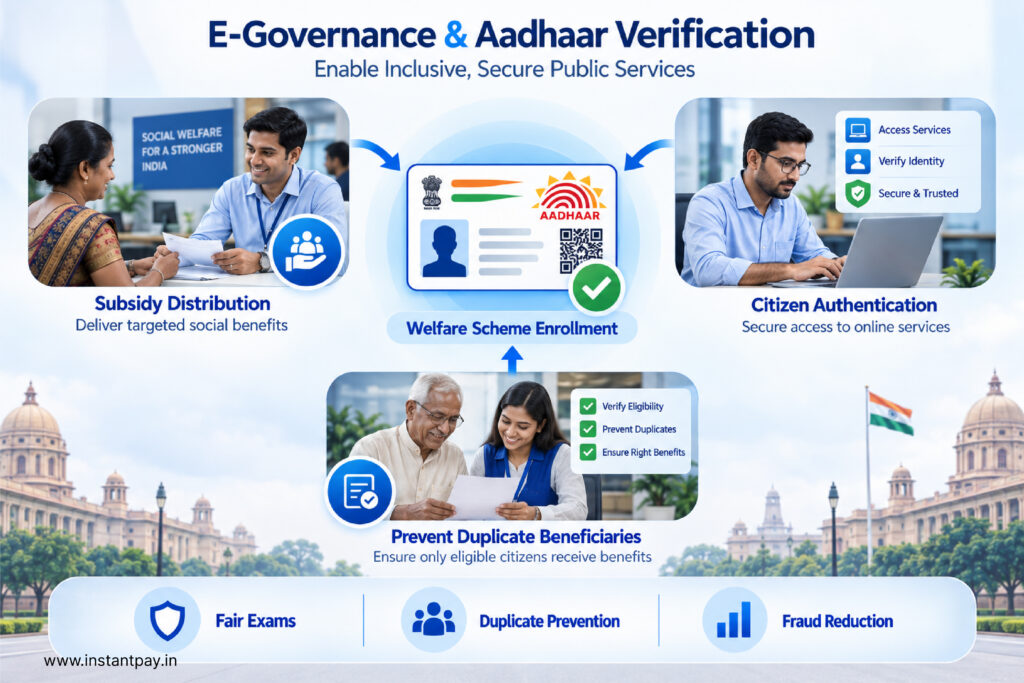
Aadhaar serves as the foundational layer of digital identity for delivering public services.
More applications include:
– Subsidy distribution: Guarantees the benefits are received by the eligible recipient.
– Welfare scheme enrollment: Eliminates double dipping and fraudulent beneficiaries.
– Citizen authentication: Provides secure access to the government portals and services.
Aadhaar APIs enable the government to offer the public services efficiently, affordably, and free of fraud.
9. Healthcare Sector
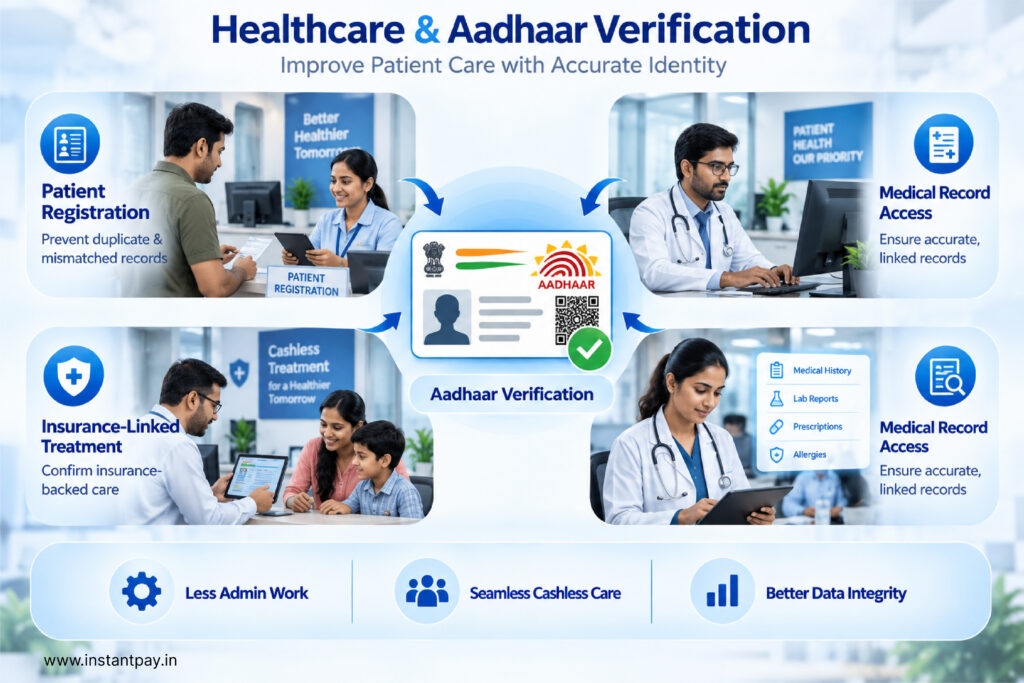
In recent times, the use of Aadhaar for the purpose of identifying patients has become common practice in various healthcare systems.
Expanded applications:
- Patient registration: By adopting Aadhaar, the use of fake identities has been reduced significantly.
- Treatment effectiveness validation: The Aadhaar number serves as proof of insurance.
- Access to medical records: This helps ensure the medical record belongs to the right person.
The benefits are reduced administrative burden and enhancement of data accuracy in patient care.
10. Employee Verification & Workforce Management
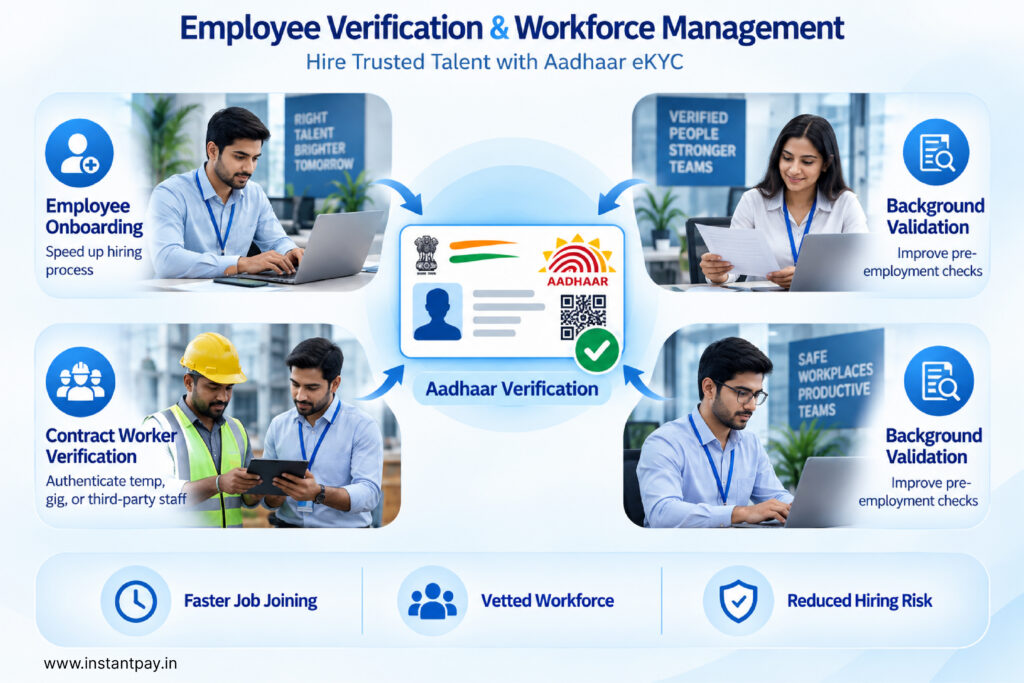
Organizations use Aadhaar Verification APIs to streamline workforce onboarding.
Expanded use cases:
- Employee onboarding: Enables faster joining without physical document checks.
- Contract worker verification: Validates gig workers, temporary staff, and third-party hires.
- Background validation: Supports identity confirmation during pre-employment checks.
Fast Aadhaar KYC reduces onboarding delays, improves workforce integrity, and supports compliance-heavy hiring environments.
Industry Stats
India’s Aadhaar ecosystem continues to scale rapidly as a backbone for digital verification. By the end of April 2025, the cumulative number of Aadhaar e-KYC transactions had surpassed 2,393 crore (23.93 billion)—reflecting strong adoption of digital identity checks across sectors such as banking, telecom, and financial services. In the same period, Aadhaar authentication transactions exceeded 15,011 crore (150 billion), underscoring the massive usage of real-time identity validation in both public services and private platforms.
Aadhaar vs. Traditional Verification Process
| Parameter | Aadhaar Verification API | Traditional Verification |
| Speed | Near-instant (seconds) | Days to weeks |
| Process | Fully digital | Manual, paper-based |
| Fraud Risk | Low (government-backed data) | Higher (document forgery possible) |
| Scalability | High-volume, API-driven | Limited by manpower |
| Cost | Lower at scale | Higher operational costs |
| User Experience | Seamless | Friction-heavy |
Traditional verification struggles with delays, document manipulation, and poor scalability—making it unsuitable for modern digital businesses.
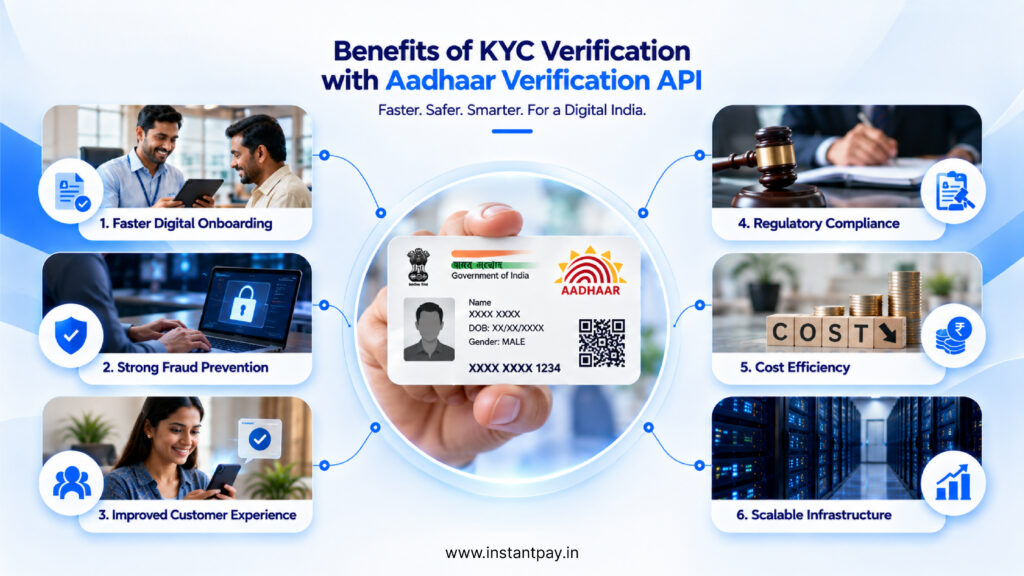
Benefits of KYC Verification with Aadhaar Verification API
1. Faster Digital Onboarding
One of the advantages of using Aadhaar verification APIs is instant identity verification. All businesses experience a major reduction in the time taken to complete KYC processes (from days to seconds). Thus, onboarding processes for any customer are substantially shortened in banking, lending, telecommunications, or digital platforms.
Fast onboarding results in higher conversion rates, decreases abandonment rates during signup, and speeds up the time from turning the users into revenue-generating clients.
2. Strong Fraud Prevention
Since Aadhaar verification relies on a government-sanctioned identity model, it provides far greater certainty than checks based on documents. With the help of Aadhaar-based eKYC, the following types of fraud will be avoided:
1. Using forged documents for impersonation
2. Establishing fake or duplicate accounts
3. Creating a synthetic identity from mixed or stolen information
Therefore, Aadhaar functions as an essential layer for fighting fraud in high-volume digital onboarding.
3. Regulatory Compliance
Using Aadhaar for eKYC fulfills KYC, AML, and sector-specific compliance requirements. This is important in regulated industries like financial services, insurance, and telecom. API-based verification produces:
– Uniform verification records.
– Audit trails that are correctly timestamped.
– Compliance that is constant across all channels.
So, this lowers the regulatory risk and facilitates auditing, inspections, and internal administration evaluations.
4. Cost Efficiency
Automated Aadhaar verification does away with the need for:
– Manually obtaining and evaluating documents
– Storing KYC documents physically
– Repeating verification processes due to human error
Through the use of API-driven processes in place of manual processes, organizations can greatly reduce operational costs, dependence on manpower, and turnaround time while scaling their operations.
5. Improved Customer Experience
Aadhaar KYC streamlines the onboarding process for users by enabling them to:
– Validate their identity without needing to provide physical documents
– Skip trips to the branch for in-person verification
– Finish the onboarding process from anywhere and on any device
This results in a faster, easier, and more trustworthy onboarding process.
6. Scalable Infrastructure
Aadhaar Verification APIs are tailored for high-volume, concurrent verification demands so that companies can grow quickly. Whether it’s bringing on board hundreds or millions of users and regardless of the scenario, APIs guarantee:
– High verification accuracy
– Low latency even in busy hours
– Easy integration in web, mobile, and backend systems
By having this flexibility, businesses can expand without changing their KYC processes and thereby ensure long-term success.
How Aadhaar Verification API Works (High-Level Overview)
The Aadhaar Verification API is designed to perform secure, consent-driven identity validation in real time. Below is a simplified breakdown of how the process works across digital platforms.
1. User Provides Aadhaar Details or Aadhaar-Linked Consent
The verification flow begins when a user initiates onboarding and provides:
- Their Aadhaar number or
- Explicit Aadhaar-linked consent through an OTP or authentication mechanism
This consent-first approach ensures the process remains privacy-aware and compliant, with the user authorizing identity verification.
2. API Initiates Secure Identity Validation
Once consent is captured, the Aadhaar Verification API securely transmits the request through encrypted channels to the Unique Identification Authority of India (UIDAI) authentication framework.
At this stage:
- Identity details are checked against official Aadhaar records
- Authentication confirms whether the Aadhaar information is valid and active
No manual intervention is required, ensuring speed and consistency.
3. Verified Identity Data Is Returned in a Structured Response
After successful validation, the API returns a machine-readable response to the requesting system. Depending on the use case and permissions, this may include the following:
- Verification status (success/failure)
- Basic demographic confirmation
- Authentication reference IDs for audit purposes
The response is standardized, making it easy to integrate into onboarding, risk, or compliance workflows.
4. Business Systems Log and Act on the Verification Outcome
The verified response is automatically
- Logged for compliance and audit trails
- Used to approve, reject, or route the user to the next step
- Combined with other checks (PAN, bank account verification, device signals, etc.)
This enables real-time decisioning without breaking the user journey.
5. Seamless Digital Onboarding Across Platforms
Because the entire flow is API-driven, Aadhaar verification works consistently across:
- Web applications
- Mobile apps
- Backend onboarding systems
The result is fast, scalable digital onboarding with Aadhaar verification, reducing friction for users while maintaining strong identity assurance for businesses.
Conclusion
Throughout this article, one key point stands out: Aadhaar verification has gone from being part of compliance procedures to a vital technology layer. As companies move more of their operations to digital platforms, the significance of being able to verify an individual’s identity in a rapid, secure, and large-scale way cannot be overemphasized anymore.
Aadhaar eKYC has already shown its effectiveness among all the digital businesses, such as banking and finance, telecommunications, e-commerce, healthcare, and public services, by solving the issues of complicated onboarding processes, minimizing the chances for fraud, and ensuring compliance with legal requirements. The introduction of this technology made it possible to complete a process that used to take hours of paperwork within a matter of seconds.
The comparison with earlier methods of handling verification underscores the importance of this change: the typical KYC process is slow, expensive, dependent on documents’ authenticity, and has low scalability—factors that can put modern businesses at risk. Aadhaar verification API solves these problems—now everything can be done in real-time, and data auditing becomes standard.
The importance of the role of Aadhaar in ensuring the availability of the verification process cannot be underestimated, too. It eliminates the need for knowing clients physically via KYC, helping companies reach their customers all over the world, even if they live in remote areas and have no access to the identification process.
More importantly, the process of using eKYC has a bright future. With all of the new fraudulent schemes appearing and regulatory requirements becoming stricter, the use of any kinds of manual or unreliable identification processes might result in significant risks and unreliability of results of KYC procedure.
Frequently Asked Questions (FAQs)
1. What is an Aadhaar Verification API and why is it used?
An Aadhaar Verification API is a digital interface that allows businesses to verify an individual’s identity using Aadhaar data in real time. It is used to enable fast, secure, and paperless KYC for onboarding customers across sectors such as banking, telecom, insurance, and e-commerce.
2. How does Aadhaar-based eKYC differ from traditional KYC methods?
Traditional KYC relies on physical documents, manual checks, and in-person verification, which are time-consuming and prone to errors. Aadhaar-based eKYC is fully digital, consent-driven, and instant, significantly reducing onboarding time while improving accuracy and compliance.
3. Is Aadhaar verification safe and secure for users?
Yes. Aadhaar verification operates through encrypted, secure channels and requires explicit user consent. Businesses receive only verified responses required for KYC purposes, along with audit references, ensuring data security and privacy compliance.
4. Can Aadhaar Verification API be used for instant onboarding?
Yes. Aadhaar Verification APIs enable real-time identity validation, allowing businesses to complete KYC within seconds. This supports instant onboarding for bank accounts, loans, SIM cards, wallets, and other digital services.
5. Which industries benefit the most from Aadhaar Verification APIs?
Industries with high onboarding volumes or regulatory requirements benefit the most. This includes financial services, telecom, insurance, e-commerce, logistics, healthcare, real estate, education, employee verification, and e-governance.
6. Does Aadhaar-based KYC help prevent fraud?
Yes. Because Aadhaar verification is backed by a government-issued identity system, it significantly reduces impersonation, fake accounts, duplicate identities, and synthetic identity fraud—especially in digital and remote onboarding scenarios.
7. Is Aadhaar KYC mandatory for all businesses?
No. Aadhaar KYC is not mandatory for all businesses, but it is widely adopted in regulated sectors where strong identity assurance is required. Many organizations choose Aadhaar-based eKYC voluntarily due to its speed, reliability, and compliance benefits.
8. What information does a business receive after Aadhaar verification?
Businesses receive a structured verification response indicating whether the Aadhaar authentication was successful, along with reference identifiers for audit purposes. The exact data shared depends on the use case, consent, and regulatory permissions.
9. Can Aadhaar Verification API scale for large businesses?
Yes. Aadhaar APIs are designed for high-volume, concurrent verification requests. They can support onboarding of thousands or millions of users without performance degradation, making them suitable for fast-growing digital platforms.
10. How does Aadhaar verification improve the customer experience?
Aadhaar-based eKYC removes the need for physical documents, branch visits, or lengthy manual checks. Users can complete verification quickly from any device, resulting in a smoother, faster, and more convenient onboarding experience.