India’s digital payments ecosystem is growing at record speed, from Rs.3,659 lakh crore in FY24 (18,737 crore transactions, up 44% CAGR from FY18) with total transactions exceeding Rs.1,572 lakh crore in early 2026 and volumes reaching 221.9 billion transactions (up ~35% YoY), according to RBI. Today, over 80–85% of digital payments are made via mobile devices, while UPI alone accounts for nearly 84% of retail transaction volumes, making it the backbone of India’s payment infrastructure.
What is Driving the Evolution of Payment Gateways?
India’s payment gateways market hit USD 2.06B (Rs.17,000 crore) in 2026, projected to USD 3.92B by 2032 (9.63% CAGR), with UPI capturing 62% share via AutoPay (668M daily txns peak). Modern payment gateways have evolved from basic transaction processors into intelligent, customer-facing digital infrastructure. They are now integrated directly into websites and mobile apps to enable fast, secure, and seamless payments.
Key advancements include:
- AI-powered fraud detection for real-time risk monitoring
- UPI AutoPay for automated recurring payments
- Tokenization (RBI-mandated) to secure card data
- Real-time analytics for smarter business decisions
- Multi-currency support for global transactions
Why Modern Payment Gateways Matter Today?
With India’s digital economy projected to reach $1 trillion by 2030, businesses need payment systems that deliver:
- Instant transaction processing
- High security and compliance (PCI DSS, RBI guidelines)
- Scalability for high transaction volumes
- Seamless omnichannel experiences
Additionally, tokenized transactions reduce fraud by up to 20%, while the rise of cross-border commerce—expected to hit $200 billion by 2026 in India—is pushing gateways to support global payment capabilities.
The Bottom Line
Modern payment gateways are no longer optional—they are critical infrastructure for digital commerce. As mobile-first transactions dominate and consumer expectations rise, businesses must adopt advanced gateway features to ensure speed, trust, and seamless user experiences.
Source: RBI Payment System Report (2024–25), Financial Express, Business Today
Tokenization and Data Security
Digital payments are soaring in India, with billions of transactions processed every day, and so the use of techniques such as tokenization needs to become standard to ensure data security as well as build a foundation upon which India’s overall digital payments ecosystem will expand.
RBI (Reserve Bank of India) report that approximately 99.8% of all transactions processed in India each day are conducted using a digital payment method; therefore, we can see the movement towards digital payment systems will only grow over time.
India’s Digital Payments Boom
- UPI is the dominant payment method in India and accounts for ~83–85% of the total volume of retail digital payments processed through it.
- The number of transactions processed by UPI in FY25 surpassed 185 billion, a more than 40% increase compared to the previous year
- Globally, India represents ~48% of the total volume of real-time payments.
- Digital payments have increased 38x over the past 10 years.
The volume of transactions has grown tremendously over this same period, creating a large attack surface for fraud. Advanced security measures, such as tokenization, will be critical in protecting against fraud.
What Is Tokenization in Payment Gateways?
Tokenization replaces sensitive cardholder information with a non-sensitive equivalent value (i.e., a “token”) that causes the original cardholder information never to be stored or made visible during the payment transaction process.
How Does Tokenization Work?
- A customer completes their checkout by providing their cardholder information.
- A payment system uses the customer’s entry to create a non-sensitive (tokenized) version of that information as a secure alternative.
- The original cardholder information is retained in a highly secure token vault or database.
- The customer will then be processed for the original entry of their payment and subsequent recharges using the token.
Tokenization in India: RBI Insights
- As of December 2024, the total number of tokens issued by banks in India is over 91+ crore (910 million)
- Over 320 crore (3.2 billion) transactions have been conducted using these tokens.
- 98% of e-commerce transactions have been processed without actual credit/debit card number(s) being stored in the relevant systems.
- Tokenization reduces fraud in compliant systems by as much as 90%.
It is clear from this evidence that India is making huge strides toward establishing a secure, token-based, and cardless payment system.
Why Is Tokenization Critical in India?
With UPI handling billions of low-value transactions and cards still dominant in e-commerce, tokenization plays a dual role:
For Merchants
- Reduced PCI DSS compliance scope
- Lower breach liability
- Secure storage elimination (no raw card data)
For Consumers
- Protection against card theft and fraud
- Safer recurring payments and subscriptions
- Higher trust in digital platforms
Why is tokenization important in India?
Tokenization is critical in India because it secures billions of digital transactions by replacing sensitive card data with tokens, reducing fraud risks and enabling safe large-scale adoption of UPI, cards, and e-commerce payments.
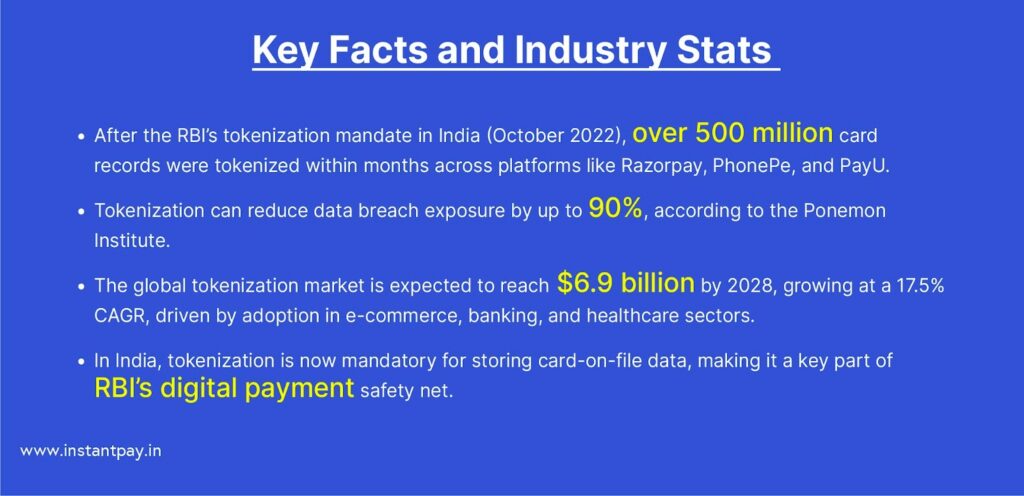
- In the wake of the RBI’s tokenization mandate in October 2022, the number of card records that were tokenized in India has skyrocketed, with more than 500 million records tokenized across a range of platforms, such as Razorpay, PhonePe, and PayU, in just a few months.
- According to research conducted by the Ponemon Institute, tokenization of sensitive data can help reduce the risk of data breaches by up to 90%.
- Additionally, the overall global tokenization market is expected to reach $6.9 billion by 2028, representing a compound growth rate of 17.5% per year, largely due to increased use of tokenization in e-commerce, banking, and healthcare.
- As a result, tokenization is now the only way that businesses can collect, store, and process cardholder data as part of an RBI-compliant digital payment solution in India.
What Are the Benefits of Tokenization for Merchants?
Digital payment processing businesses have a competitive edge in the marketplace via tokenization.
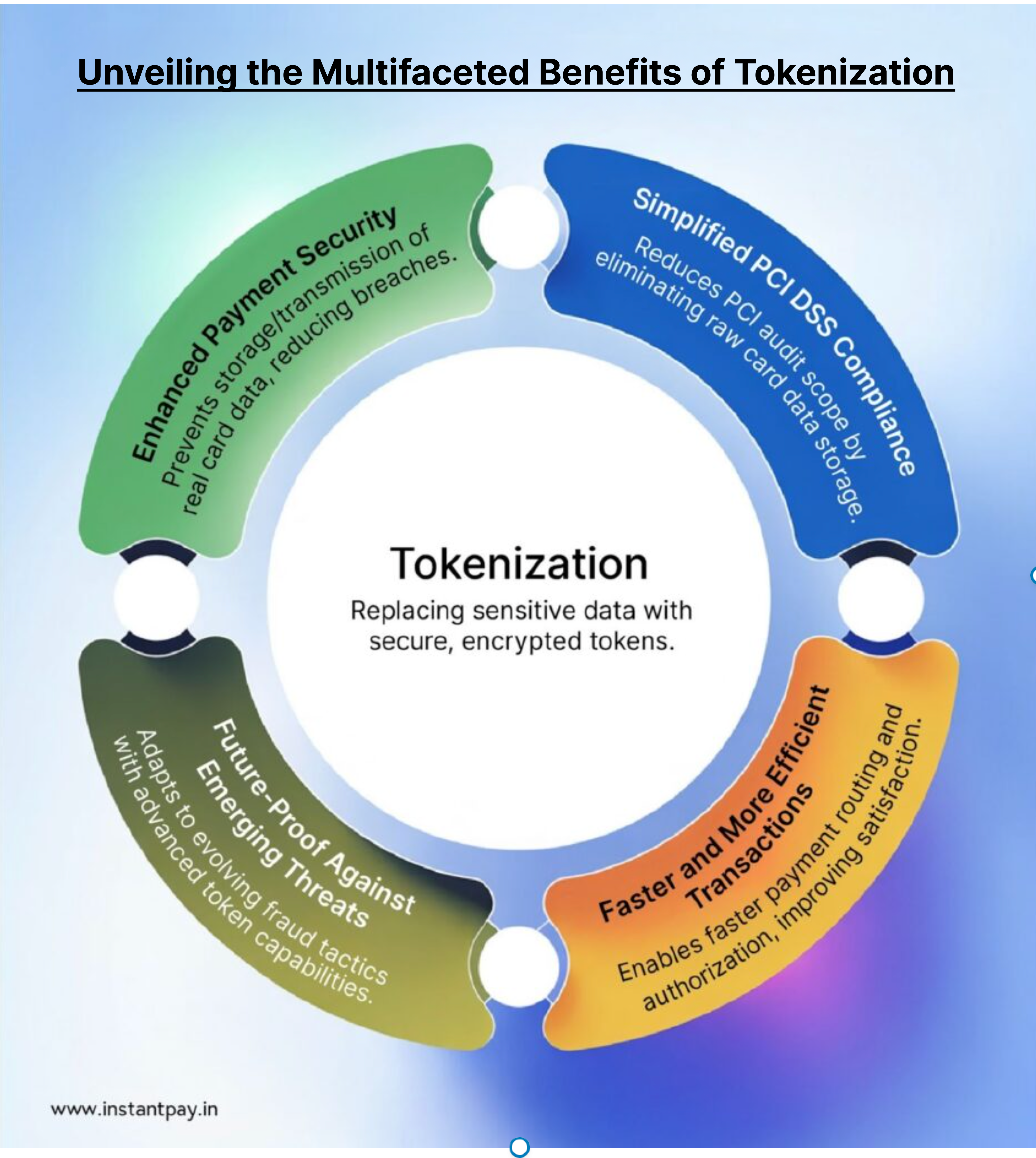
Tokenization involves replacing sensitive customer information (such as credit card numbers) with encrypted tokens so that merchants enjoy increased security, simplified compliance with regulations, and quicker transaction speed.
Reasons for merchants to adopt Tokenization are:
1. Enhanced Payment Security
Use of tokenization prevents the storage or transmission of actual card data when conducting transactions. The potential of hackers copying data is greatly reduced because in their interception, they will only get meaningless tokens.
In addition, using tokenization has been shown to decrease the risk of a data breach by an estimated 90% (Ponemon Institute).
2. Simplified PCI DSS Compliance
Any organization that accepts digital payments will need to comply with the Payment Card Industry Data Security Standard (PCI DSS). By eliminating the need for merchants to store credit card data on their servers, implementing tokenization also reduces the complexity and audit costs related to PCI compliance.
3. Faster and More Efficient Transactions
Tokens are lightweight and securely stored, allowing for quicker routing/authorization of payments. This leads to improved checkout speeds, less payment failure, and ultimately, a better customer experience.
Many Payment Gateways that utilize Tokenization claim to have seen up to 15% faster transaction completion times on both recurring billing as well as single-click purchases.
4. Future-Proof Against Emerging Threats
Tokenization evolves, just like the methods of fraud. Tokenization supports advanced features like:
- Tokens that are unique to each device
- Authentication based on the context of the transaction
- Dynamic refresh rates for tokens using risk-scoring
Tokenization is one of the cornerstones of a modern, zero-trust payment infrastructure.
How Tokenization Benefits Consumers?
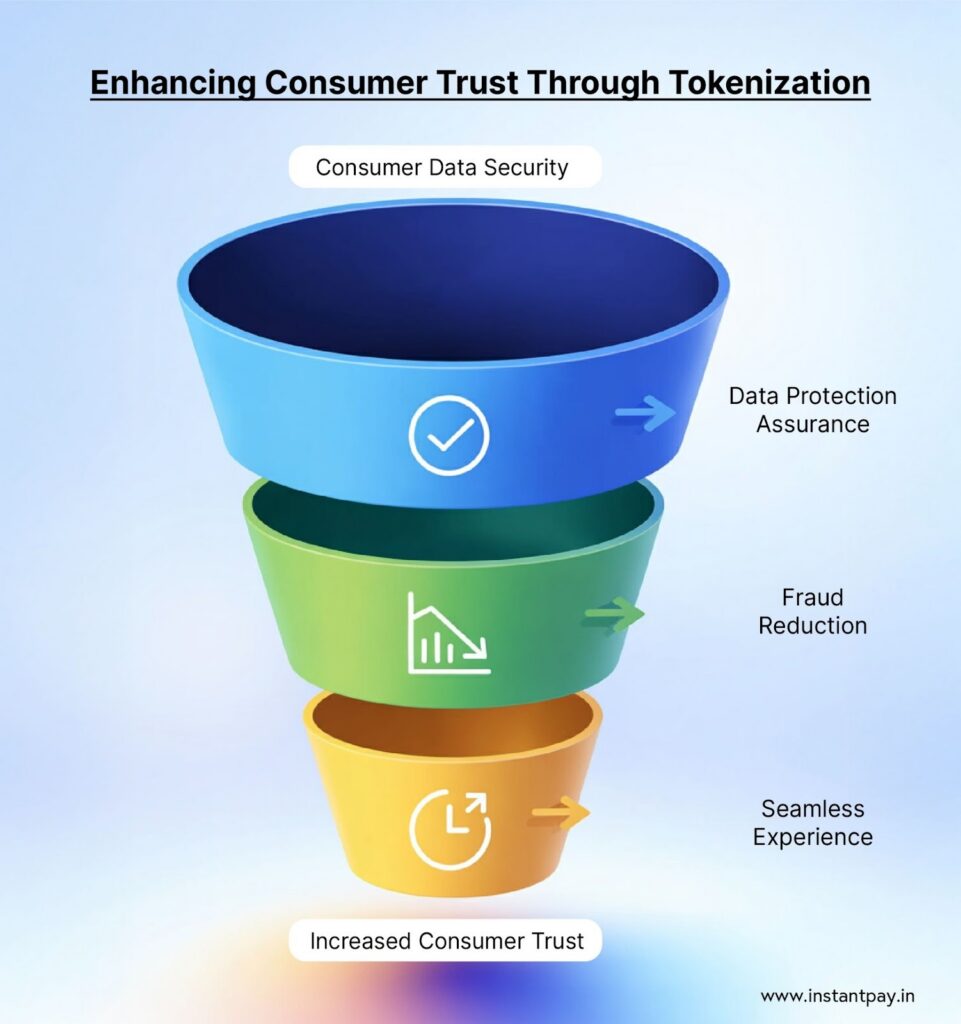
Tokenizing the customer payment process improves the shopping experience and the customer’s confidence in making purchases. While securing a customer’s data at each step of their payment journey, tokenization will provide peace of mind while improving customer loyalty.
1. Secure Data & Customer Assurance
Customers can rest easy knowing that businesses do not keep their actual card information on file. This helps prevent misuse, theft, or phishing scams involving their credit cards.
A survey of consumers in India shows that they prefer businesses that give them the option of a tokenized checkout or using saved cards.
2. Reduced Risk of Fraud when making Digital Payments
Tokenization has significantly reduced the ability to commit fraud using:
* Online Payments
* Mobile Wallets
* Recurring Billing
After the introduction of tokenization, RBI states there was a dramatic decrease in card-not-present (CNP) type fraud post-October 2022.
3. Seamless Experience when making Repeat Purchases
Tokenizing a customer’s credit card will allow for quick purchases and recurring payments without compromising security by using:
* OTT subscription services
* Utility bill auto-payments
* Grocery or meal delivery apps
Studies indicate that consumers are 25%-40% more satisfied with businesses that offer either a tokenized one-click checkout or save credit cards for return visits.
In addition to being a method of improved back-end security, tokenization is also a tool to help build trust with consumers. Because victims of fraud and identity theft are less likely to trust online businesses to keep their payment data private and secure, tokenization provides the reassurance that customers need to feel confident about making digital purchases. As more consumers move towards digital commerce, the importance of tokenization will become increasingly relevant for enhancing the safety, efficiency, and the convenience of payment experiences for both businesses and their customers.
AI-Driven Fraud Prevention in Modern Payment Gateways
With more than 12 billion UPI transactions every month and record-high online payments being processed by businesses to the extent that they have been through all of this, fraud acts! With 24% of digital payment fraud cases being reported in FY23, as per the Reserve Bank of India (RBI), businesses have progressed beyond old fraud filters. AI-enabled fraud detection serves as the new frontier for securing digital transactions.
We have several ways in which AI is enhancing fraud prevention.
Real-Time Transaction Monitoring
What Is Real-Time Fraud Detection in Payment Gateways?
With real-time fraud detection on payments through AI, businesses can monitor their payment activity instantly, meaning that they can flag or block suspicious transactions as they happen—before any loss is incurred.
Some of the common aspects of real-time fraud detection include
- Instant Alerts—Through AI, businesses (i.e., the payment gateway) can monitor transaction metadata, such as time, geographical location, device, and purchase history, in real time. Once an exception has been detected, such as a foreign IP using a local card or a foreign card making a high-value purchase, the payment gateway system would take immediate action.
- Pattern Recognition & Behavioral Analysis – AI uses dynamic behavior models (unlike static rule engines), which help in detecting differences in consumer purchasing characteristics, therefore helping to identify whether an expense should be paid or not. This subsequently enhances the accuracy for fraud detection and will drastically decrease the number of false positives.
According to McKinsey, their research shows that AI-assisted fraud detection in payment stacks can result in a financial fraud loss reduction of 50-60% through integration of the AI fraud detection systems.
Machine Learning Algorithms
What Role Does Machine Learning Play in Preventing Fraudulent Transactions?
The ability of AI to create machine learning algorithms allows it to analyze millions of past transactions and accurately identify or predict fraudulent transactions—more effectively than manually checking each transaction.
Key Benefits of Using ML for Fraud Prevention:
1. Learning & Adapting – New patterns of fraud will continue to emerge, which requires the ML model to adapt to changes in the way that fraudsters commit fraud (such as by creating synthetic identities, using triangulation methods, or taking control of an account). This protects the systems against new types of fraud.
2. Using Predictive Analytics – By analyzing how transactions have been conducted in the past, the ML model can determine the indicators of future fraud, thereby allowing it to prevent high-risk transactions from occurring before they happen.
According to Gartner, by 2026 more than 80% of digital commerce companies will have adopted AI-powered risk intelligence as part of their counter-fraud strategy.
Reducing Chargeback Incidents with AI
AI is also beneficial in preventing chargebacks by helping to prevent them through various methods and levels of fraud detection.
Advantages of AI in the prevention of chargebacks:
- Fraud Identification with Accuracy – AI reduces the number of false positives presented as a result of fraud: Therefore, only valid transactions are flagged as questioned, and only true fraudulent transactions are halted.
- Recommendations for Root Cause Analysis & Prevention – As fraud is deterred by the early detection of trends in chargeback transactions, AI systems provide useful analytics on your checkout processes (for example: invalid address, strange deliveries, and OTP issue) to you to allow you to fix those root causes of chargebacks before they cause chargebacks.
- Strategic Implementation—Utilizing AI-driven analytics allows companies to improve UI/UX design, create new risk rules, and track high-risk groups—substantially lowering your volume of chargebacks.
According to Juniper Research, AI-enabled tools reduce chargebacks/fraud by as much as 40% in certain instances, especially in online lenders and e-commerce companies.
Recurring Billing and Subscription Management: A Game Changer for Modern Business
Automated payment options have become a key differentiator in the fast-paced and constantly evolving digital economy of today’s world. It is projected that India’s digital subscription economy will exceed $12 billion by the end of 2025 (PwC India). Businesses must adapt and implement systems that allow for subscriptions and recurring payments. They can achieve this through modern online payment gateways (seamless, secure, and intelligent transaction processing).
Streamlined Payment Processes with Recurring Billing
How Does Recurring Payment Work?
Recurring payments allow companies to automatically bill their customers on a predetermined schedule (weekly/monthly/yearly) without requiring any manual intervention from either entity.
Key Benefits:
- Automated Payment Collection- Say Goodbye to Following Up with Invoices. With Autopay, businesses are able to collect all fees consistently, punctually, and efficiently.
- Reduced Administrative Time- Your team will be able to spend less time on reconciling transactions and writing payment reminder emails and more time improving the quality of their service.
- Enhanced Customer Experience – Customers don’t have to worry about having to re-enter their payment information, or the service will be interrupted due to missed payment.
Zuora found that, among companies that utilize recurring payments, 89% of these companies reported increased speed of revenue recognition and higher cash flow average stability.
When using auto-debit payment gateways, subscription-based businesses in India have seen their churn rates drop by 30-50%, including the likes of OTT services, EdTech services, and SaaS products.
Enhancing Customer Retention through Subscription Management
A recurrent bill is more about follow-through and maintaining customer retention rather than simply being efficient, and can establish an environment where customers have little or no friction in making payments, thus increasing their satisfaction and loyalty towards the service.
Ways to accomplish this:
- AutoRenewal Reminders – Keep your customers updated without causing them any surprise.
- Long-term User Loyalty Programs – Provide a special discount or exclusive offer for a long-time user.
- Customized Subscription Options – Allow customer self-administration of upgrades, pauses, and cancellations.
According to the Harvard Business Review, if you can increase retention by just 5% it will result in profit increases of between 25% and 95%, and therefore, payment continuity is an effective strategy for increasing retention.
Flexible Billing Options to Suit Every Customer
Today’s digital consumers are looking for convenience as well as choice. Payment gateways that incorporate advanced billing logic make it easy for companies to provide a variety of payment options designed to meet their customers’ needs.
The following features will allow you to be more flexible in the way that you bill your customers:
- Different Billing Frequencies – Daily, weekly, monthly, quarterly or yearly, all on flexible payment terms.
- Prorated Charges – By fairly billing customers for upgrading or downgrading after the fact, it builds transparency and establishes trust.
- Trial Periods and Grace Periods – Allowing potential customers to try out your product or service risk-free, and keeping them longer as a result.
According to Statista, 49% of customers who use digital services globally prefer to use flexible billing models, with retention rates being 2 times higher for those customers when they are fairly prorated at the time of upgrading.

Multi-Currency Support in Payment Gateways: Unlocking Global Commerce
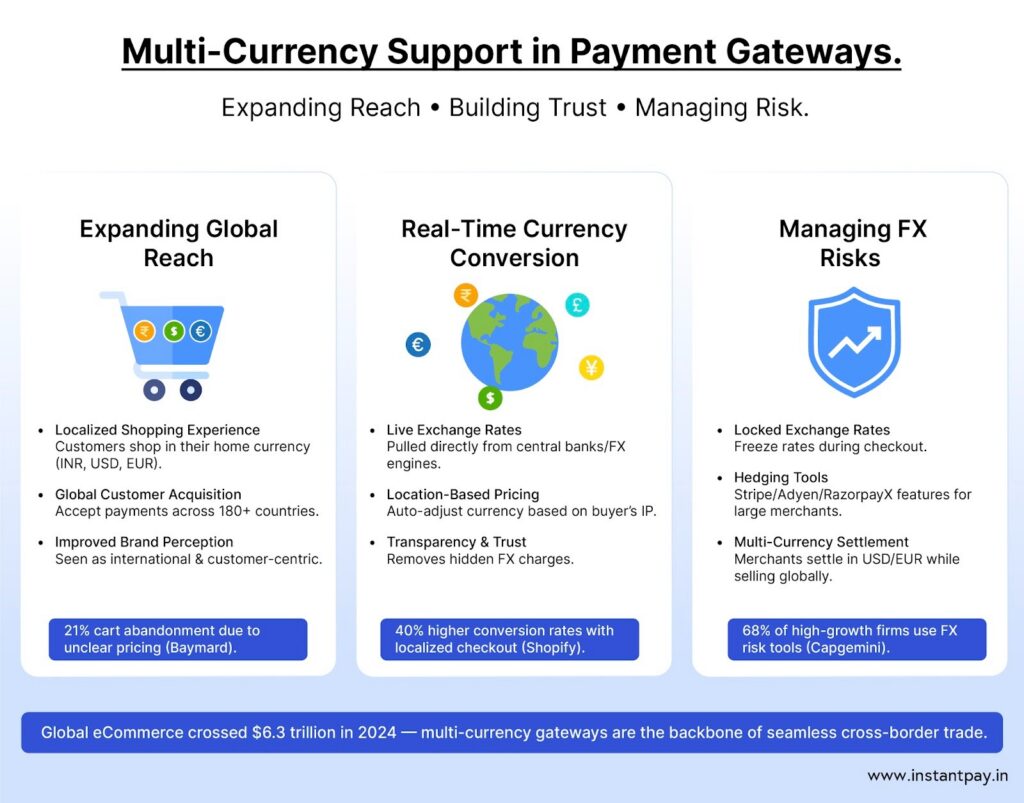
The global eCommerce industry is expected to grow by more than $6.3 trillion (USD) by 2024, which means that there are no geographic boundaries for you as a business owner. With the help of modern payment gateways, you can reach international markets by using a multi-currency (and cross-border) payment option to accept and process payment seamlessly; therefore, allowing you to create a truly global customer base without any hindrance to your business operations.
Expanding Global Reach with Currency Localization
By using a multi-currency payment method, your customers can view product prices and even pay for products in their local currency without any friction resulting from manual conversions, FX confusion, or additional bank fees incurred.
Here are some key benefits of using multi-currency payment gateways to expand the company’s global reach, as well as how localization of currency improves the global reach of the company:
- Localized shopping experience – Customers want to purchase products in their local currency (INR, USD, EUR, AED, etc.). When you provide them with the ability to shop in their own currency, they will feel more confident about making a purchase; therefore, there is a higher probability that they will actually convert to pay. Research by Baymard Institute indicates that 21% of abandoned carts are attributed to lack of clarity or unexpected pricing information.
- Global customer acquisition – The use of a local currency payment option will allow you to expand into more than 180 countries, especially in fast-growing eCommerce markets like Southeast Asia, the Middle East, and Africa.
- Improved brand image – Brands that provide a multi-currency checkout are seen as being globally minded and customer-centric, therefore building global trust and credibility.
According to estimates, India’s cross-border eCommerce exports are projected to reach $200 billion (USD) by 2030 and many of the consumers from around the world will expect a seamless checkout experience.
Real-Time Currency Conversion: Precision at Checkout
What exactly does real-time currency conversion mean when looking at payment gateways?
Real-time currency conversion is defined as converting the price of an online purchase into the local currency of the buyer, dynamically, so that at the time of checkout there are no surprises on price due to fluctuating exchange rates.
Characteristics Of Real-Time Currency Conversion:
- Live Exchange Rates Using Real-Time Currency Exchange – Exchange rates are pulled from Central Banks or Foreign Exchange Engine sources to ensure that customers see prices in real time.
- Pricing Based On Geographic Location – Advanced Payment Processors are able to detect either the IP address or geographic position of the user’s device, and will automatically convert price to the appropriate currency prior to completing the transaction.
- Transparency And Trust – Consumers are able to do business without incurring unknown Bank or FX fees. As a result, customers are more satisfied and likely to complete a successful transaction.
Shopify has estimated that retailers providing localized currency pricing solutions experience a 40% increase in conversion rates when selling to international consumers.
Managing Currency Exchange Risks
When merchants sell over borders, there is a risk of exchange rate fluctuation and as a result, can either decrease their profit or create confusion with billing. Modern electronic payment gateways have built in tools for risk management to reduce these risks.
Some common solutions are:
- Locked Exchange Rates – Freezes the exchange rate at conversion during the checkout process to maintain pricing regardless of fluctuations in FX.
- FX Hedging Techniques – Some of the larger merchants might choose to use automated hedging tools offered by gateways such as Stripe, Adyen and RazorpayX to defend against dramatic shifts in currency value.
- Multi-Currency Settlement – Some gateways will allow an international merchant to settle their account in their specified currency (for example: if they only want to settle in USD even though the customer is in Japan) therefore reducing the overhead cost of conversion.
According to Capgemini, 68% of the high-growth global companies have used FX Risk Management solutions for their international operations.

Embracing Modern Payment Gateway Features: A Strategic Growth Imperative
In today’s highly connected digital economy,payment gateways offer more than just a means to transact—they serve as the strategic driver of security, scalability, and global customer acquisition. Each of the features offered by modern payment gateways (i.e., tokenization and artificial intelligence fraud detection, recurring billing, and multi-currency capabilities) is designed to improve operational efficiency while increasing customer satisfaction.
Why It Matters:
- Tokenization protects over 500 million cards that have been tokenized as of March 2022 due to the Reserve Bank of India’s (RBI) mandate; by doing so, companies can reduce their payment data breach risks by as much as 90% (based on Ponemon Institute).
- AI-based fraud detection systems have the potential to lower fraud losses by 60%, while also reducing the rate of chargebacks (20% from Juniper Research).
- Recurring billing solutions allow for the automation of renewals and reduce payment friction; they have been proved to increase the likelihood of repeat purchases by 30 to 50% in the subscription model (based on Zuora).
- Multi-currency support can increase conversion rates cross-border by as much as 40% (Shopify).
By using advanced capabilities to conduct business in this manner, organizations can establish a more effective and efficient operation and build a future-ready infrastructure that will allow them to scale at a rapid pace within the ever-evolving digital marketplace.
Frequently Asked Questions (FAQ’s)
1. What are the advanced features of modern payment gateways?
Recent advancements in technology and financial service delivery include very complex payment processing options such as Artificial Intelligence (AI) based fraud detection capabilities, Tokenization of card information to store credit cards securely in an encrypted vault, UPI AutoPay for automated, recurring payment processing, real time analytics, as well as, the ability for merchants to operate using multiple currencies for international payments.
2. How does tokenization work in payment gateways?
Tokenization eliminates exposure to highly sensitive Credit Card account numbers. Thus, Tokenization replaces highly sensitive information with securely stored tokens. Consequently, Tokenization allows for the secure storage of sensitive Credit Card information in a Token Vault as opposed to a merchant having to store sensitive information in a merchant database.
3. Why is tokenization important for digital payments in India?
Many experts believe that because of the tremendous amount of digital transactions, Tokenization is crucial to the safety and security of the digital payment ecosystem in India. In addition, to the aforementioned benefits, Tokenization can significantly reduce fraud risk (up to 90%) and help to meet the Reserve Bank of India’s (RBI) regulation standards.
4. What are the benefits of tokenization for merchants?
Tokenization allows for merchants to achieve a smaller scope of PCI DSS compliance, while also minimizing the risk associated with data breaches by eliminating the need to store sensitive Credit Card information, and increase the speed of payments while improving overall success rates for payment processing.
5. How does AI help in fraud detection in payment gateways?
AI allows for real-time monitoring of transactions, along with analysing transaction behaviour and patterns to detect potentially fraudulent transactions instantly. It is estimated that AI can reduce fraud losses by or between 50% – 60%.
6. What is real-time fraud detection in payment systems?
Real-time fraud detection uses AI to analyse transaction data in order to instantly block or flag a transaction as potentially fraudulent prior to the transaction being executed thus eliminating any potential for loss.
7. What is UPI AutoPay and how does it work?
With UPI AutoPay, users can set up automatic monthly payments for subscriptions, bills, etc., which will automatically be withdrawn every month (on schedule) without having to initiate the withdrawal manually.
8. How do recurring payments benefit businesses?
Automated recurring billing gives businesses an easier and more efficient way of collecting money, resulting in an increase in cash flow and a reduction in customer churn by 30%-50% because of the convenience of not needing to have customers manually submit payments.
9. What is multi-currency support in payment gateways?
By allowing customers to pay in multiple currencies, businesses can operate globally and thus offer customers localized pricing.
10. How does real-time currency conversion work in payment gateways?
Real-time currency conversion uses live exchange rates so that the price is accurate when customers check out, which increases transparency and decreases checkout abandonment.
11. Why are modern payment gateways essential for businesses today?
They provide secure, speedy, and scalable payment solutions that can handle high volumes of payments and give companies the possibility of selling their goods/services in additional countries, while also improving the customer journey through a smooth checkout process.
12. How do payment gateways improve customer experience?
Modern gateways make it possible for customers to have a quicker checkout experience, utilize one-click payment options, process payments securely, use multiple billing options, and access local payment options, therefore yielding an extremely positive overall customer experience and retention rates.