As healthcare costs continue to rise, the need for having an adequate financial back-up plan in case of serious illness is increasingly important. You may want to consider getting critical illness coverage added as an endorsement/rider to your existing term life insurance policy. The purpose of this rider is to cover the high cost associated with undergoing treatment for medical conditions that have the potential to be life-threatening (cancer, heart attack, stroke).
The average cost of treating cancer for people with early-stage cancer is 5 to 7 lakhs; advanced stages range from 20 to 30 lakhs (based on Care Health Insurance data from claims made in 2026). A single chemotherapy treatment may range from 12,000 to 75,000 per cycle. The cost of treating a heart attack (such as having an angioplasty or staying in an ICU) ranges from 250,000 to 600,000 in major cities like New Delhi and Mumbai.
While your main term insurance policy provides coverage to your beneficiaries if you die, this additional rider will provide your family with financial assistance in the event that you survive a catastrophic illness and incur a significant amount of out-of-pocket medical expenses.
In order to maximize your ability to achieve long-term financial stability, it is important to choose riders based on your own health-related risks and financial goals.
If you are trying to financially protect your family, here are five considerations when deciding if you should add the critical illness rider to your term policy:
What Is a Critical Illness Rider and How Does It Work?
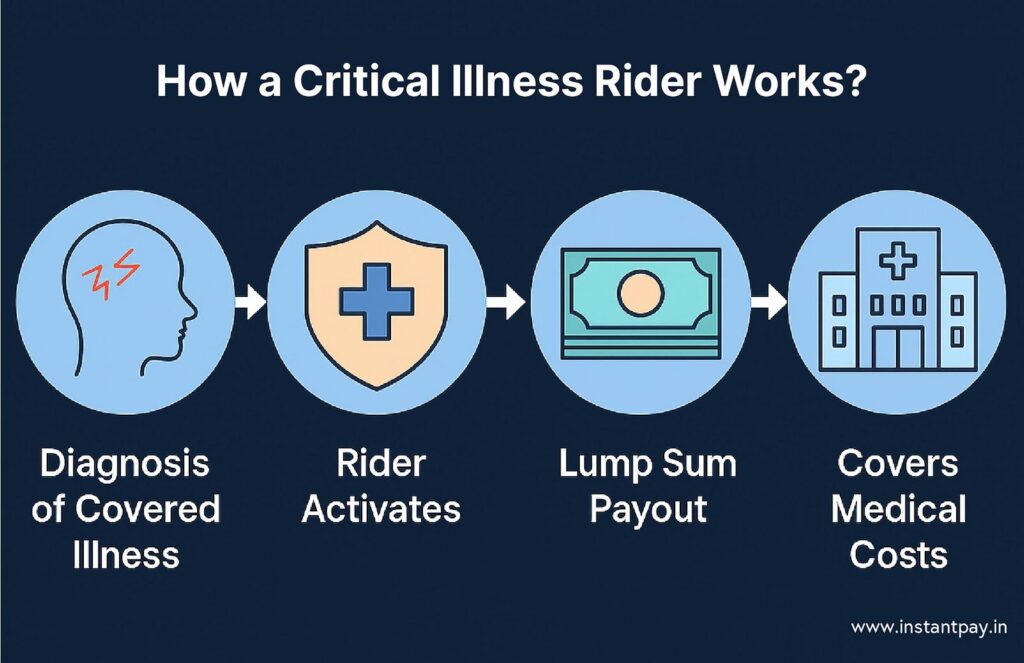
Critical illness insurance is an inclusory benefit to your term life policy that provides benefits if you become diagnosed with an irreversible, critical illness. When you get diagnosed and have benefits available, the rider pays you a lump sum of cash which you may use for medical expenses and hospital costs.
Why is this important?
The critical illness rider is an enhancement and extension of the basic coverage provided by your term life policy. The purpose of the critical illness rider is to provide you with additional funds to pay for your treatment after you’ve been affected by a critical illness so that, if you do recover from that illness, the last thing you have to worry about is how to pay for the medical bills you incurred while receiving treatment.
A critical illness rider adds to your term life insurance by giving you a one-time payment when you’re diagnosed with an illness that is on the rider’s list. The payment can help alleviate the financial burden of treatments, such as Rs. 20,000,000 for advanced cancer or Rs. 3,000,000 for a heart procedure.
Without coverage (riders) for catastrophic events, 40–50% of Indian households experience health-related financial expenses that deplete their savings. With a rider, you have coverage for 15-36 illnesses (i.e., cancer, stroke, etc.), with a maximum payout amount of Rs.5,000 (fifty-per cent) or 25% of the amount of the original policy (base sum), applied after a 90-day waiting period and 28-day post-survivor period. This provides out-of-pocket payment for your medical costs (i.e. chemotherapy cycle Rs.12-75,000) while also providing additional recovery funds, especially as surgery costs across India now frequently exceed Rs.2.5 million (2,000,000).
How does it work?
The rider will become active when you receive a diagnosis of an illness. The benefit of the rider will be paid in one lump sum, and the funds from the rider may be used to help pay for medical treatment, thereby relieving some of the financial pressure associated with surviving a critical illness can help cover treatment costs and alleviate the financial burden of surviving such an illness.
Factor 1: Understanding the Coverage Scope
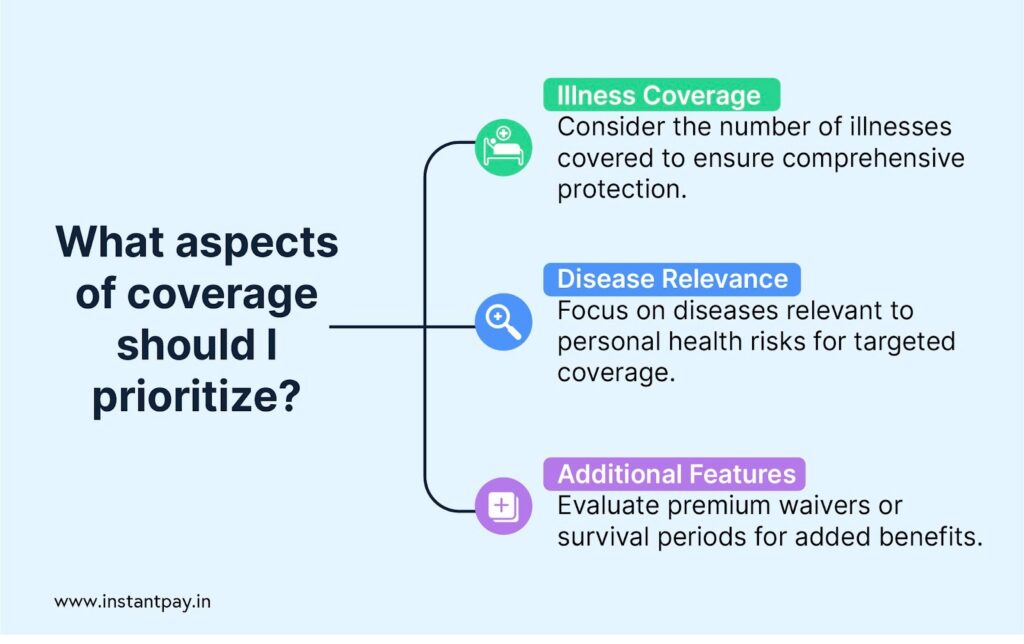
If you’re considering taking out a critical illness addendum, it’s important to understand what your policy will cover as well as the breadth of coverage that is available. A critical illness addendum should offer you the best possible protection from a variety of life-threatening illnesses. The most common illnesses that are covered by critical illness addendums include cancer, heart disease, stroke, and kidney failure. The level of coverage can vary significantly between insurance companies.
Why Coverage Scope is Important:
A broader scope of coverage means you will have a wider range of illnesses covered under your policy and not just the most common. For example, if you have a family history of a particular illness, you will want to ensure that this type of illness is covered. There are some insurance companies that have a more comprehensive policy, while others may limit what is covered.
What to Look For:
When reviewing additional coverage, it is important that the policy not only covers the most common types of illnesses but also provides you with coverage for critical illnesses that are more likely to be a risk for your health. For example, if you live in a location with a higher propensity for developing specific illnesses or if you have a family history of multiple illnesses, your critical illness rider should be specifically tailored towards that risk.
Example:
HDFC Life offers critical illness coverage for up to 60 illnesses while LIC offers critical illness coverage for only 15 illnesses. Although LIC may be a more economical choice, you should carefully consider whether the amount of protection being provided is sufficient based on your needs.
To find out more details about how to fit a critical illness insurance policy into your overall insurance plan, check this detailed analysis comparing the coverage offered by various riders.

Factor 2: Assessing Your Health Risks and Family Medical History
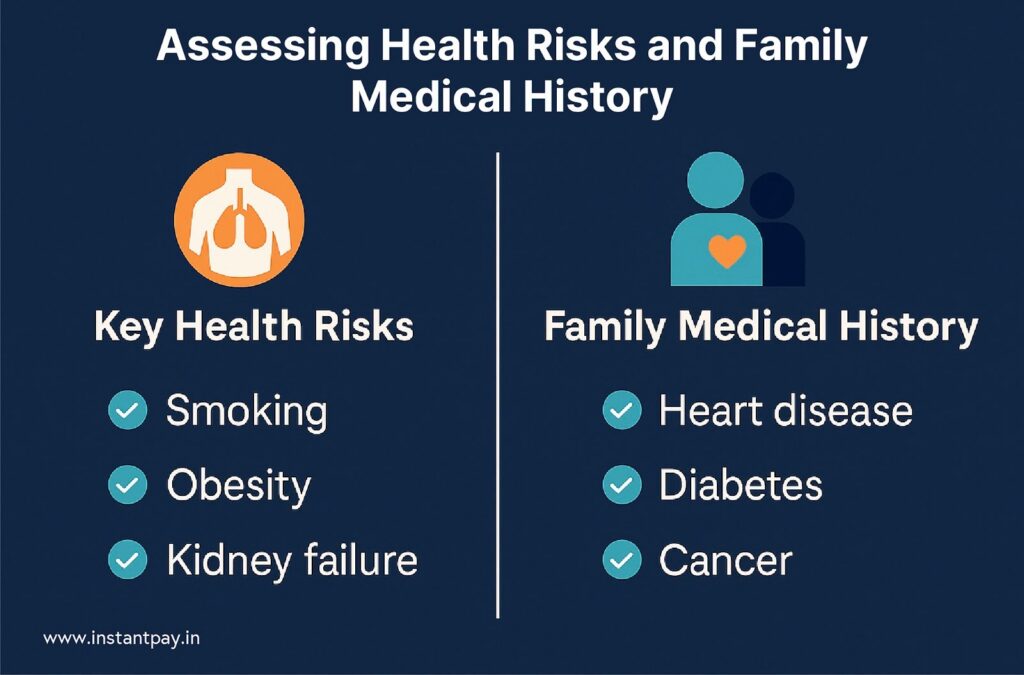
Factors that determine what type of coverage you will need are your individual health & your family’s medical histories. Your individual health is how you are doing health-wise today & what things YOU do (like smoking or exercising) to maintain your health. The types of things YOU do to maintain your health can indicate facility types of illnesses that you may be at risk for in the future. Also, your family’s medical history can show you what types of illnesses you may face in the future based on family’s history of specific conditions.
Importance of Personal Health:
One of the most significant factors determining what type of critical illness add-on riders will be offered to you is your overall health. For example, a person who is more sedentary than they should be, or has cholesterol levels that are too high could be at risk for developing a heart-related illness or diabetes. Hence, this must be considered when determining what you will receive coverage for through the critical illness rider. For example, if you have high blood pressure and you are overweight, your rider should provide coverage for all heart-related illnesses and complications.
Family Medical History:
If someone in your immediate family has been diagnosed with specific illnesses such as cancer, diabetes, or heart disease, your probability of developing one of these diseases increases significantly. Therefore, you should consider adding coverage to your rider for developing any of these specific types of illnesses, even if you are currently healthy. Individuals with family medical histories have to understand that having comprehensive coverage and getting help early is critical because they have a higher probability of developing these diseases.
Considerations for Higher Risk Groups:
Individuals who currently live with chronic diseases (hypertension, diabetes) or have genetic predispositions must have more extensive critical illness coverage. Therefore, the critical illness rider must encompass a broader range of illnesses than typical critical illness riders. This is to make sure you are covered for illnesses related to your health or family history.
Example:
If an entire family has a history of heart disease, the rider should cover all heart-related illnesses. This coverage includes but is not limited to coronary artery disease, heart attacks, and bypass surgeries. Generally, the majority of these diseases are caused by both a person’s lifestyle and the genetics of that person’s family. Therefore, individuals at risk for developing heart disease are more in need of comprehensive coverage.
Factor 3: Premium Costs vs. Coverage Benefits
There is a need to strike an appropriate balance between cost and coverage when adding a critical illness rider onto a monthly or annual policy. While many insurers will try and encourage you to choose a lower cost premium rider; you also need to ensure you are getting adequate protection for your serious health conditions.
Balancing Cost and Coverage:
Usually, critical illness riders have varying premium rates depending on how many illnesses you wish to cover with your policy, what amount of coverage you want per illness, and the insured’s age and overall health status. Generally, the more illnesses you determine are covered, results in higher premiums; but the decision should be made by evaluating if the extra costs for those additional covered illnesses justifies the extra price for providing you additional protection. Therefore, you want a policy covering all the major health risks without putting a significant strain on your finances.
Long-Term Financial Impact:
When making a decision regarding selecting a critical illness rider; you should take into consideration how that rider fit into your overall long-term financial growth plan. Since you want to be able to afford that rider today and still be able to afford to pay for it in the years to come. Choosing an affordable rider today may protect you from financial difficulties created by a critical illness, assuming adequate coverage is provided under the rider; and funding to pay the premium is available until the policy is fully paid.
Tips for Cost Management:
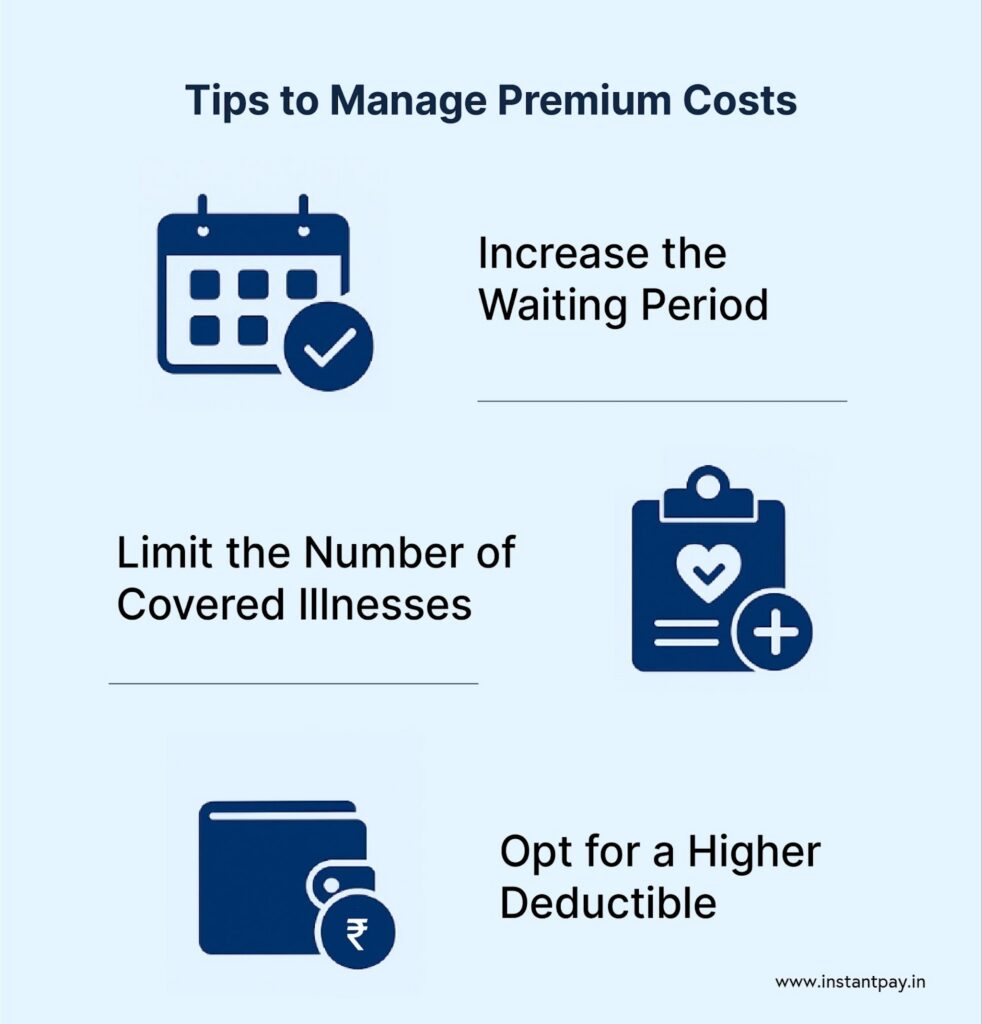
Below are some simple ways to keep your premiums within your budget without sacrificing the protection you would receive from the insurance:
- Increase the waiting period: By increasing the waiting period before the rider becomes effective, your premium will decrease.
- Limit the number of illnesses covered: Many riders offer a variety of illnesses for coverage; therefore, if you choose a rider with fewer illnesses covered, your premium will be reduced.
- Choose a higher deductible: Although a higher deductible will reduce your premium/cost, it will also put more financial burden on you when you make a claim.
Example:
Most major insurers provide premium waiver options. Therefore, if you become diagnosed with a covered critical illness, the premium waiver will only apply to your future premium payments, so you will not be concerned about paying your insurance premiums while you are recovering from your critical illness. The premium waiver option assists in eliminating a financial burden that could be caused by a critical illness event.
Factor 4: Claim Process and Payout Structure
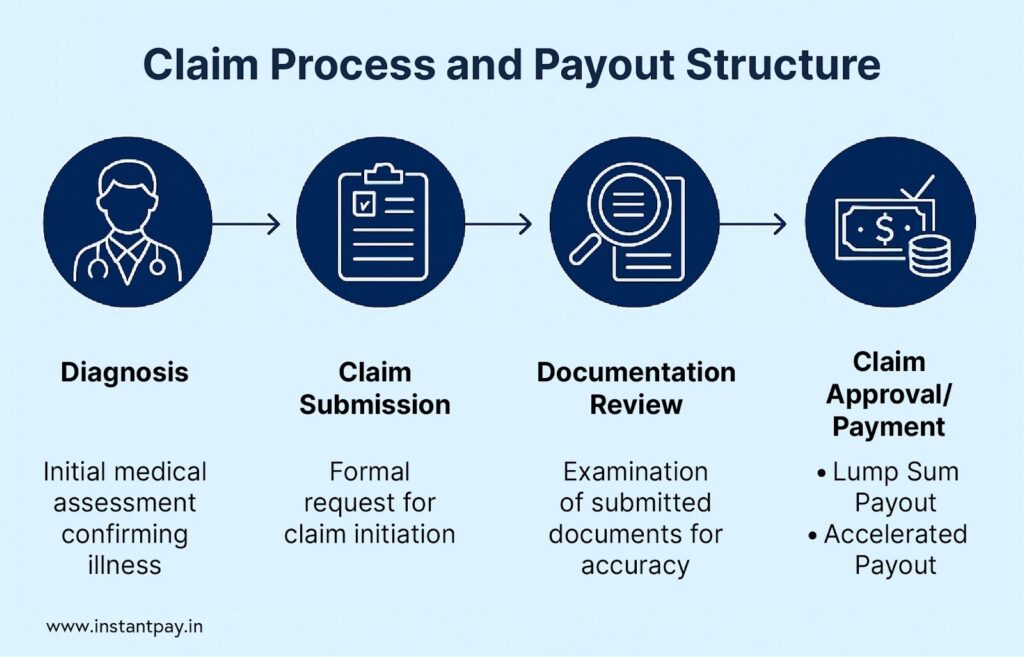
It’s important when choosing a critical illness rider that you consider the claim procedure and the manner in which payouts are made as they play an important role in determining how easily you can get access to your benefits. When claims are processed quickly and without any complications, you will have access to your benefits when you need them most, without delays or complications.
Smooth and Quick Payouts:
The most crucial factor to consider is whether the insurer that you choose has a fast and easy claims process. During times of crisis in your health, you do not want to deal with delays from bureaucracy and complicated paperwork. When you choose a rider with an insurer that has a great reputation for processing claims efficiently, you can be assured that you will receive your benefits.
Claim Settlement Ratio:
The claim settlement ratio is a very important indicator of an insurer’s ability to pay claims. The claim settlement ratio is determined by dividing the number of claims the insurer has paid out by the total number of claims submitted to the insurer. Generally, an insurer with a higher claim settlement ratio is very reliable when paying claims. For example, ICICI Prudential is one of the highest claim settlement ratios of any insurer, making it a good choice for those who want assurance that their claims for critical illness will be paid quickly and in full.
Payout Types:
Critical illness riders typically have two basic types of payouts: lump sum payouts and accelerated payouts.
- Lump Sum Payout: A lump sum payout provides you with one payment upon the diagnosis of a covered illness, thus providing you with enough money to pay all of your medical expenses in one payment and relieving you of any financial concerns.
- Accelerated Payout: An accelerated payout provides you with a portion of your death benefit upon diagnosis of a covered illness, thus reducing the amount of the death benefit that would be paid to you and providing you with greater flexibility, but it decreases the amount paid to your beneficiary when you die.
Example:
For example, ICICI Prudential provides both a lump sum payout and an accelerated payout to their policyholders. By providing flexibility in determining which payout will best satisfy the financial needs of the policyholder, they allow their policyholders to receive long-term care for their critical illness while providing financial security to their family in the event that the policyholder dies before they have received their full death benefit.
Factor 5: Policy Terms – Waiting Periods, Exclusions, and Renewability
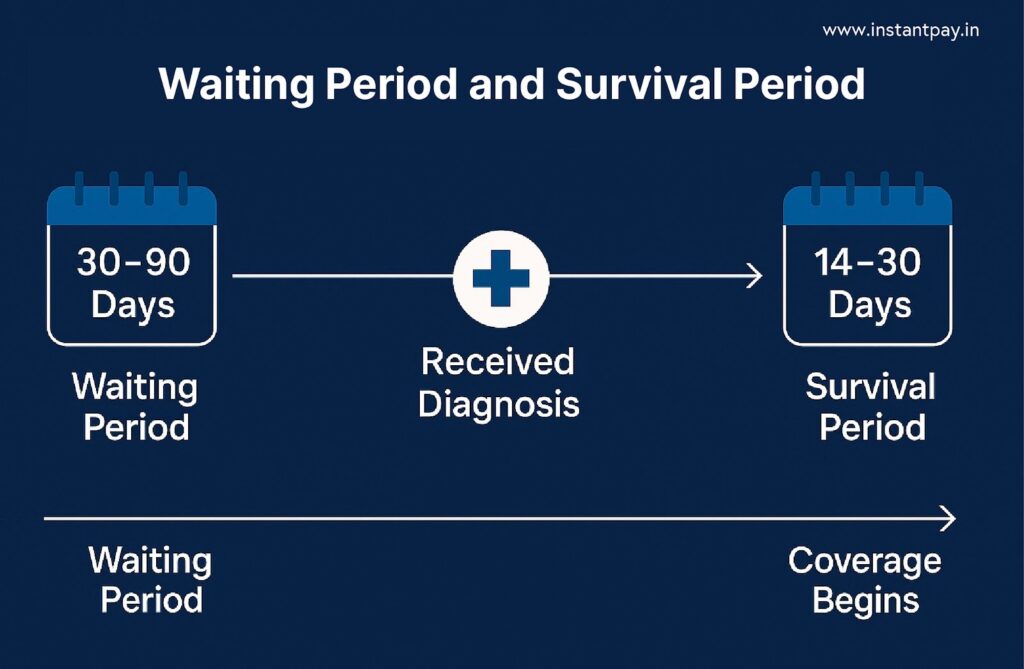
It is important that you understand waiting period, Exclusions and Renewability when searching for a critical illness add on policy, as these elements of your insurance will define how your long term coverage works.
Waiting Period and Survival Period:
A wait time is the length of time (typically 30 to 90 days) that you must wait after the day your rider is purchased before you can start to use them. During this time you will not be able to claim any benefits for a critical illness until after the waiting period ends. Survival time is the length of time that you must exist after having a critical illness diagnosed before you will receive a payment on your rider. Be sure to choose your rider with “wait” and “survival” times that work for you. The number of days “wait” and “survive” will be different from rider to rider.
Exclusions:
Common exclusions in critical illness riders include:
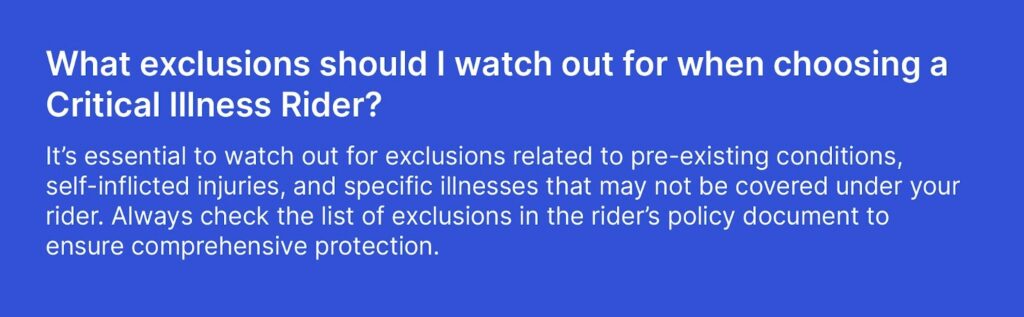
- Pre-existing conditions: Most insurance companies will not cover an illness you have already been diagnosed with before you purchase a rider to cover it.
- Self-inflicted injuries: Some insurance companies will not cover self-induced injuries or injury caused by high risk behaviour.
- Certain specific diseases: Some insurance companies will only provide coverage for certain illnesses depending on their definitions. The best way to understand how an exclusion will affect future claims is to read the exclusion documents carefully before making a claim.
It’s crucial to carefully review the exclusions to avoid unpleasant surprises when it’s time to make a claim.
Renewability:
When deciding on a rider, it is important to consider the renewability of the rider as part of the long term security the rider will provide. Look for a company that will allow you to continue renewing beyond the initial term (typically 75 years). Insurers who provide flexibility such as Max Life and Bajaj Allianz Life are two examples of companies that have riders with renewability options.
They have riders that allow insured individuals to continue to receive benefits regardless of their age or whether they are still healthy. This is an important benefit as it provides continued financial support over your lifetime as you continue to age and are at greater risk of developing a health condition.
Example:
Example 1: Bajaj Allianz Life provides riders with renewability options that allow individuals to continue to receive benefits after attaining age 75.
Example 2: Max Life provides flexibility within their riders. They will provide renewability and/or adjust the rider benefit based on age and health condition.
Additional Factors to Consider When Choosing a Critical Illness Rider
| Factor | Why It Matters | What to Look For |
| Age and Health Condition of the Policyholder | Older age and pre-existing conditions affect premiums and coverage needs. | Ensure that the rider is tailored to your age and health condition to avoid higher premiums or limited coverage. |
| Policy Term and Coverage Limit | The duration and coverage limit determine how long you’re covered and how much is provided. | Choose a rider that offers the right policy term and coverage limit based on your health risks and financial goals. |
| Riders Available | Additional riders can enhance coverage. | Consider adding supplementary riders like accidental death or hospital cash benefits for more comprehensive protection. |
| Cashless Network and Hospitals | A wide network of hospitals ensures ease of treatment without upfront payment. | Check if the insurer has a broad cashless hospital network to avoid having to pay medical expenses upfront. |
| Reimbursement Process | Determines how quickly expenses are covered after paying out-of-pocket. | Ensure that the insurer has a simple and quick reimbursement process in place, so you’re not burdened by upfront payments. |
| Free Medical Check-ups | Regular check-ups help in early diagnosis and ensure your health is monitored. | Look for policies that include free medical check-ups, as these can provide additional insights into your health and help with early detection of illnesses. |
| Pre- and Post-Hospitalization Expenses | Covers treatment before and after hospitalization, ensuring full coverage. | Choose a rider that covers both pre-hospitalization (diagnostic tests, consultations) and post-hospitalization (medications, follow-ups) expenses. |
| Survival Period | Impacts eligibility for a payout after diagnosis. | Check the survival period for different illnesses, as it can vary depending on the type of illness and insurer. |
| Policy Terms on Rejection and Review | Offers clarity on the process for rejected claims and how to dispute them. | Understand how to handle claim rejections and whether there’s an option for policy review or appeal. |
| Waiting Period for Specific Conditions | Some illnesses have longer waiting periods before they are covered. | Review the waiting periods for various illnesses to ensure you aren’t left unprotected if you’re diagnosed with a condition early in the policy. |
Final Thoughts
A critical illness rider provides important financial protection from serious medical situations; you will not have to take on the costs of your medical bills or lose the income you will be missing due to an unexpected health event. The cost of healthcare is continuing to increase, and adding a critical illness rider to your term insurance allows you to be able to pay for your health issues while helping to maintain your financial security.
In order to select the right critical illness rider for your health and financial needs, review and evaluate the following criteria before selecting a rider: coverage level, premium cost, waiting period before coverage starts, exclusions. When selecting a rider, it is important to choose a rider that has options to fit your changing health and that you will be able to renew your rider as you age.
Frequently Asked Questions (FAQ’s)
1. What is a critical illness rider in term insurance?
If diagnosed with certain illnesses that fall under the critical illness rider, you will receive a cash payment from your term insurance policy to help cover expenses related to your diagnosis.
2. How does a critical illness rider work?
Critical illness riders agree to provide a consumer a lump-sum cash payment once they meet the eligibility requirements of their policy after being diagnosed with a qualifying illness that is covered by the terms of the rider. By receiving the lump-sum cash payment, the consumer is able to pay for medical services and/or for their day-to-day expenses while recuperating.
3. Is it worth adding a critical illness rider to term insurance?
It is a great way to provide financial coverage in case you survive a critical illness and to keep up with the high cost of medical care and the potential loss of savings due to the diagnosis of a critical illness.
4. What illnesses are covered under a critical illness rider?
Many life insurance companies offer critical illness riders and will pay for a wide variety of illnesses that will be beneficial to you financially. There are at least three critical illnesses that all critical illness riders will cover; these include cancer, coronary artery disease, and stroke. Some companies even provide riders that cover 40-60 other illnesses in addition to the three major illnesses.
5. How do I choose the best critical illness rider?
Evaluating how long you intend to receive, how risky your health is, what types of illnesses are covered under the rider, how you will pay the premiums, and what type of terms/provisions are included in the rider to protect you as the insured party are just a few examples that will allow you to make an educated choice when deciding on a critical illness rider.
6. What is the waiting period in critical illness insurance?
A “waiting period” is defined as the time period during which you cannot submit a claim for benefit payment on the policy. Depending upon the state in which you reside, the waiting periods are typically 30-90 days. Your policy will state when you can submit your claim.
7. What is the difference between lump sum and accelerated payout?
The main difference between a lump sum payout and an accelerated payout is that the lump sum payout is the total amount that will be paid to you upon the diagnosis of a covered critical illness. The accelerated payout is a partial payment on the total amount payable to your beneficiaries upon your death.
8. Can I claim a critical illness rider for pre-existing diseases?
Most critical illness riders will not provide for the insured party if they have an illness prior to purchasing the policy. You must read your policy completely before purchasing any insurance product.
9. How much critical illness coverage should I take?
To determine the appropriate amount of critical illness coverage that you should purchase, you need to evaluate how much money you expect to incur for medical expenses in the event of an unexpected medical event involving critical illness and how much money you expect to replace your lost wages while you are recovering from your medical event.
10. What should I verify before buying a critical illness rider?
You should evaluate the critical illness rider’s qualifications to determine if the major critical illness is covered prior to submitting a claim against the policy. You need to review the waiting period, the surviving period, and the claims ratio of the insurer, as well as the claims type, duration of the coverage, and the premium. You also want to ensure that the insurance company provides sufficient protection for your long-term medical expenses should you become ill.