Term insurance is becoming increasingly popular in India; however, the significant majority of policyholders do not know that there are certain exclusions to every term insurance policy, and, therefore, many will have their claims denied. The IRDAI statistics for 2024 indicate that an average of 83 percent of health insurance claims were settled by insurers while 11 percent of claims were denied; the other six percent were still in process at the end of the year, mainly due to situations where the insured either did not disclose information on their claim or committed suicide during the exclusion period or died as a result of illegal activity.
This situation demonstrates the increasing importance of understanding what death types are excluded under your term insurance policy prior to having something happen.
When we purchase life insurance coverage, we expect that the insurer will pay our families to cover expenses when we die, regardless of what happens to us when we die. However, there are exclusions in every life insurance policy for certain types of deaths that may potentially result in denial of coverage to the insured’s family during a very emotional period. Understanding what types of death will not be covered by a term insurance policy is not a minor detail; it’s essential for obtaining an informed purchase.
This blog post will outline the major exclusions you should know about when applying for term insurance, with the substantiation of actual data, as well as an overview of guidelines from the IRDAI and the direction to avoid having claims rejected in the future.
Does Term Insurance Cover All Types of Death?

“Term insurance is perceived as a complete insurance policy; however, this statement is only partially correct. Most accidental deaths, natural deaths, and some types of terminal illness are covered through a term policy, but for all scenarios, full payment is not guaranteed.
The catch lies within the exclusions found on all term policies. Insurance companies may deny payment on any claim made if the claimant’s death occurred as a result of an exclusion.
For that reason, you must understand all exclusions that would prevent your family from receiving full coverage when they expect it after an emotional death.
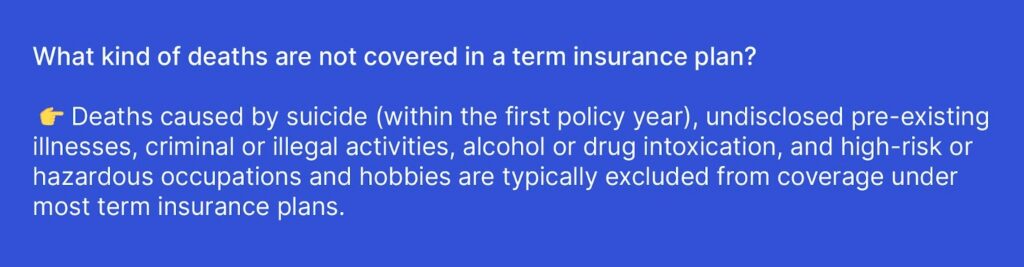
While term insurance generally covers deaths due to natural causes or accidents, there are limits to what’s included. Understanding these boundaries starts with knowing how term insurance works at its core—this explainer on term insurance meaning can help clarify the foundation before diving into exclusions.
Myth vs. Reality
| Myth | Reality |
| “Term plans cover all deaths.” | “Exclusions like suicide (in the first year) and illegal acts are not covered.” |
| “If I die during an adventure trip, my nominee gets the claim.” | “Death during risky activities like paragliding may be excluded.” |
| “Once I buy it, all health conditions are covered.” | “Undisclosed pre-existing illnesses may lead to claim rejection.” |

What IRDAI Excludes from Term Insurance Coverage?
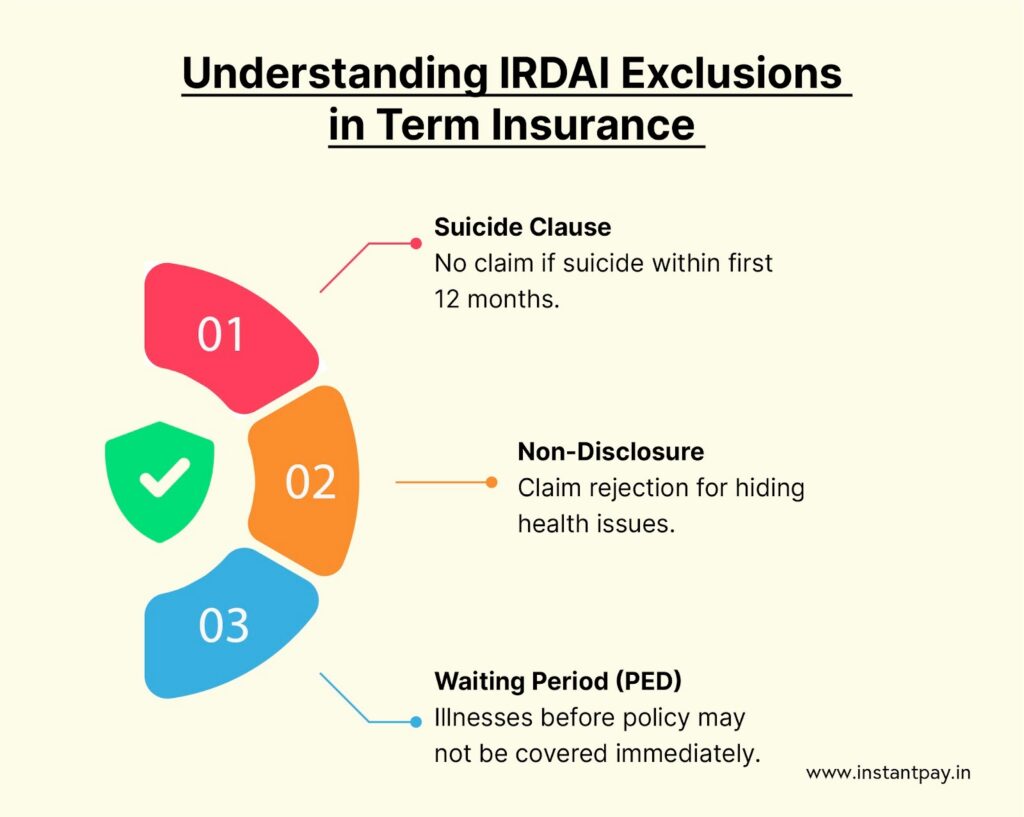
It’s vital that any person taking out an insurance policy be aware of any exclusions outlined by the Insurance Regulatory and Development Authority of India (IRDAI) so that they know the circumstances under which term insurance claims will not be treated as valid and ultimately, will not be paid.
Suicide Clause: 12-Month Exclusion Period
If the insured person commits suicide within 12 months after taking out the insurance policy (or within 12 months after reviving it), then the policy becomes null and void. The only liability of the insurer will be to return a percentage of the premiums paid, minus taxes & any additional premium charged (for example, 80% under the Saral Jeevan Bima plan).
Non-Disclosure of Material Information
If the insured person fails or refuses to disclose any material facts that could affect the premium charged (e.g. their health at the time of taking out the policy), this could result in a claim being refused, and an exclusion of coverage. The insurer will reserve their right to repudiate a claim if it is determined that there was a failure by the policyholder to provide full information and disclosure at the time of application.
Waiting Period for Pre-Existing Diseases
Pre-existing conditions will typically be excluded from coverage for a waiting period of some type. The time will typically vary from one insurance provider to another; however, a minimum time period would usually apply for most insurers (typically, up to 36 months continuously covered). Claims arising from the pre-existing condition will generally not be paid as they were incurred during the waiting period.
Understanding the exclusions listed above is important to ensure that the beneficiary is not surprised when it comes time to settle a claim. Always make sure that you read through your policy document carefully and disclose any relevant facts with your insurer before taking out the policy to avoid a claim denial.
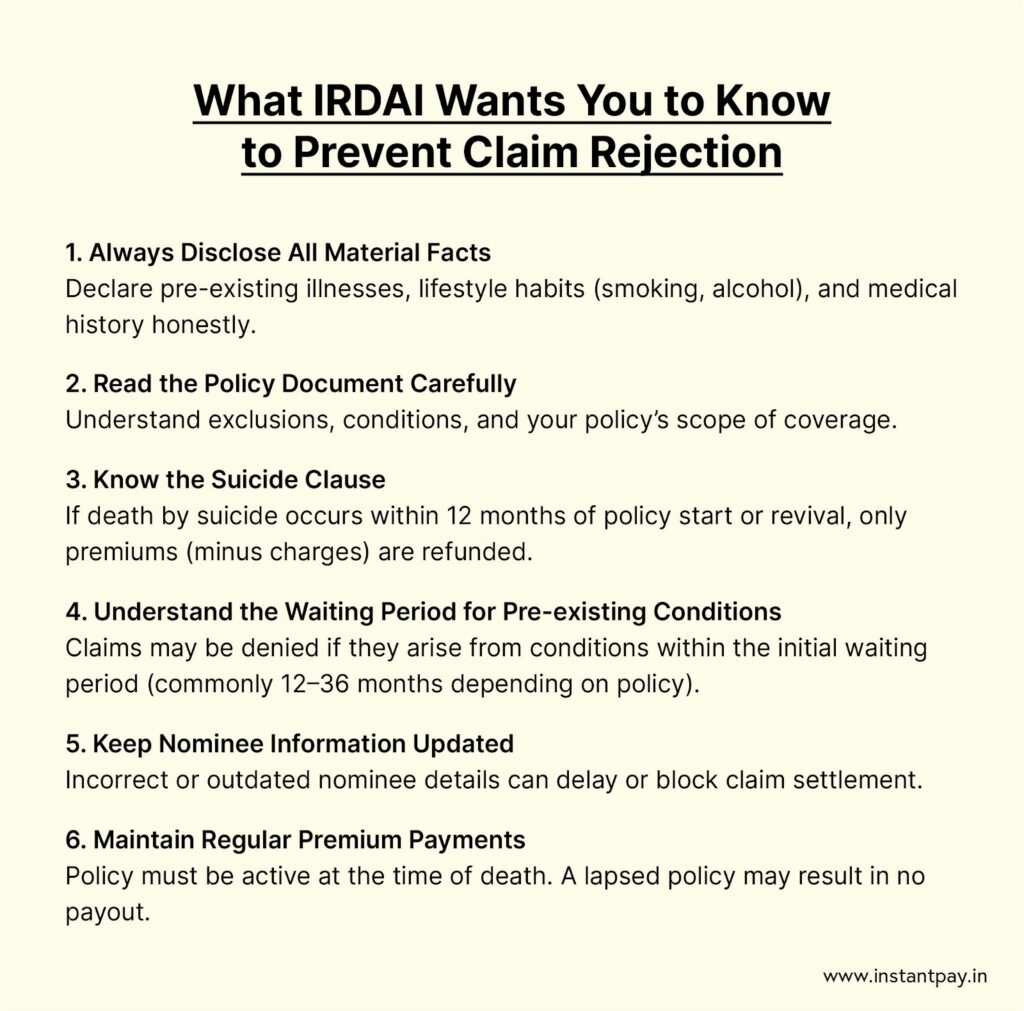
List of Deaths Commonly Not Covered
While term insurance offers broad protection, it doesn’t extend to all causes of death. Most claim rejections stem from specific exclusions stated in the policy. Here are the most commonly not covered scenarios, each backed by IRDAI guidelines or insurer norms.
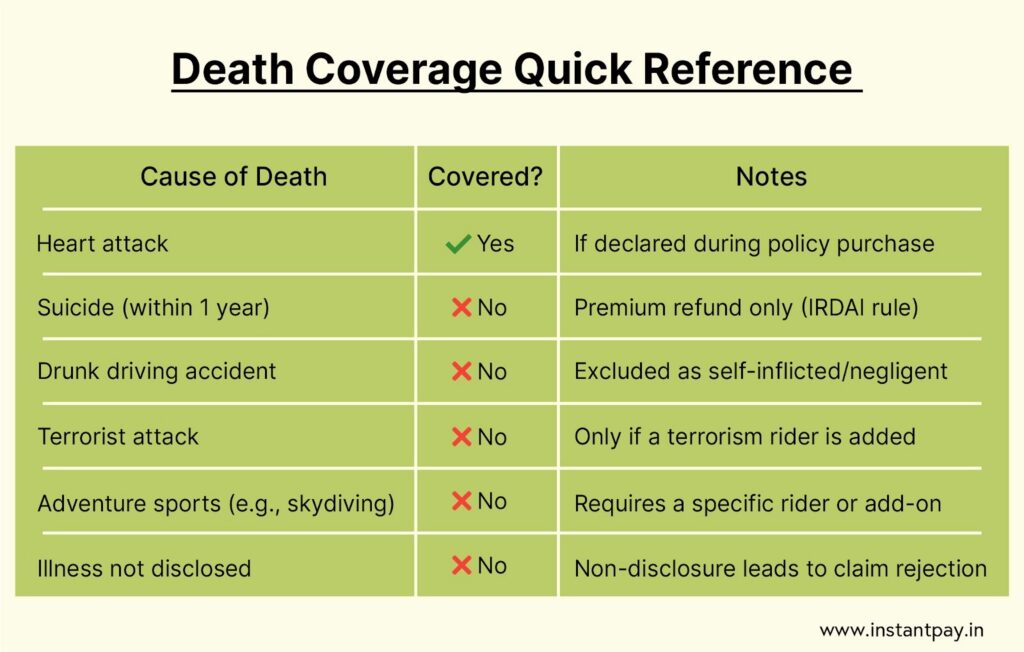
1. Is Suicide Covered in the First Year of a Term Plan?
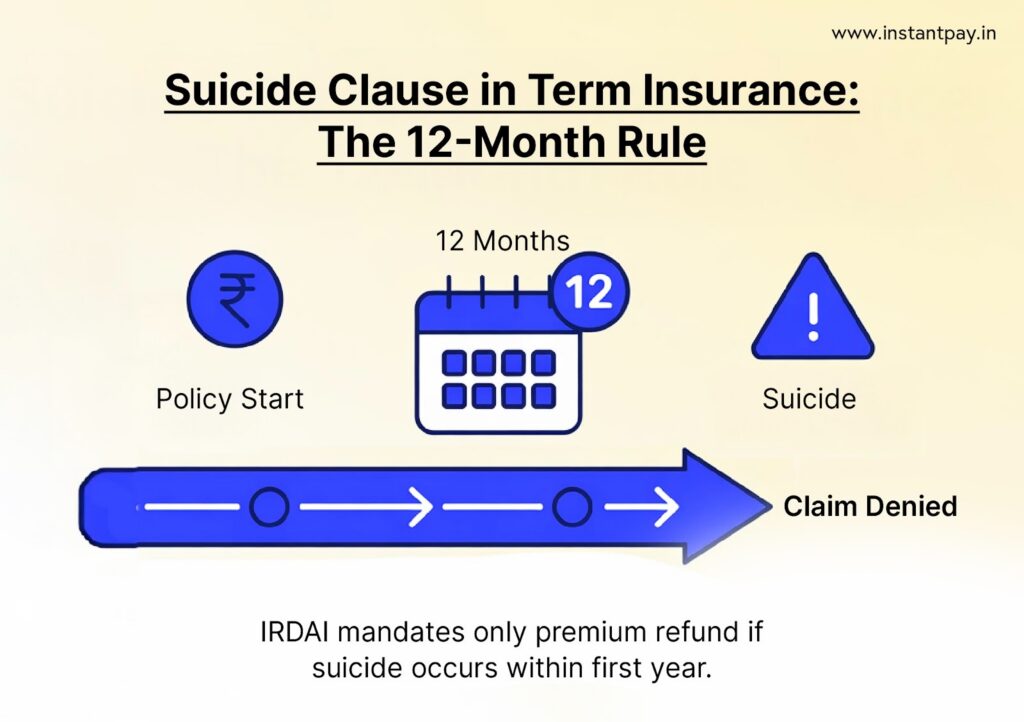
No. It’s excluded.
If the policyholder dies by suicide within 12 months of policy inception, the nominee will not receive the sum assured. Instead, the insurer may refund only a portion of the premiums paid.
Example: Under the IRDAI-standard Saral Jeevan Bima plan, 80% of premiums are refunded.
2. What Happens If You Hide a Pre-Existing Illness?
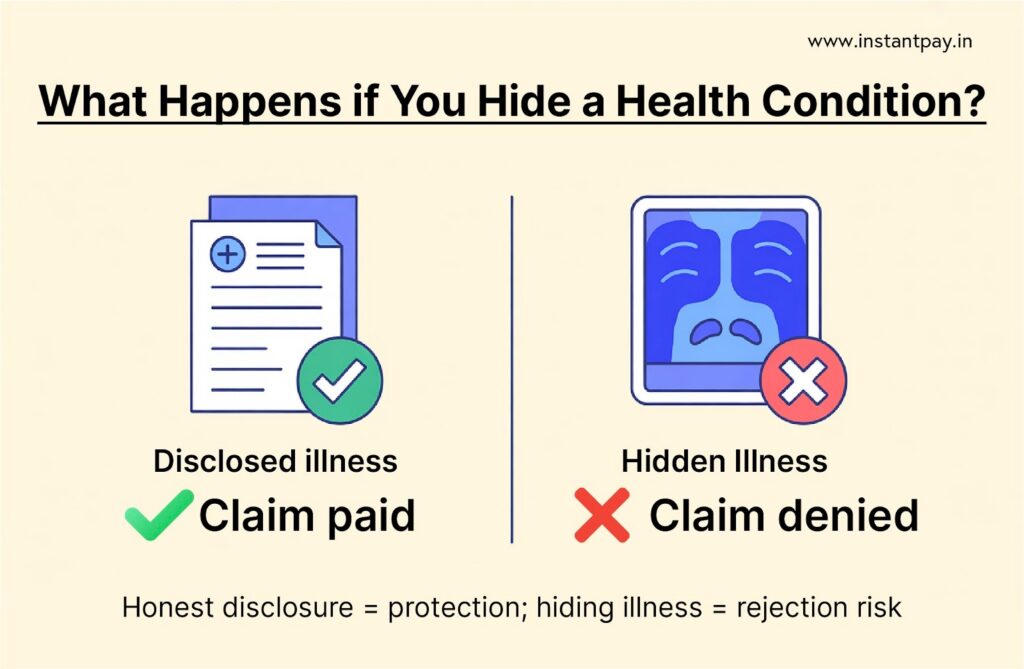
A claim may be rejected.
Non-disclosure of a critical illness, like diabetes, cancer, or hypertension, can void the policy at the time of claim.
Example: A person with an undisclosed liver condition passes away; the insurer discovers this during claim verification and rejects the payout.
3. Does Term Insurance Cover Drug Overdose or Alcohol Abuse?
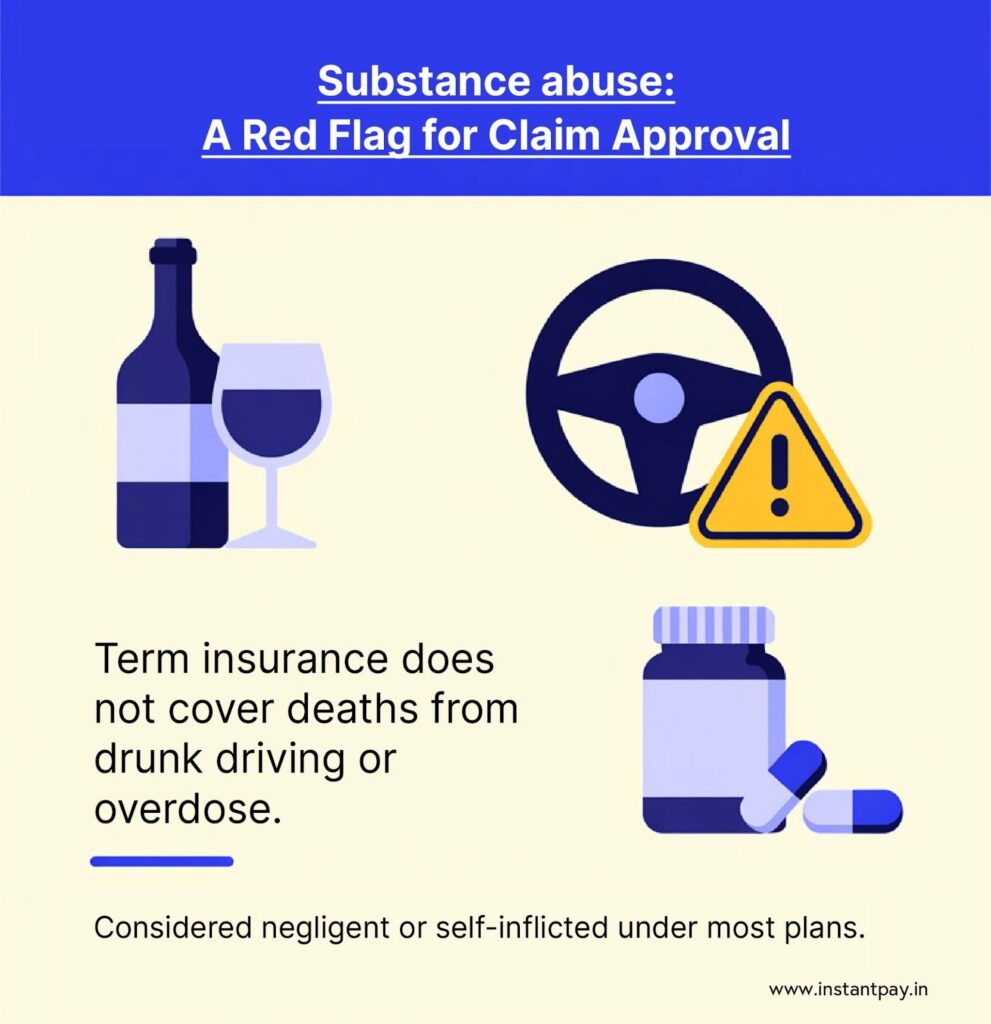
Generally not.
Deaths caused by alcohol poisoning, drink-driving, or drug overdose are considered self-inflicted or negligent and are often excluded from coverage.
Example: A fatal accident while driving under the influence can lead to outright claim rejection.
4. Is Death During a Crime Covered in Term Insurance?
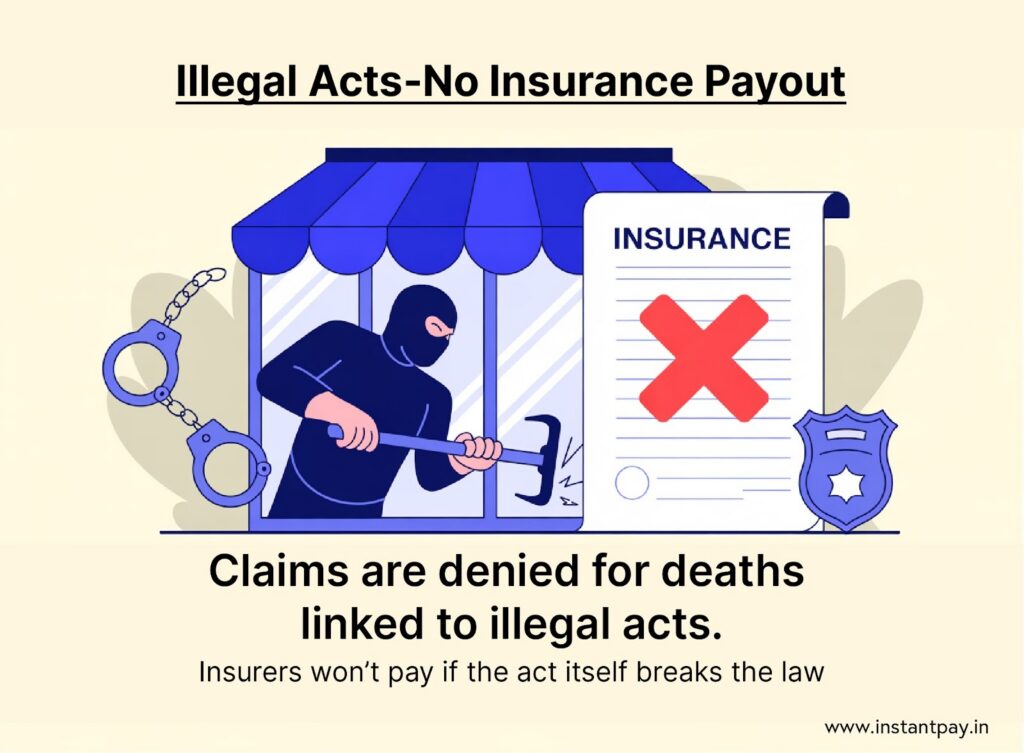
Not covered.
If the policyholder dies while engaging in criminal activity, such as theft, assault, or financial fraud, the claim is usually denied under the “illegal acts” exclusion.
Example: A person is shot while attempting a robbery—their nominee cannot claim the insurance amount.
5. Are Adventure or Hazardous Activities Covered?
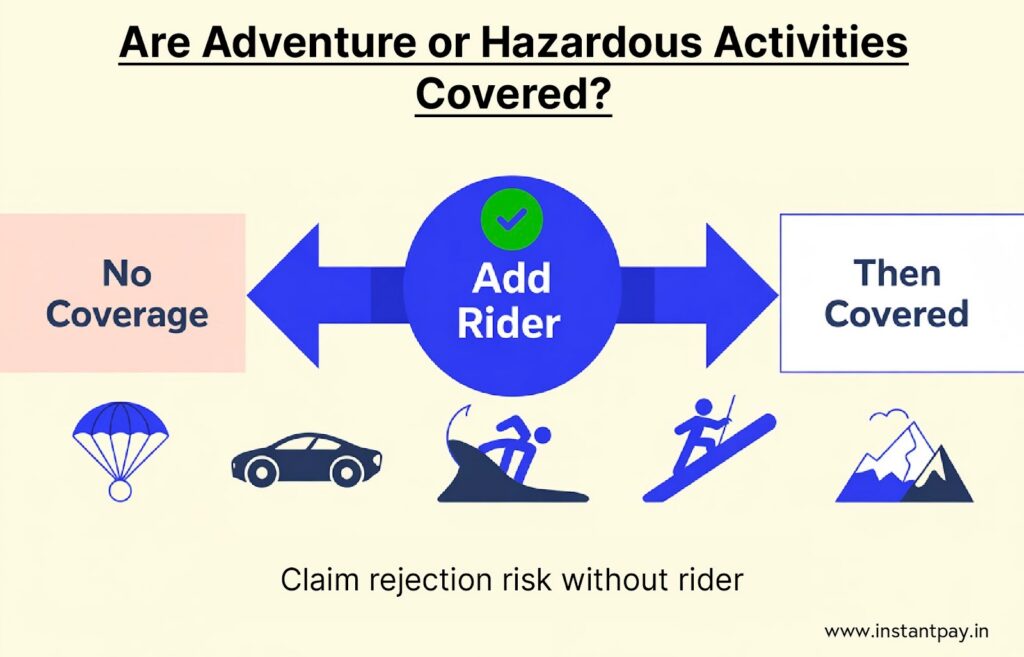
Only if riders are added.
High-risk activities such as skydiving, paragliding, scuba diving, or auto racing are excluded by default. Coverage is possible only through specific adventure sport riders.
Example: A mountain climber dies during an expedition. If not covered by an adventure rider, the claim may be declined.
6. Does Term Insurance Cover Death from War or Terrorism?
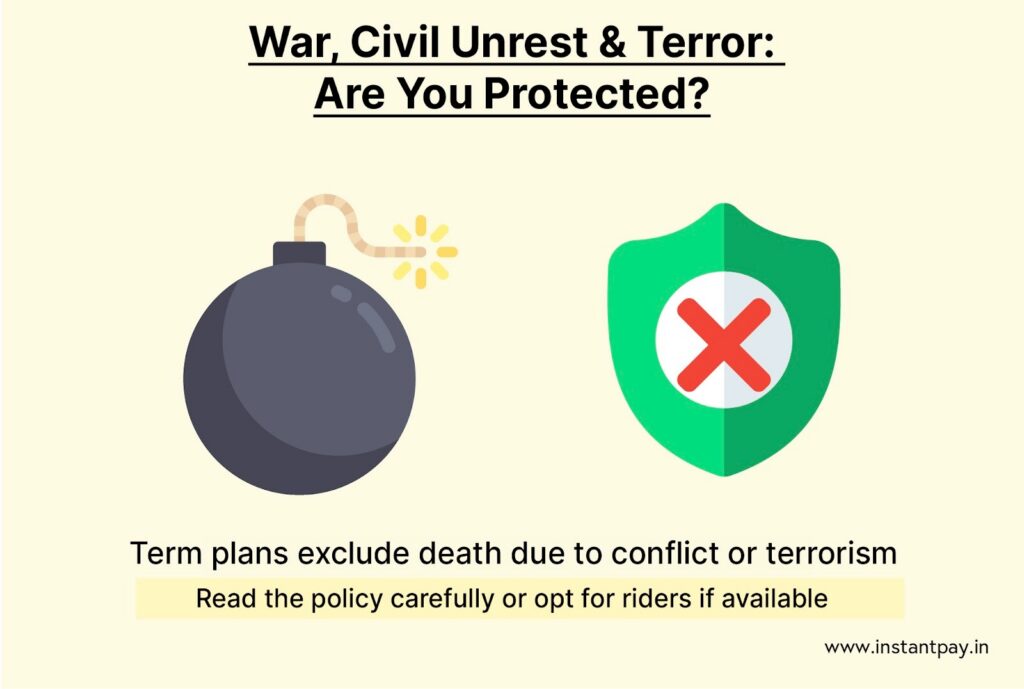
Typically excluded.
Deaths due to war, armed rebellion, civil unrest, or terrorist attacks are part of the standard exclusions in most term policies.
Example: A civilian killed in a terror blast won’t be eligible for payout unless the policy includes a terrorism rider.
Common Misconceptions Around Natural and Accidental Deaths
Misunderstandings around how natural or accidental deaths are treated in term insurance often lead to rejected claims. Let’s break down the facts:
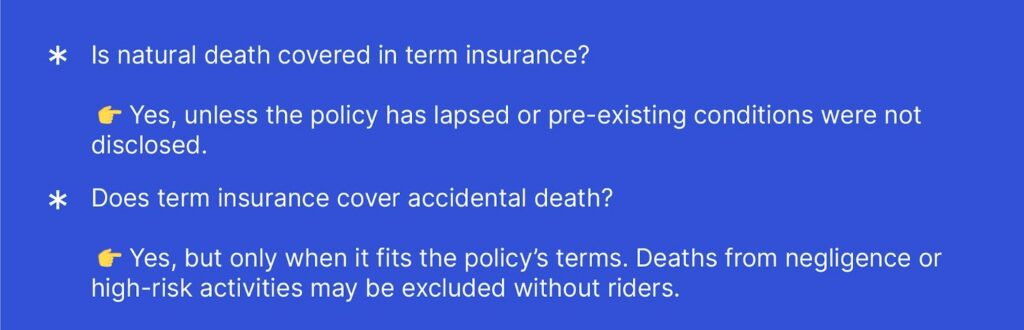
Natural Deaths
- Usually Covered: Deaths due to ageing, heart attack, or illness are generally covered under standard term plans.
- Policy Must Be Active: If the policy has lapsed due to non-payment, the claim will be denied.
- Disclosure is Key: If the policyholder hides a pre-existing disease (e.g., cancer, diabetes) and dies due to it, the insurer may reject the claim.
Accidental Deaths
- Covered in Most Plans: Death due to road accidents, falls, or sudden injuries is usually included.
- Not All Accidents Qualify: If the accident involves alcohol, drugs, or illegal activities, the claim may be excluded.
- Adventure Sports Need Riders: Activities like paragliding or mountain climbing require specific riders for coverage.
Understand key details before buying term insurance that often go unnoticed but matter during claims.
Which Types of Plans Provide Death Cover?
| Plan Type | Provides Death Cover? |
| Term Life Insurance | Yes, provides pure death cover |
| Whole Life Insurance | Yes, covers death anytime |
| Endowment Plan | Yes, death benefit plus savings |
| Health Insurance | No, covers medical expenses only |
| Critical Illness Plan | No, pays lump sum on illness diagnosis, not death |
| Accidental Death Rider | Yes, additional death cover due to accidents |
| Savings/Investment Plan | No, primarily for wealth creation, no death cover |
How to Avoid Claim Rejection Due to Exclusions?
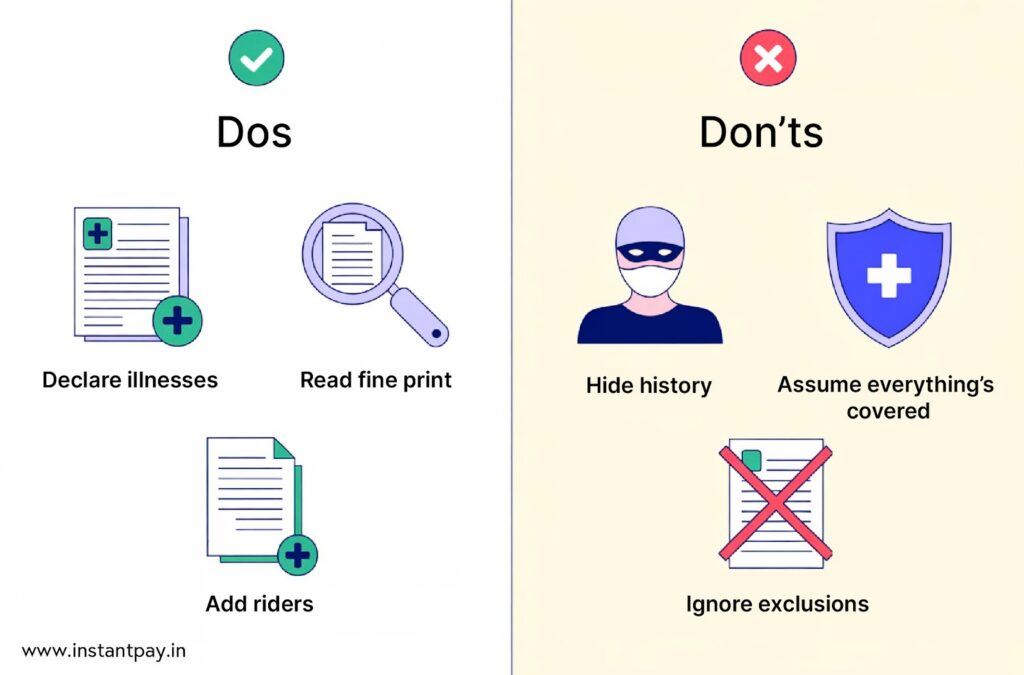
Buying a term insurance plan is only the first step. Ensuring your family actually receives the payout means understanding what could lead to claim rejection and actively avoiding those pitfalls.
Here’s how to reduce the chances of exclusions affecting your claim:
- Disclose All Health Conditions Honestly
Never hide existing health issues, surgeries, or medical history during the proposal. Even minor non-disclosures can void the policy later. Transparency ensures your coverage remains valid. - Avoid High-Risk Behaviours
Insurance claims can be denied if the policyholder engages in dangerous activities like illegal racing, excessive alcohol use, or drug consumption. Staying away from such habits helps keep your cover intact. - Understand What Your Policy Excludes
Don’t just skim the policy brochure. Read the exclusions section carefully—especially around suicide clauses, waiting periods, and risky lifestyle exclusions. When in doubt, ask your insurer or advisor for clarity. - Add Relevant Riders to Expand Protection
Riders like Accidental Death Benefit or Critical Illness Cover offer extended protection against exclusions that aren’t covered by default. They come at a small additional cost but significantly enhance your payout eligibility.

Final Thoughts
Although term insurance may provide critical financial protection, it is only effective if you have a clear understanding of the exclusions and conditions that may apply.
A common misconception is that all deaths will be covered. Some examples of exclusions, which may result in claims being denied, include suicides occurring during the first year of coverage, undisclosed medical conditions and illegal or hazarded activity deaths. Additionally, natural deaths may also be excluded from coverage if your policy has lapsed or you failed to disclose any pertinent information or details.
Before purchasing term insurance, obtain and review the following:
1. A list of all exclusions in your insurance policy
2. If you belong to a high-risk category and your policy also requires a rider
3. Review waiting periods for certain medical conditions and/or illnesses
Finally, when in doubt regarding any of the details mentioned above, consult either your insurer or a licensed agent to confirm that your beneficiary will not face complications in the future regarding your term insurance coverage.

FAQs
1. What doesn’t term life insurance cover?
Term life insurance typically excludes deaths due to suicide within the first year, deaths during illegal activities, undisclosed pre-existing conditions, and deaths related to high-risk hobbies unless riders are added.
2. What are exclusions in term insurance?
Exclusions are specific situations or causes of death that the policy does not cover, such as suicide during the initial waiting period, deaths from risky activities, or non-disclosure of health conditions.
3. Is suicidal death covered in term insurance?
Suicidal death is generally excluded during the first 12 months (waiting period). After this period, it is usually covered.
4. Does term life insurance cover all deaths?
No, it covers most natural and accidental deaths but excludes certain causes like suicide in the waiting period, deaths during illegal acts, or undisclosed illnesses.
5. What type of death is not covered by insurance?
Deaths from suicide during the waiting period, deaths due to participation in illegal activities, or deaths from non-disclosed pre-existing illnesses are commonly not covered.
6. What if I start drinking after taking term insurance?
Starting to drink after purchasing insurance usually does not void the policy unless it leads to death related to alcohol abuse, which is excluded, or if you fail to disclose relevant health information.
7. What is the difference between natural death and accidental death?
Natural death occurs due to illness or aging, while accidental death results from unforeseen external events like accidents, injuries, or trauma.
8. What is classified as accidental death?
Accidental death is caused by sudden, unexpected incidents such as car crashes, falls, drowning, or other external physical injuries.