A serious illness doesn’t just affect a person’s health, it disrupts entire households. When a loved one is diagnosed with something critical, everything changes: income slows, responsibilities shift, and expenses multiply overnight.
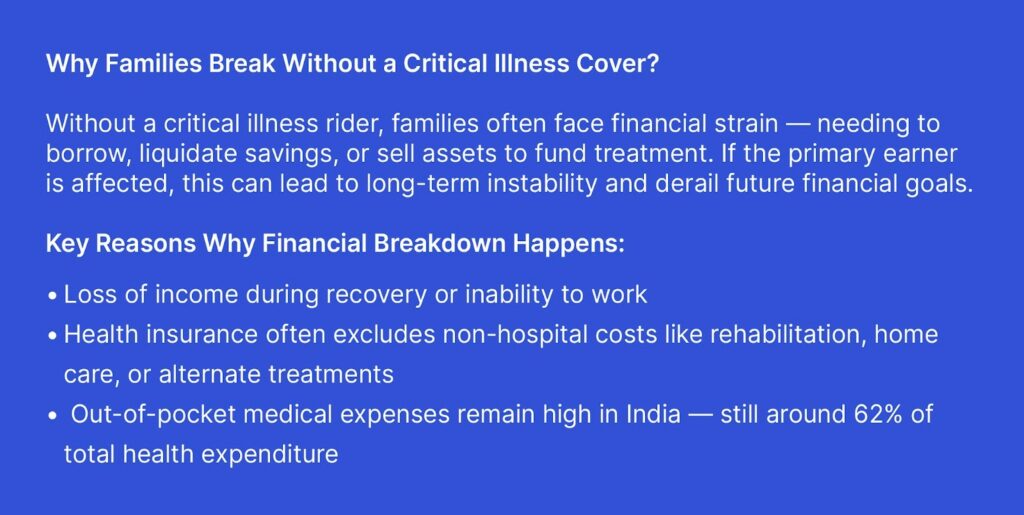
Whether it’s cancer, a heart condition, or kidney failure, the reality is that families often face a dual blow — medical stress and financial uncertainty. The hospital bills are just the beginning. Travel for treatment, daily care, and temporary job loss all add up quickly.
Studies show that individuals may experience a 20% drop inincome within four years of being hospitalized for a serious illness.
So, what is the financial impact of a critical illness in India? It’s not just about medical costs, it’s about losing stability, compromising on long-term goals, and struggling to stay afloat during recovery.
This is where a critical illness rider makes a meaningful difference. With a one-time payout provided on diagnosis, it helps families manage expenses, maintain financial dignity, and focus on what truly matters: healing.
In this blog, we look beyond policy features and explore real families who turned this rider into a turning point from financial despair to recovery and resilience.
What Is a Critical Illness Rider and How Does It Work?
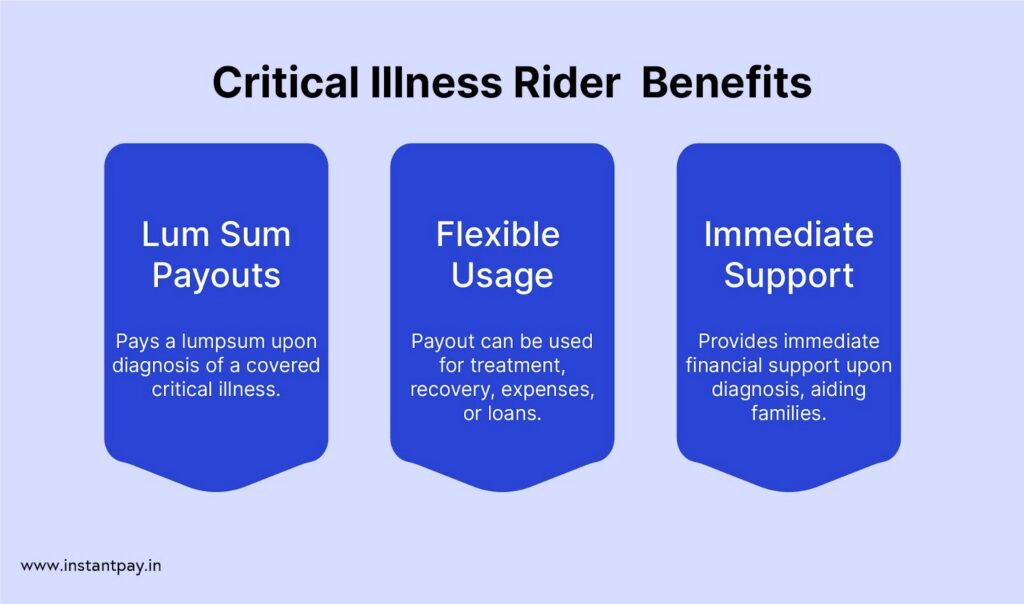
A critical illness rider pays a lump sum when you’re diagnosed with a covered serious illness, such as cancer, heart attack, or kidney failure. This payout can be used freely for treatment, recovery, daily expenses, or even paying off loans, with no restrictions on how the money is spent.
Unlike traditional health insurance that only covers hospital bills, this rider provides immediate financial support on diagnosis, helping families manage costs when income might be interrupted.
Here’s what it typically offers:
- Covers 10–40 major illnesses, such as cancer, heart attack, kidney failure, etc., depending on the insurer
- One-time lump sum payout over and above your regular health insurance
- Activates on diagnosis, not death or hospitalisation
- Offers peace of mind without waiting for claim approvals
It’s often added to a term plan with critical illness cover, offering a broader safety net when life takes an unexpected turn. To understand how this and other add-ons can enhance your protection, see how smart riders are being used in Top Term Insurance Riders in 2025.
By bridging the gap between health insurance and real-world financial needs, the critical illness rider proves its worth exactly when it’s needed most, at the first sign of a medical crisis.
How Critical Illness Riders Turn Tragedy Into Triumph?
1. Dr. Meera Rao’s Story
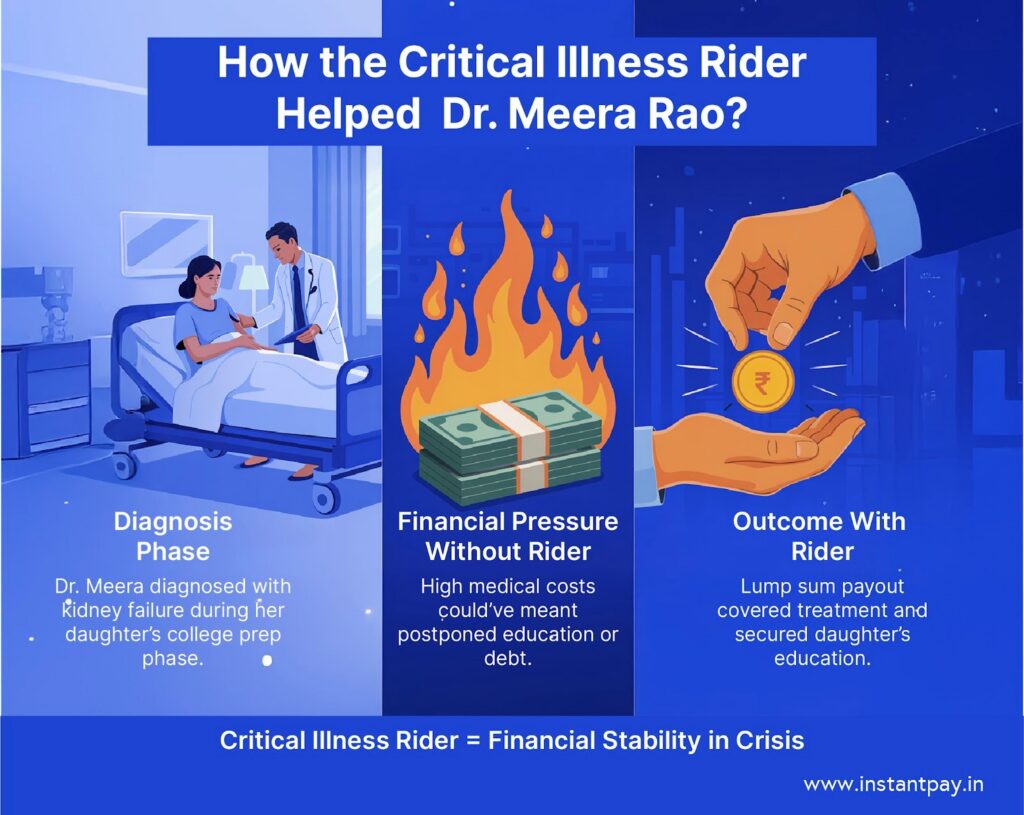
A well-respected pediatrician, Dr. Meera Rao, was diagnosed with kidney failure just as her daughter was preparing for higher studies. With mounting medical bills and education expenses looming, her family’s savings were under severe strain.
What could have gone wrong:
Without a critical illness rider, Dr. Rao’s family might have had to postpone or compromise her daughter’s education plans or rely on high-interest loans during the treatment period.
How the rider helped:
The lump-sum payout upon diagnosis allowed Dr. Rao to access the best medical care without financial hesitation. Crucially, it also ensured her daughter’s education continued uninterrupted.
Why it matters:
When the main breadwinner faces a critical illness, it can trigger a chain reaction—selling assets, taking on debt, and long-term financial hardship. The critical illness rider helped break this cycle before it could start.
2. John’s Heart Attack
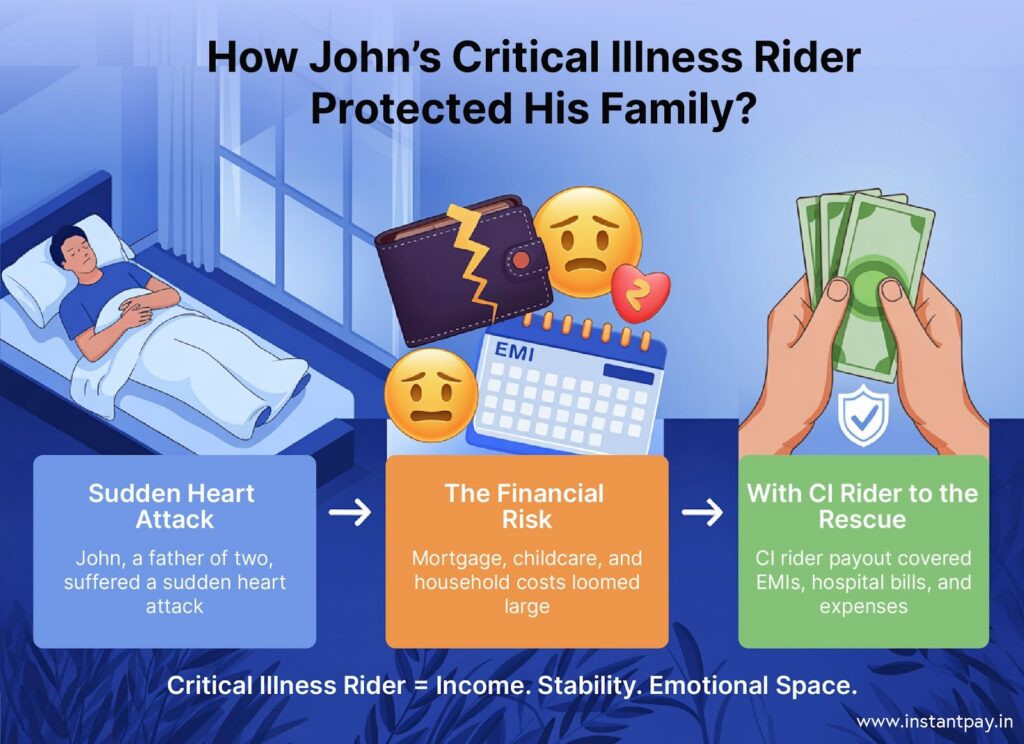
John, a father of two, suffered a sudden heart attack. With ongoing mortgage payments and childcare costs, his family was staring at a deep financial hole.
What could have gone wrong:
His spouse would have had to dip into retirement savings or take up additional jobs. Stress levels would’ve skyrocketed — right when emotional stability was needed most.
How the rider helped:
The rider payout covered hospital bills, mortgage EMIs, and living costs for several months, giving his family space to cope and heal.
Why it matters:
Health crises don’t just bring medical bills, they disrupt income, emotional well-being, and day-to-day security. John’s rider protected all three.
3. Riya’s Cancer Diagnosis
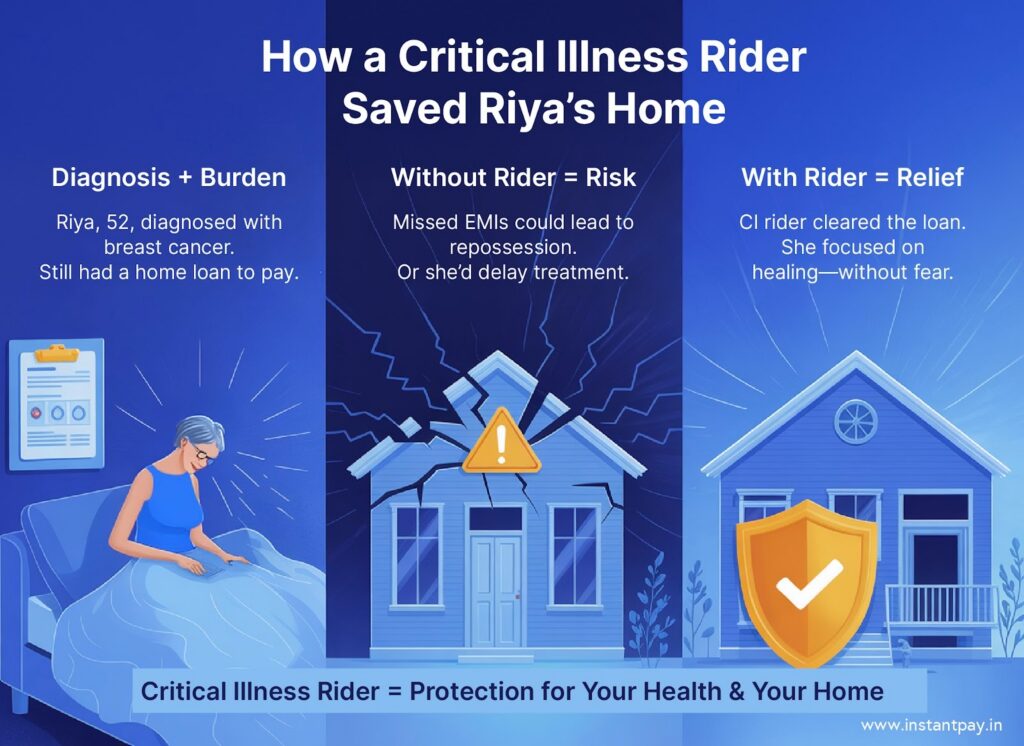
Riya was diagnosed with breast cancer at 52. With a home loan still active and treatment options costly, she feared losing her house or going into debt.
What could have gone wrong:
Missed EMIs could’ve led to repossession. She may have had to settle for lower-quality treatment or delay chemotherapy due to lack of funds.
How the rider helped:
Her critical illness benefit cleared the outstanding home loan, giving her peace of mind and stability during treatment.
Why it matters:
No one should have to choose between health and home. For Riya, the rider ensured she didn’t have to.
4. Ravi’s Brain Haemorrhage
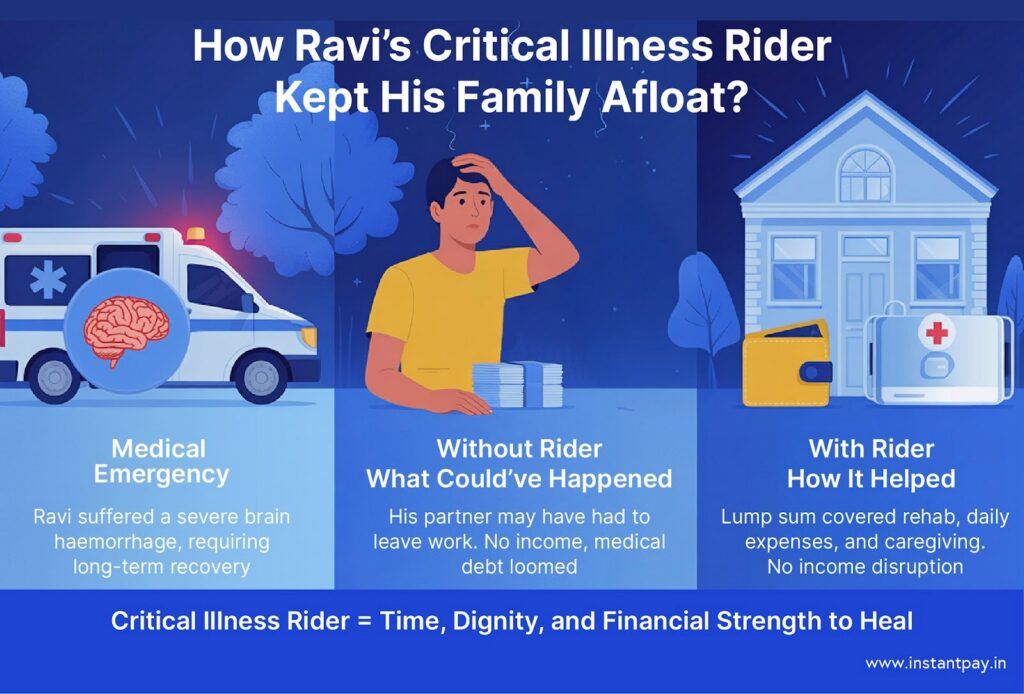
Despite tight finances, Ravi had held on to his critical illness cover. Months later, he suffered a severe brain haemorrhage, a life-altering event with a long recovery.
What could have gone wrong:
His partner would’ve had to quit work to care for him. Medical bills could’ve forced them into debt. The family would’ve lost both income and stability.
How the rider helped:
The lump sum payout supported rehab, daily expenses, and home care, ensuring the household stayed afloat even without active income.
Why it matters:
The payout wasn’t just money; it was time, dignity, and space to heal. It turned a medical disaster into a manageable crisis.
5. Deven’s Wife’s Bypass Surgery
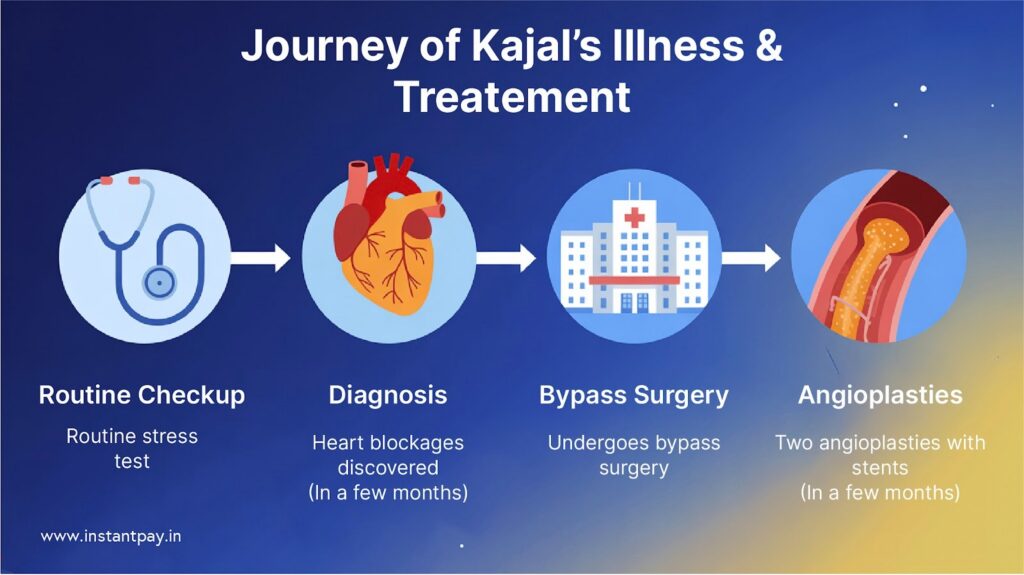
Deven Pabaru’s world turned upside down when his wife Kajal was diagnosed with multiple heart blockages. What started with a routine stress test led to a bypass surgery, complications, and two more angioplasties with five stents, all within months. Emotionally and financially, it could have been devastating.
What could have gone wrong:
Without adequate insurance, the family might have had to exhaust savings or take on debt to manage repeated hospitalizations and critical procedures.
How the rider helped:
Their health insurance covered major expenses—surgeries, post-op care, and consultations, letting the family focus on recovery instead of bills.
Why it matters:
Critical illnesses don’t come with a warning. Insurance ensured Deven’s family had stability, dignity, and the space to heal when it mattered most.
Why Critical Illness Rider Matters in India (2025)
| Data Point | Figure / Insight |
| Projected Cancer Cases by 2025 | Around 1.57 million new cancer cases are expected in India by 2025. |
| Average Cost of Cancer Treatment | Typically ranges from Rs.2.5 lakh to Rs.22 lakh, depending on the city, hospital, and stage of illness. |
| Life Insurance Claim Settlement Ratio (2023-24) | 96.82% of life insurance claims were settled within 30 days in FY 2023-24, reflecting improved trust and faster disbursements. |
| Insurance Penetration in India (2023-24) | Overall penetration stood at 3.7%, with life insurance at 2.8% and non-life (including health) at just 1%, showing room for awareness and growth. |
For those exploring term insurance options or considering add-ons like critical illness riders, this detailed guide on critical illness insurance in India offers helpful insights into how these riders enhance coverage.
Final Thoughts
Term insurance is designed to protect your family in case of your untimely demise, but life doesn’t just throw challenges after death. A serious illness can strike when you’re still here, trying to provide, support, and survive. And the costs, financial, emotional, and physical, can be devastating.
That’s where a critical illness rider becomes essential.
It does more than just offer a payout, it offers choices. The choice to get the best treatment. The choice to maintain your lifestyle. The choice is to keep your children’s education or EMIs on track without liquidating savings or taking on debt.
As we’ve seen from real-life stories, this rider often becomes the buffer that prevents a financial free fall. In a world where medical emergencies can turn into financial crises overnight, this one decision can shape your family’s ability to recover.