Critical illness and terminal illness benefits are often confused, but knowing the difference could be the key to protecting your family’s future. In India, non-communicable diseases such as heart disease, cancer, and diabetes now account for about 62% of all deaths, up from around 38% in 1990, underlining how common serious health events have become. With rising health uncertainties and complex policy terms, it’s easy to assume that either coverage is enough. The reality? Each serves a different purpose; one supports recovery, the other prepares for the end.
In this blog, we decode how major illness payouts and end-of-life benefits work in term insurance. From definitions and claim triggers to who needs what and why, you’ll get clear comparisons, practical examples, and a framework to make smarter, life-stage-based decisions.
What Is a Critical Illness in Insurance?

A major illness is a life-altering medical condition, such as cancer, stroke, or a heart attack, that typically requires long-term treatment and can severely disrupt income or daily life. Most insurers classify it as a major, serious illness that is potentially treatable if detected early. These conditions are predefined in the policy document and must meet diagnostic criteria set by the insurer.
To qualify for a payout, two conditions usually apply:
- The diagnosis must match the policy’s medical definition.
- A survival period—often 14 to 30 days post-diagnosis—must be met before the benefit is disbursed.
This lump-sum payout is designed to help policyholders cover non-hospital expenses, support household income, and focus on recovery without financial stress.
A critical illness is a serious but treatable medical condition, like cancer or heart disease. Insurers pay a lump sum upon diagnosis, which helps manage treatment costs, income loss, or recovery expenses.
While some opt for standalone plans, this benefit is more commonly added as a rider within a term insurance policy, offering broader medical coverage without buying a separate product.
What Is Terminal Illness in Term Insurance?

An early life-cover payout is a medically certified condition that cannot be cured and is expected to result in death within a specific time frame, usually 12 months or less. In insurance terms, this benefit allows a policyholder to access the life cover payout early, helping manage medical bills, caregiving costs, or other final-stage expenses with dignity and control.
This provision is often included as a living benefit rider within term life insurance and can be claimed once eligibility is confirmed by a medical professional.
To qualify for a terminal illness benefit:
- The illness must be certified as incurable by a licensed medical practitioner.
- The individual must have a life expectancy of 12 months or less (some insurers allow up to 24 months).
- The policy must include an active living benefit rider—either by default or as an add-on.

How Is a Major Illness Different from a Terminal Illness in Insurance?
While both critical and Terminal prognosis insurance are health-related add-ons to life insurance, their purposes, structures, and impacts are fundamentally different. One supports recovery from major medical conditions, while the other provides early financial support during the final stages of life.
Here’s a quick comparison to help clarify:
Critical Illness vs Terminal Illness: Key Differences
| Feature | Critical Illness | Terminal Illness |
| Curability | Often treatable | Incurable |
| Policy Format | Standalone policy or added rider | Rider only (included or optional in life insurance) |
| Payout Trigger | Diagnosis of a listed severe illness | Certified life expectancy of 12 months or less |
| Payout Type | One-time lump sum | Accelerated payout from the base sum assured |
| Use of Funds | Treatment, recovery, and income replacement | End-of-life support, outstanding debts, legacy |
This distinction becomes especially relevant when looking at how different health-related coverage functions during real financial emergencies. For instance, many families facing prolonged treatments have found that having a serious illness rider in place provided timely support, whether to manage hospital bills or maintain household stability, something reflected in situations shared through real recovery experiences involving major illness cover.
How Claims Work in Each Case?
Filing a claim for a major illness benefit or an end-of-life payout involves different steps and timelines, primarily because the conditions they cover vary greatly in urgency, severity, and medical classification.
Here’s how each works in practice:
1. Major Illness Claim Process (Major Illness Benefit)

When a policyholder is diagnosed with a covered illness like cancer, heart attack, or kidney failure, the claim process follows these steps:
- Diagnosis Confirmation: The illness must be listed in the policy and meet the insurer’s medical criteria.
- Survival Period Begins: Most insurers require the insured to survive for 14 to 30 days post-diagnosis.
- Document Submission: This includes lab reports, diagnosis certificates, and KYC documents.
- Lump Sum Payout: Once approved, the amount is transferred to the policyholder’s account for treatment, home care, or income replacement.
This payout is not linked to mortality; it’s designed to offer financial relief while the person is still in treatment or recovery.
2. Advance Sum Assured Payout Claim Process (End-of-Life Benefit)
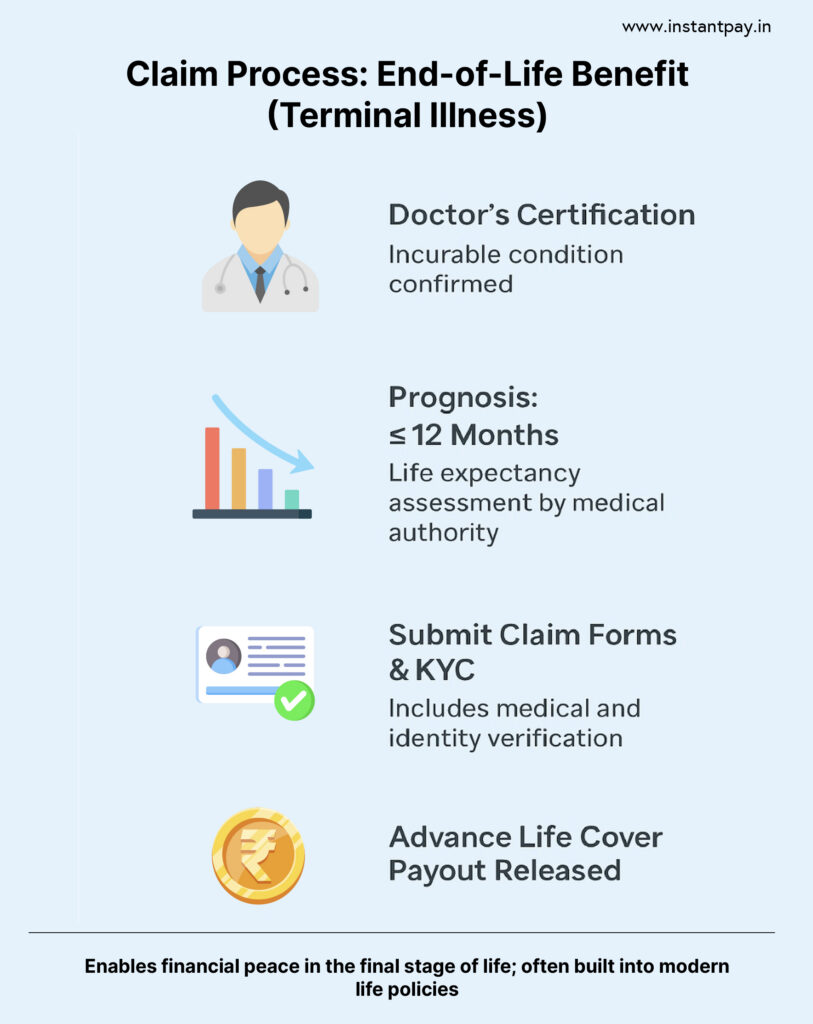
For Early life cover payout claims, where the condition is deemed incurable and life expectancy is short, the process differs:
- Doctor’s Certification: A licensed medical expert must certify that the condition is terminal.
- Prognosis of More than 12 Months: The medical report must state that life expectancy is 12 months or less (some insurers may accept up to 24 months).
- Claim Forms & KYC: Necessary documents, identity proof, and insurer-specific forms must be submitted.
- Advance Payout Disbursed: A portion or full sum assured is paid in advance to help manage final-stage costs, debts, or care needs.
This ensures that the insured or their family can make end-of-life decisions with financial dignity.
Who Should Consider a Diagnosis-based Payout Cover?
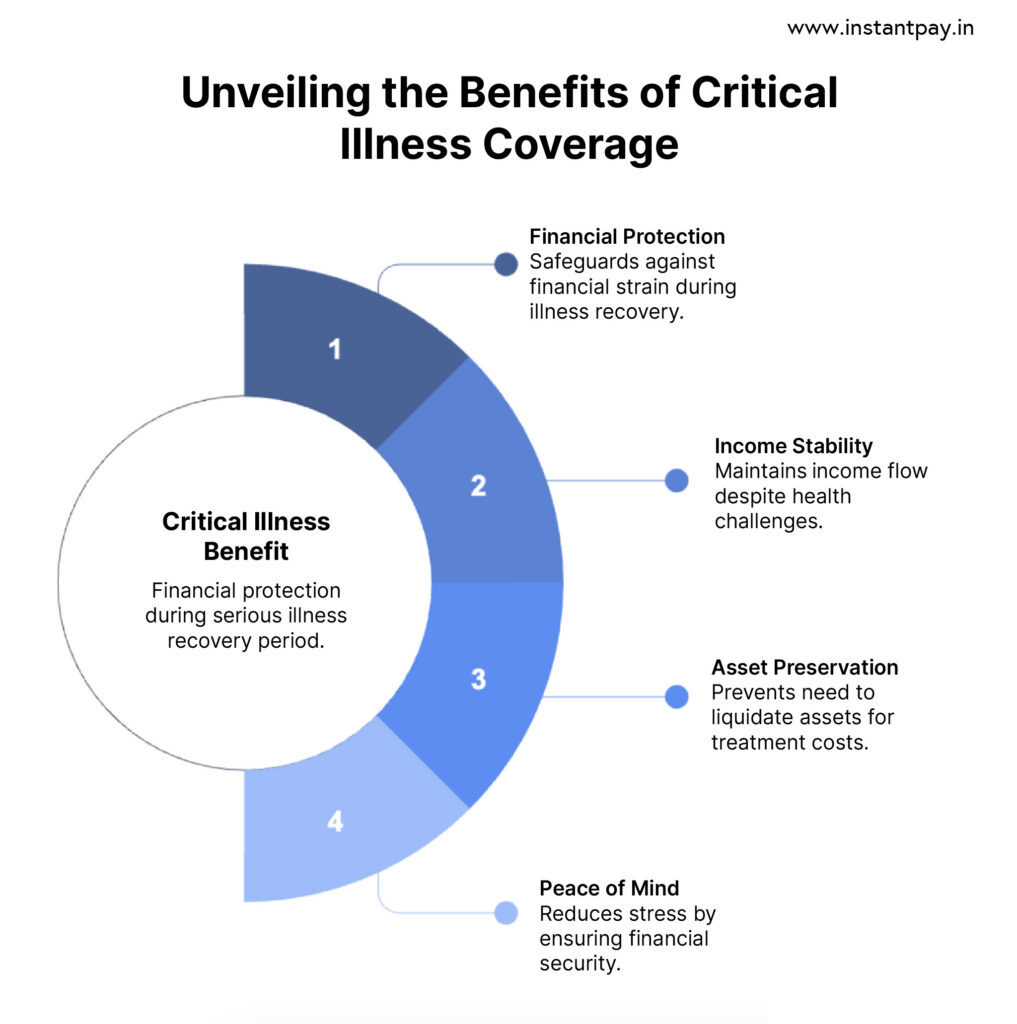
A major illness benefit is especially important during the years when financial obligations are at their peak, usually between the ages of 30 and 50. If you’re managing EMIs, supporting dependents, or building long-term assets, a sudden diagnosis of a serious condition like heart disease or cancer can derail both your income and recovery.
Unlike basic life insurance, this cover is not about mortality—it’s about protecting your earning ability while you heal. It acts as a financial cushion during long treatment cycles, reducing the pressure to dip into emergency funds or liquidate assets.

You should consider this benefit if:
- You’re at risk of conditions like stroke, cancer, or lifestyle-driven diseases
- Your employer’s health plan doesn’t offer full coverage for critical-stage treatment
- You want to preserve long-term savings during medical recovery
- You’re in your mid-30s to early 50s and managing both income and caregiving roles
This rider is often integrated into flexible life cover plans, helping you maintain lifestyle continuity even when your health is compromised. In fact, many policyholders in this bracket choose it as part of a structured protection strategy, especially when planning for long-term financial security.
Who Should Consider an Accelerated Death Benefit Cover?
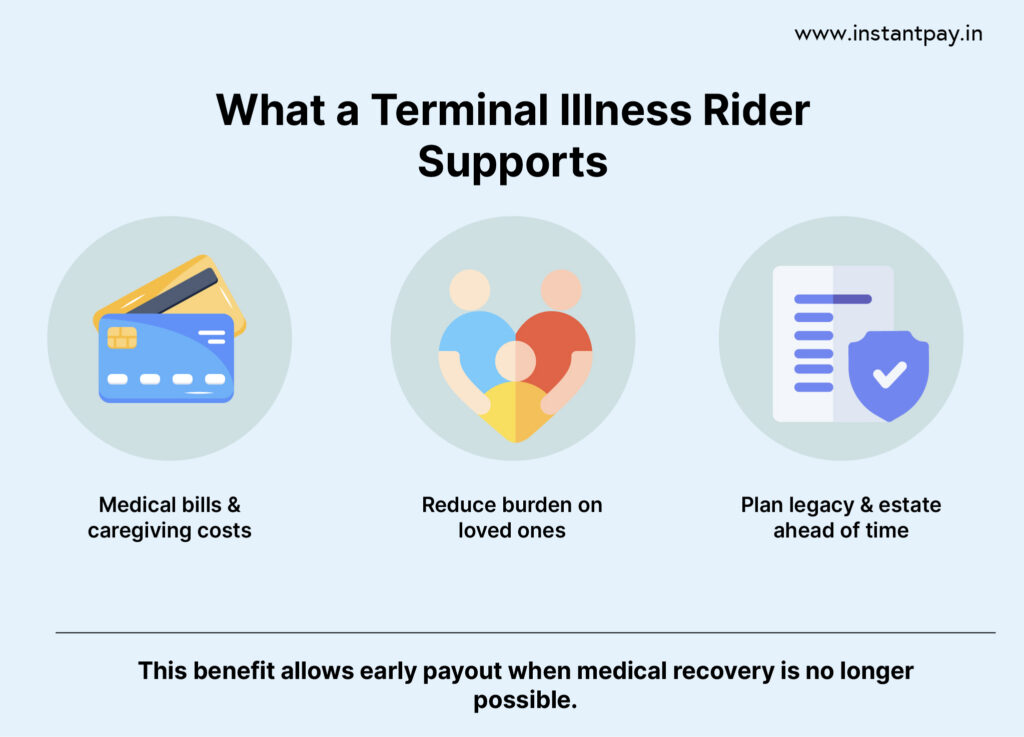
A Living benefit rider is designed for situations where medical recovery is no longer possible, and the prognosis indicates a life expectancy of 12 months or less. Instead of waiting for the life insurance claim after death, this benefit allows you to access your sum assured in advance, bringing financial control and peace of mind during a critical phase.
It is not just a clause in your policy—it’s a dignified option for those who want to manage their final-stage affairs with clarity and support.

You should consider this benefit if:
- You’re above 50 and beginning to plan for retirement, legacy, or estate distribution
- There’s a family history of conditions like advanced cancer, organ failure, or neurodegenerative diseases
- You want to relieve your family from sudden, high-cost expenses during your final months
- Your term insurance plan doesn’t already include a life expectancy insurance payout rider (some policies offer it by default)
More than anything, this rider offers flexibility when it’s needed most, so decisions about care, finances, and dignity can be made on your terms.
Some modern term plans already come with this benefit embedded, especially after regulatory shifts focused on policy transparency.
Checklist: Choosing Between Critical & Terminal Illness Covers
- Are you at higher risk of recovery-susceptible illnesses (like stroke, cancer)?
- Do you need income protection during treatment or recovery?
- Do you want to ease the financial burden at the end-of-life?
- Is the living benefit rider already included in your plan?
- Are there survival or waiting periods you’re comfortable with?
Can You Add Both Riders? Should You?
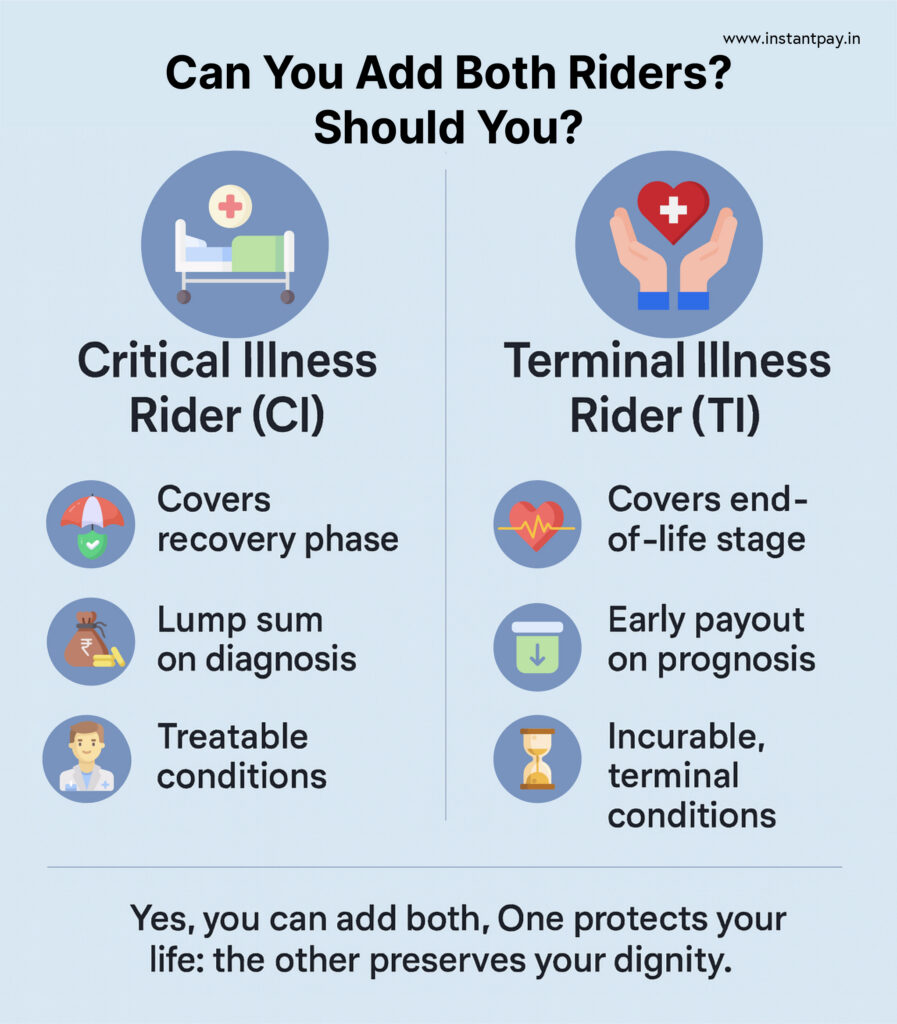
Yes—most insurers do allow both a serious illness rider and a early life cover payout to be added to the same term insurance plan. And in many cases, it makes sense to include both.
Each benefit is designed to address a different stage of health risk:
- A major illness cover (CI rider) provides financial support while you’re still recovering from a treatable but serious health condition like cancer or a heart attack.
- An accelerated death benefit (or TI rider) ensures that, if a condition becomes incurable and the prognosis falls below 12 months, you or your family can access the life cover early, without waiting for a formal death claim.

Pro Tip: Before opting for both, be sure to review:
- Any overlap in exclusions (some illnesses may not be covered under both riders)
- Whether your policy already includes terminal illness cover by default
- The added premium impact, especially if you’re opting for a high sum assured or extended tenure
Final Thoughts
The role of riders in life insurance is expanding—no longer limited to niche add-ons, they are now becoming central to a well-rounded protection strategy. As insurers respond to changing health realities and consumer expectations, both serious illness and terminal illness riders are evolving to offer more timely and inclusive support.
Here’s what to watch for:
- Major illness riders are increasingly covering modern health conditions such as early-stage cancers and select mental health disorders. IRDAI’s directive for insurers to include mental illness under health coverage is influencing rider enhancements as well.
- Terminal illness benefits may see greater flexibility, with some insurers evaluating the possibility of extending the payout trigger beyond the current 12-month life expectancy threshold, potentially up to 18 or 24 months. While not formalized, it reflects a growing shift toward earlier intervention.
- The claims experience is becoming more digitized, especially in metro cities where pilot models now support real-time medical validation using electronic health records. This could soon become standard practice, reducing processing delays across the board.
- Most importantly, policyholders should reassess their riders every 2–3 years. Medical risks, family responsibilities, and regulatory updates (such as IRDAI’s recent cap on waiting periods at 3 years) can all impact how effective your current coverage is.
By proactively aligning your policy with these shifts, you’re not just buying insurance—you’re building a financial buffer that adapts with you.
FAQs
1. What is the difference between critical illness and terminal illness?
Critical illness refers to serious but treatable conditions like cancer or a heart attack. Terminal illness involves incurable diseases with a life expectancy of under 12 months. CI riders support recovery; TI riders offer early death benefit payout.
2. Is cancer a terminal or critical illness?
Cancer can be both. Early-stage or treatable cancers are covered under a life-altering condition. Advanced, incurable cancers may qualify as terminal illness, depending on medical prognosis and policy terms.
3. What is 100% payout on terminal illness?
A 100% payout on terminal illness means the entire life insurance sum assured is paid early once an incurable disease is confirmed. This accelerates the death benefit, allowing financial planning during the final stage.
4. How many months is a terminal illness?
Most insurers define incurable disease as a condition where the life expectancy is 12 months or less, certified by a registered medical practitioner. Some global models may extend this to 18–24 months.
5. How is critical illness payout calculated?
Incurable illness benefits offer a fixed lump sum payout once diagnosis and survival period conditions are met. It’s not linked to hospitalization costs—the payout amount is pre-decided at the time of buying the policy.
6. What is the death benefit for terminal illness?
The death benefit under terminal illness is typically the sum assured of your life insurance, paid out in advance after medical confirmation of the illness. No second payout occurs after death in most plans.
7. What are the top 3 critical illnesses?
The most commonly covered Life-altering condition are:
- Cancer (major types)
- Stroke
- Heart attack (myocardial infarction)
These top conditions account for the majority of serious illness claims.
8. Does critical illness pay out on death?
No. Treatable illness riders do not pay out on death. They are triggered by the diagnosis of a covered illness and require survival for a set number of days (usually 14–30) to qualify.
9. Is paralysis a terminal illness?
No. Paralysis is usually classified as a treatable illness, especially if caused by stroke or neurological damage. It may be covered under CI plans, but is not considered terminal unless accompanied by a fatal prognosis.
10. What is the maximum age for critical illness cover?
Most insurers offer lump-sum illness coverage up to age 65–70, though it varies by provider. Entry age typically ranges from 18 to 60, and renewal may be available till 75 under select plans.
11. How is major illness insurance paid?
Major illness insurance pays a lump sum directly to the policyholder upon confirmed diagnosis and survival. This payment can be used for treatment, income support, or any personal need, regardless of hospitalization.